Join us on a literary world trip!
Add this book to bookshelf
Grey
Write a new comment Default profile 50px
Grey
Subscribe to read the full book or read the first pages for free!
All characters reduced
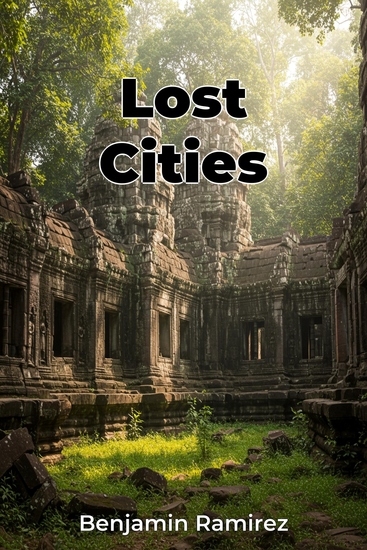
Lost Cities - cover

Lost Cities

Benjamin Ramirez

Translator A AI

Publisher: Publifye

  • 0
  • 0
  • 0

Summary

Lost Cities explores the captivating stories of forgotten urban centers, examining their architecture, history, and the archaeological efforts to unearth them. Uncover the mysteries of ancient civilizations and their metropolises, learning how environmental changes and societal factors contributed to their abandonment. The book highlights how studying these lost cities offers invaluable lessons for contemporary urban planning and global sustainability, providing insights into the cyclical nature of civilization.


The book begins by equipping readers with essential archaeological tools and methodologies, such as dating techniques, remote sensing, and artifact analysis. Delving into detailed case studies, the narrative examines cities swallowed by jungles, like Angkor, and those buried beneath deserts, such as Ubar, scrutinizing the impact of environmental pressures and resource depletion.


Discover submerged settlements, such as Pavlopetri, analyzing the catastrophic geological events that led to their demise. Adopting a holistic approach, Lost Cities integrates archaeological findings with historical accounts and environmental data. Each chapter meticulously presents architectural remains, written records, and material culture to reconstruct the lives and achievements of past inhabitants.


This meticulously researched book distinguishes itself by forging interdisciplinary connections with climatology, geology, and anthropology, offering a comprehensive understanding of each lost city and its relevance to our modern world.
Available since: 03/05/2025.
Print length: 69 pages.

Other books that might interest you

  • Making of Modern India The: The History of India from the Middle Ages to Independence from Britain - cover

    Making of Modern India The: The...

    Editors Charles River

    • 0
    • 0
    • 0
    India has been the location of many different empires throughout its long history. The Indus Valley Civilization was home to one of the world’s first civilizations more than 5,000 years ago, which was followed by the Aryan-Vedic culture and then a host of other kingdoms that flourished across the Sub-Continent. India has also been the birthplace of many religions. The Vedic religion of the Aryans evolved into the Hindu religion, and Buddhism and Jainism were also born in India. By the Middle Ages, India was home to many different religions and ethnic groups, with dozens of languages being spoken, making India less of a single, unified country and more of a land of many countries. Despite India’s tradition of cultural and political pluralism, several rulers attempted to place the entire Sub-Continent under the rule of one dynasty or government with a dominant religion. Most of these would-be rulers were far from successful, although a few came close, setting the template for later conquerors. 
    The Delhi Sultanate was comprised of five dynasties that expanded their borders, and Islam, at sword point, but also through diplomacy and trade. The Delhi Sultanate became known as a state that welcomed the expertise of foreigners, no matter their religion, and promoted the welfare of its citizens through a host of social programs. Eventually, the Delhi Sultanate grafted ideas and inspiration from India’s pre-Islamic past with those of Islam to create a state that was quite unique and powerful. The Delhi sultans were themselves descended from Turks and brought with them ideas from Persia. Furthermore, as their empire grew, they invited scholars from throughout the Islamic world to their country, and as Muslim scholars, scientists, and administrators from the Near East made their way into India, the Delhi sultans also incorporated some of the cultural ideas of the native Hindu Indians to create a state that was as unique as any the world had ever seen.
    Show book
  • Feeling Their Pain - Why Voters Want Leaders Who Care - cover

    Feeling Their Pain - Why Voters...

    Jared McDonald

    • 0
    • 0
    • 0
    The 2020 presidential election in the United States marked, for many, a return to "compassionate politics." Joe Biden had run on a platform of empathy, emphasizing his personal history as a means of connecting with everyone, from American workers who had lost jobs to military families who had lost loved ones. Although perceptions of candidate compassion are broadly understood to influence vote choice, less understood is the question of how candidates convince voters they truly "care about people like them." In Feeling their Pain, Jared McDonald provides a framework for understanding why voters view some politicians as more compassionate than others. 


    McDonald shows that perceptions of compassion in candidates for public office are based on the number and intensity of commonalities that bind citizens to political leaders. Commonalities can come in many forms, such as a shared experience, a shared emotion, or a shared identity. Compassion may be universal, such as when candidates convey empathy to all individuals who are struggling. Or compassion may be exclusionary, such as when candidates express a preference for some groups over others. Thus, the way campaigns choose to wield compassion in their messaging strategies has important implications not only for election outcomes, but for American political polarization as well.
    Show book
  • On Poetry - cover

    On Poetry

    Jackie Wills

    • 0
    • 0
    • 0
    We begin with a drive to write something that's never been said before, to protest, to offload, to challenge or catch the zeitgeist. We imagine we write like the poets we admire. Slowly we learn the craft, understanding eventually that a writer is indentured for life.
    Drawing on decades of experience as a poet and tutor, this compelling book is part hands-on guide and part reflection on ways that poetry can make a difference to how we live. It is also a survey of many varied and inspirational writers, especially women poets from the end of the 20th century.
    The final section of this unique book offers starting points and resources that will prove essential for new and experienced poets alike. Jackie Wills is herself one of our most genuine and brilliantly insightful poets; and, as the sections on writing workshops show, she has helped people of all ages find their way into poetry.
    Show book
  • Goddie - cover

    Goddie

    Robert Picart

    • 0
    • 0
    • 0
    In Robert Picart’s debut novel Goddie, we read the story of Goddie, a young girl born in the mid-1900s in the picturesque Blue Mountains of Jamaica. With the sudden loss of both parents, Goddie finds herself indentured to strangers in order to pay for school. Heartbroken, weary and alone, she forms a plan to escape to Great Britain as the Windrush movement escalates.Will Goddie be able to escape the depths of betrayal for good and start over again? Will she succumb to despair? Or will she find the strength to find her place in a new and turbulent world?
    Show book
  • Football Club Geopolitics - New Edition - 22 Unusual Stories to Understand the World - cover

    Football Club Geopolitics - New...

    Kévin Veyssière

    • 0
    • 0
    • 0
    Preface by Pascal Boniface.
    Why did the Euro soccer tournament follow in the footsteps of European integration? What confrontations are impossible between certain countries, such as those between Russia and Ukraine, or Armenia and Azerbaijan? Which matches have gone beyond sporting stakes to become geopolitical “wars”? Or, conversely, how can soccer be a tool of emancipation for peoples? Or even play a part in the political strategies of countries such as Saudi Arabia and Qatar as they seek to improve their image in the eyes of the world? 
    In a pleasant and precise style, the author tells us 22 stories in which the round ball found itself at the heart of international relations. He shows us that geopolitics is neither boring nor reserved for seasoned diplomats, and that soccer can go beyond the pitch.
    Show book
  • Medieval Education - The Rise of Universities - cover

    Medieval Education - The Rise of...

    Harris Ropes

    • 0
    • 0
    • 0
    During the early medieval period, education in Europe was primarily shaped by the influence of the Church. With the decline of the Western Roman Empire, formal education systems deteriorated, leaving monasteries and cathedral schools as the main centers of learning. These institutions preserved classical knowledge and played a crucial role in the intellectual revival of the Middle Ages. Monastic and cathedral schools provided education for clergy members and, over time, expanded their reach to include nobles and, in some cases, commoners. 
    Monastic schools were among the earliest centers of learning, with monks serving as teachers and scribes. These schools focused on religious instruction, teaching Latin, biblical texts, and theological commentaries. The goal was to prepare future clergy members for service in the Church. Monastic scriptoria were responsible for copying and preserving important texts, ensuring the transmission of classical and Christian knowledge. While most students in monastic schools were destined for religious life, some noble families sent their sons for education in literacy and administration, as the Church held significant political influence. 
    Cathedral schools emerged as a response to the growing demand for education beyond monastic settings. They were often attached to large churches or bishoprics and provided instruction to a wider audience, including future clergymen, royal officials, and scholars. These schools offered a more structured curriculum, covering subjects such as grammar, rhetoric, and logic, which formed the foundation of medieval education. Over time, cathedral schools developed into important intellectual hubs, attracting students from various regions. The presence of prominent teachers and scholars helped establish certain cathedral schools as precursors to medieval universities.
    Show book