Unisciti a noi in un viaggio nel mondo dei libri!
Aggiungi questo libro allo scaffale
Grey
Scrivi un nuovo commento Default profile 50px
Grey
Iscriviti per leggere l'intero libro o leggi le prime pagine gratuitamente!
All characters reduced
Cave Dwellings Architecture - cover

Cave Dwellings Architecture

Benjamin Ramirez

Traduttore A AI

Casa editrice: Publifye

  • 0
  • 0
  • 0

Sinossi

Cave Dwellings Architecture explores the fascinating world of underground settlements, revealing how diverse cultures ingeniously carved homes from rock. This book examines the architectural techniques, cultural adaptations, and historical significance of these subterranean communities. Discover how societies adapted their lifestyles and belief systems to the unique challenges of underground living. For example, the deliberate engineering of these structures often provided natural thermal insulation, offering protection from harsh climates.

 
The book presents a historical overview, spanning from prehistoric times to the present, to understand the social, economic, and political conditions that led to these settlements. It argues that cave dwellings are sophisticated architectural solutions reflecting an understanding of local environments. Uncover the ingenious ways these dwellings were constructed, from modifying existing caves to carving multi-level structures. The design of cave dwellings also provided defense against external threats.

 
The book progresses through case studies such as the cave cities of Cappadocia and the cliff dwellings of Mesa Verde, analyzing architectural features and cultural practices. By offering a global perspective and highlighting sustainable features, Cave Dwellings Architecture provides valuable insights for contemporary architecture, environmental design, and anyone interested in human dwellings and architectural history.
Disponibile da: 04/03/2025.
Lunghezza di stampa: 57 pagine.
Altri libri che potrebbero interessarti

  • Vincent van Gogh - Sunflowers and Silence - the Intensity of Being - cover

    Vincent van Gogh - Sunflowers...

    Victoria Charles

    • 0
    • 0
    • 0
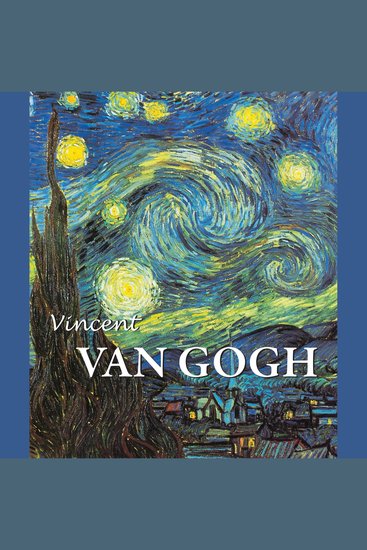
    Vincent van Gogh's life and work are so intertwined that it is hardly possible to observe one without thinking of the other. Van Gogh has indeed become the incarnation of the suffering, misunderstood martyr of modern art, the emblem of the artist as an outsider. An article, published in 1890, gave details about van Gogh's illness. The author of the article saw the painter as "a terrible and demented genius, often sublime, sometimes grotesque, always at the brink of the pathological." Very little is known about Vincent's childhood. At the age of eleven he had to leave "the human nest", as he called it himself, for various boarding schools. The first portrait shows us van Gogh as an earnest nineteen year old. At that time he had already been at work for three years in The Hague and, later, in London in the gallery Goupil & Co. In 1874 his love for Ursula Loyer ended in disaster and a year later he was transferred to Paris, against his will. After a particularly heated argument during Christmas holidays in 1881, his father, a pastor, ordered Vincent to leave. With this final break, he abandoned his family name and signed his canvases simply "Vincent". He left for Paris and never returned to Holland. In Paris he came to know Paul Gauguin, whose paintings he greatly admired. The self-portrait was the main subject of Vincent's work from 1886c88. In February 1888 Vincent left Paris for Arles and tried to persuade Gauguin to join him. The months of waiting for Gauguin were the most productive time in van Gogh's life. He wanted to show his friend as many pictures as possible and decorate the Yellow House. But Gauguin did not share his views on art and finally returned to Paris. On 7 January, 1889, fourteen days after his famous self-mutilation, Vincent left the hospital where he was convalescing. Although he hoped to recover from and to forget his madness, but he actually came back twice more in the same year. During his last stay in hospital, Vincent painted landscapes in which he recreated the world of his childhood. It is said that Vincent van Gogh shot himself in the side in a field but decided to return to the inn and went to bed. The landlord informed Dr Gachet and his brother Theo, who described the last moments of his life which ended on 29 July, 1890: "I wanted to die. While I was sitting next to him promising that we would try to heal him. [...], he answered, 'La tristesse durera toujours (The sadness will last forever).'"
    Mostra libro
  • 19: The Musical - An American Suffrage Story - cover

    19: The Musical - An American...

    Jennifer Schwed, Doug Bradshaw

    • 0
    • 0
    • 0
    19: The Musical is the dynamic and little-known story of Alice Paul, Ida B. Wells, Susan B. Anthony, Carrie Chapman Catt, Inez Milholland and the other suffragists who fought to get women the right to vote - The 19th Amendment. The inspirational story of these fearless women is brought to life through jazz, traditional musical standards style, spoken word, and hints of gospel. Alice Paul and the suffragist's fight for equality have been re-imagined for a new generation with a poignant and uplifting message that will resonate for years to come. 
    Originally created and performed on stage, 19: The Musical has been adapted for a new medium to reach a broader audience through audiobooks. 
    Book & Lyrics by Jennifer Schwed and Doug Bradshaw, ​​​​​​​Music Composed & Arranged by Charlie Barnett
    Mostra libro
  • On the Subject of Fallen Things - cover

    On the Subject of Fallen Things

    James Kearns

    • 0
    • 0
    • 0
    "you start every new day with an inventory: a moth, a cape, a parachute, a coffin, a gun, the wall you built to mount the gun."
    On the Subject of Fallen Things is an addictive, Chekhovian metanarrative: phenomenological, absurd, and dripping with black humour. James Kearns' speaker keeps company with Lazarus, an inept psychic, and a deceased superhero, but finds himself increasingly alone—lost in dialogue with mortality, both personal and anthropological. Permanence, culpability, the function and corruption of human storytelling: all come into play in a surge of momentum that grips the reader, even as it breaks apart: a lean explosion, a gunshot in the distance.
    "On the Subject of Fallen Things weaves whimsy into narrative epiphanies that you never see coming. Each line aggregating weight like the lightness of snowflakes gathering into an avalanche. Hugely enjoyable. Get it now." Roger Robinson, A Portable Paradise, Winner of the 2019 T.S. Eliot Prize
    "This is a really brilliant sequence of poems. Like Ponge, or Herbert, or Steger, or Simic, it manages to be both serious and fleeting, weighty and funny. It's hopeful, actually." S.J. Fowler, 3:AM Magazine
    Mostra libro
  • The Value Gap - Female-Driven Films from Pitch to Premiere - cover

    The Value Gap - Female-Driven...

    Courtney Brannon Donoghue

    • 0
    • 0
    • 0
    Conversations about gender equity in the workplace accelerated in the 2010s, with debates inside Hollywood specifically pointing to broader systemic problems of employment disparities and exploitative labor practices. Compounded by the devastating #MeToo revelations, these problems led to a wide-scale call for change. The Value Gap traces female-driven filmmaking across development, financing, production, film festivals, marketing, and distribution, examining the realities facing women working in the industry during this transformative moment. Drawing from five years of extensive interviews with female producers, writers, and directors at different stages of their careers, Courtney Brannon Donoghue examines how Hollywood business cultures "value" female-driven projects as risky or not bankable. Industry claims that "movies targeting female audiences don't make money" or "women can't direct big-budget blockbusters" have long circulated to rationalize systemic gender inequities and have served to normalize studios prioritizing the white male–driven status quo. Through a critical media industry studies lens, The Value Gap challenges this pervasive logic with firsthand accounts of women actively navigating the male-dominated and conglomerate-owned industrial landscape.
    Mostra libro
  • Agile Project Management with Kanban - Enhancing Collaboration and Streamlining Workflows - cover

    Agile Project Management with...

    William Adams

    • 0
    • 0
    • 0
    Unlock the power of Kanban to revolutionize your project management approach with "Agile Project Management with Kanban: Efficient Workflows, Continuous Improvement." In this comprehensive guide, seasoned project management experts delve into the dynamic world of Agile methodologies and showcase how Kanban can be the game-changer for achieving unprecedented efficiency and continuous improvement in your projects. 
    Embark on a journey through the core principles of Kanban, a visual management system that promotes collaboration, flexibility, and transparency in project workflows. Through real-world examples and practical insights, this book equips you with the tools and techniques needed to seamlessly integrate Kanban into your Agile project management strategy. 
    "Agile Project Management with Kanban" provides the insights and strategies you need to elevate your projects to new heights of efficiency and success. Take the leap into the world of Agile with Kanban and revolutionize the way you approach project management.
    Mostra libro
  • O Say Can You Sing - cover

    O Say Can You Sing

    Michael D. Young

    • 0
    • 0
    • 0
    In O Say, Can You Sing, Michael D. Young uncovers the powerful, true stories behind America’s most beloved patriotic songs—and the faithful believers who lived out Christian values through sacrifice, courage, and conviction. These aren’t textbook figures. They’re everyday heroes whose devotion to God and love of freedom helped shape the soul of a nation.Meet Harriet Tubman, a woman of unshakable faith who, despite chronic illness and a bounty on her head, led dozens to freedom through the Underground Railroad. She called herself “Moses,” and the lyrics of The Battle Hymn of the Republic—“Mine eyes have seen the glory of the coming of the Lord”—became a rallying cry for her mission. Through music and action, she bore witness to a God of deliverance.In this book, you’ll discover:- How Christian men and women shaped liberty through unseen acts of courage- The spiritual roots and surprising histories of songs like God Bless America and America the Beautiful- How music preserved faith and freedom through every American conflict
     
    - QR codes that let you hear the music and explore the lives of each hero through immersive extrasPart hymnbook, part devotional, part history—this is a powerful reminder that the story of America has always been sung by believers. And their song still matters.
    Mostra libro