Unisciti a noi in un viaggio nel mondo dei libri!
Aggiungi questo libro allo scaffale
Grey
Scrivi un nuovo commento Default profile 50px
Grey
Iscriviti per leggere l'intero libro o leggi le prime pagine gratuitamente!
All characters reduced
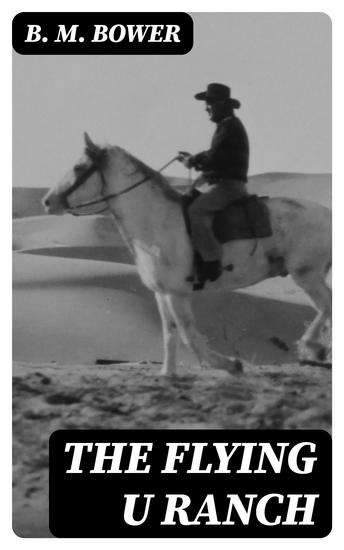
The Flying U Ranch - cover

The Flying U Ranch

B. M. Bower

Casa editrice: DigiCat

  • 0
  • 0
  • 0

Sinossi

In "The Flying U Ranch," B. M. Bower masterfully weaves a narrative that captures the rugged and romantic essence of the American West. Set against the backdrop of a cattle ranch in Montana, the story centers on the misadventures of the Flying U gang, blending humor with poignant character studies. Bower's vivid prose and authentic dialogue vividly evoke the landscape and lifestyle of early 20th-century ranchers, while her keen eye for detail illuminates the complexities of human relationships within a pastoral setting. This novel is situated within the frontier literature of its time, which sought to immortalize the cowboy mythos while also addressing the nuanced realities of frontier life. B. M. Bower, a pioneer among female Western writers, was deeply influenced by her own experiences growing up in the West. Born in 1871 in the ranching heartland of Montana and raised among cowboys, Bower's unique perspective allowed her to challenge the gender norms of her time. Her background informed her storytelling, enabling her to create authentic, relatable characters who navigate the trials and triumphs of ranch life, all while embodying the spirit of independence and adventure. "The Flying U Ranch" is a must-read for anyone who appreciates classic Western literature, as well as those drawn to themes of camaraderie, resilience, and the allure of the untamed frontier. Bower's novel not only entertains but also enriches our understanding of a formative period in American history, making it a valuable addition to any literary collection.
Disponibile da: 16/09/2022.
Lunghezza di stampa: 101 pagine.
Altri libri che potrebbero interessarti

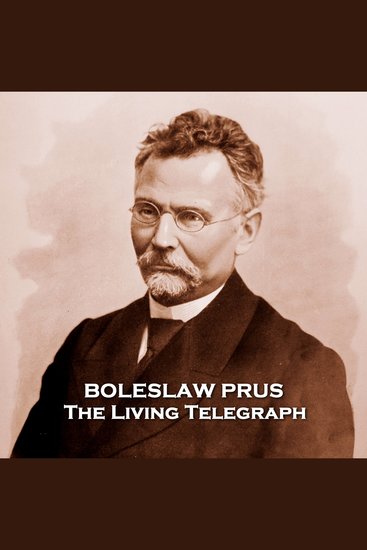
  • The Living Telegraph - From their pens to your ears genius in every story - cover

    The Living Telegraph - From...

    Boleslaw Prus

    • 0
    • 0
    • 0
    Aleksander Głowacki who wrote under the nom de plume Boleslaw Prus was born on 20th August 1847 at Hrubieszów in the Kingdom of Poland, at that time, controlled by the Russian Empire. 
    At three his mother died and then at nine his father.  Female relatives helped raise him but at 15 he joined the Polish uprising against the might of Imperial Russia.  Wounded on the battlefield, arrested and imprisoned, he was later released into the care of a relative and resumed secondary school and then Warsaw University but poverty forced him to leave after two years.  At some point he developed agoraphobia which often caused problems. 
    In 1869, he enrolled in the Forestry Department at Puławy but was soon sacked and so he began a system of self-education that led to work as a newspaper columnist on a wide-ranging series of topics that eventually became the ‘Weekly Chronicles’ and spanned 40 years. 
    With his finances now stabilized he married and then adopted his late brother-in-law’s son.  
    It seems he had doubts as to the scale of his talents and early on adopted the name ‘Boleslaw Prus’ for both his journalistic and literary offerings. 
    His work as a short-story writer met with much acclaim. He wrote several dozen of them, originally published in newspapers and ranging in length from micro-story to novella. His keen observation of everyday life and sense of humor are evident in them.  
    During his career he also wrote novels. After ‘Pharoah’, in 1895, he embarked on a four-month journey taking in Berlin, Dresden, Nuremberg, Rapperswil in Switzerland, where he stayed for two months, and his final destination, Paris.  Here his agoraphobia was so bad he couldn’t cross the Seine.  
    However, his writing continued and in 1911 his novel ‘Changes’, though uncompleted, began to be serialised.  It was never finished. 
    Boleslaw Prus died on 19th May 1912, at his Warsaw apartment.  He was 64.  A National Hero, thousands attended both his funeral service and interment.
    Mostra libro
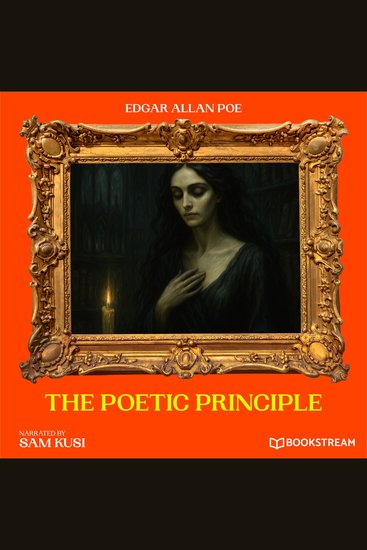
  • The Poetic Principle - cover

    The Poetic Principle

    Edgar Allan Poe

    • 0
    • 0
    • 0
    "The Poetic Principle" is an essay by Edgar Allan Poe, written near the end of his life and published posthumously in 1850, the year after his death. It is a work of literary criticism, in which Poe presents his literary theory. It is based on a series of lectures Poe had given late in his lifetime.
    The essay argues that a poem should be written "for a poem's sake" and that the ultimate goal of art is aesthetic. He also argues against the concept of a long poem, saying that an epic, if it is to be worth anything, must instead be structured as a collection of shorter pieces, each of which is not too long to be read in a single sitting.
    Mostra libro
  • Mold of the Earth - From their pens to your ears genius in every story - cover

    Mold of the Earth - From their...

    Boleslaw Prus

    • 0
    • 0
    • 0
    Aleksander Głowacki who wrote under the nom de plume Boleslaw Prus was born on 20th August 1847 at Hrubieszów in the Kingdom of Poland, at that time, controlled by the Russian Empire. 
    At three his mother died and then at nine his father.  Female relatives helped raise him but at 15 he joined the Polish uprising against the might of Imperial Russia.  Wounded on the battlefield, arrested and imprisoned, he was later released into the care of a relative and resumed secondary school and then Warsaw University but poverty forced him to leave after two years.  At some point he developed agoraphobia which often caused problems. 
    In 1869, he enrolled in the Forestry Department at Puławy but was soon sacked and so he began a system of self-education that led to work as a newspaper columnist on a wide-ranging series of topics that eventually became the ‘Weekly Chronicles’ and spanned 40 years. 
    With his finances now stabilized he married and then adopted his late brother-in-law’s son.  
    It seems he had doubts as to the scale of his talents and early on adopted the name ‘Boleslaw Prus’ for both his journalistic and literary offerings. 
    His work as a short-story writer met with much acclaim. He wrote several dozen of them, originally published in newspapers and ranging in length from micro-story to novella. His keen observation of everyday life and sense of humor are evident in them.  
    During his career he also wrote novels. After ‘Pharoah’, in 1895, he embarked on a four-month journey taking in Berlin, Dresden, Nuremberg, Rapperswil in Switzerland, where he stayed for two months, and his final destination, Paris.  Here his agoraphobia was so bad he couldn’t cross the Seine.  
    However, his writing continued and in 1911 his novel ‘Changes’, though uncompleted, began to be serialised.  It was never finished. 
    Boleslaw Prus died on 19th May 1912, at his Warsaw apartment.  He was 64.  A National Hero, thousands attended both his funeral service and interment.
    Mostra libro
  • The Lumber Room - From their pens to your ears genius in every story - cover

    The Lumber Room - From their...

    Saki Saki

    • 0
    • 0
    • 0
    Kenneth Grahame was born on 8th March 1859 in Edinburgh. 
    At age 5 his mother succumbed to puerperal fever.  His father, who had a drinking problem, now sent his 4 children to live with their grandmother at her large house in Cookham, Berkshire. Here the children lived in large open grounds next to the river.  These early experiences would in later years, be retold in his writing through a myriad of characters. 
    Grahame loved being a pupil at St Edward's School, Oxford and wanted to enroll at the university there but his guardian demurred on account of the cost. 
    Instead, a banking career was chosen for him, starting in 1879 at the Bank of England, where he rose steadily to the rank of its Secretary until retiring, with a pension, in 1908 due to ill health. 
    Alongside his commercial career Grahame had written and published various stories and essays in several periodicals. Some were anthologized as ‘Pagan Papers’ in 1893, and two years later ‘The Golden Age’ and later still ‘Dream Days’ and its masterpiece ‘The Reluctant Dragon’ became part of many home libraries.  His ability to view life through the lens of a young and curious child was superb, enabling the reader to easily identify with the character.   
    Grahame married Elspeth Thomson in 1899 and they had one child; Alastair, born semi-blind and plagued by health problems.  In a heart-rending tragedy he would later take his own life whilst attending Oxford University in 1920.   
    In 1908 Grahame reworked many of the bedtime stories he had fashioned for his son into the enduring favourite; ‘The Wind in the Willows’, describing the heart-warming adventures of Mr Toad and his friends.   
    Kenneth Grahame died in Pangbourne, Berkshire, on 6th July 1932.
    Mostra libro
  • Scoring off Jeeves - cover

    Scoring off Jeeves

    P. G. Wodehouse

    • 0
    • 0
    • 0
    "There are moments when a man feels he has the upper hand… and then there are the moments immediately after."
    In Scoring off Jeeves, Bertie Wooster is quietly confident that, just this once, he has managed to get the better of his otherwise infallible valet. A small victory, perhaps—but in a life so frequently guided, corrected, and discreetly improved, it feels like a triumph of historic proportions.
    Naturally, this cannot possibly last.
    With the usual assortment of social complications, emotional entanglements, and decisions of a distinctly Woosterian calibre, matters begin to develop in a direction that is, at best, questionable—and, at worst, entirely inevitable.
    Fortunately (or otherwise), Jeeves is observing.
    Calm, unruffled, and several moves ahead of everyone else, he allows events to unfold just far enough before applying his particular brand of quiet correction—restoring order with a precision that is as humbling as it is impressive. A perfectly tuned piece of Wodehouse: light, swift, and irresistibly clever. Ideal for listeners who appreciate understated wit, elegant mischief, and the delicate art of being gently—but decisively—outmaneuvered. Because when Bertie Wooster thinks he's winning… it's usually only part of Jeeves's plan.
    Mostra libro
  • What Was It? - From their pens to your ears genius in every story - cover

    What Was It? - From their pens...

    Fitz James O'Brien

    • 0
    • 0
    • 0
    Michael O'Brien was born in Cork, Ireland on 25th October 1826.   
    He finished his education at the University of Dublin and some accounts have him serving for a time in the British army at some in this period.  
    Whilst at college he had shown some talent for writing poetry and two of his poems were later published in ‘The Ballads of Ireland’ (1856). 
    Departing for London with an £8,000 inheritance that was all spent during his stay of 4 years, he spent some time editing a periodical to aid the World’s Fair of 1851. 
    A year later he was bound for the United States with a new name, Fitz James, and an ambition to obtain a career in literature. 
    His earliest works in the US were for The Lantern, before publishing works in the Home Journal, the New York Times, and the American Whig Review. However, his most important early outlet was Harper's Magazine, and he first published with them in February 1853, with ‘The Two Skulls’, and would over his short life contribute more than sixty articles of poetry and prose.  
    As an established writer he now proceeded to publish magazines and periodicals of the calibre of the New York Saturday Press, Putnam's Magazine, Vanity Fair, and the Atlantic Monthly to whom he sent ‘The Diamond Lens’ (1858) and ‘The Wonder Smith’ (1859).  These are very early examples of science-fiction writing and along with several others establish him as one of the founders.  He also wrote, either as originals or as adaptions several plays including ‘A Gentleman from Ireland’. 
    In New York, he was associated with a brilliant set of contemporary Bohemians. At the weekly dinners hosted by the editor, actor and dramatist John Brougham, or at the nightly suppers at Pfaff's on Broadway, he was at the center of the entertainment. 
    With the outbreak of Civil War in 1861, O'Brien joined the 7th regiment of the New York National Guard hoping to see action at the front.  
    Fitz James O’Brien was badly wounded in a skirmish on 26th February 1862.  From his wounds he caught tetanus and died at Cumberland, Maryland on 6th April 1862. He was 35.
    Mostra libro