¡Acompáñanos a viajar por el mundo de los libros!
Añadir este libro a la estantería
Grey
Escribe un nuevo comentario Default profile 50px
Grey
Suscríbete para leer el libro completo o lee las primeras páginas gratis.
All characters reduced
ANTHEM (illustrated) - cover

ANTHEM (illustrated)

Ayn Rand

Editorial: Swish

  • 0
  • 0
  • 0

Sinopsis

Anthem by Ayn Rand is a timeless dystopian novella that explores the power of individualism in a collectivist society. Set in a dark future where the concept of self has been obliterated, the story follows Equality 7-2521, a man who dares to defy the rules of his world to discover the forbidden word: "I." This gripping tale is a celebration of human spirit, innovation, and the unyielding pursuit of freedom. A must-read for fans of philosophical literature and thought-provoking stories.
Disponible desde: 18/12/2024.

Otros libros que te pueden interesar

  • Enigmatic Nature An - cover

    Enigmatic Nature An

    Anton Chekhov

    • 0
    • 0
    • 0
    In a train compartment, Voldemar, a provincial secretary of Special Commissions, who is also a budding young author, talks to an agitated young lady, reclining on a seat opposite to him. He is fascinated with the great enigma of her apparently wonderful inner world, eager to unravel its mysteries, and she, a self-proclaimed 'sufferer in Dostoyevsky's taste' implores him to reveal her soul to the world in one of his novellas.
    So she tells him how she, a young girl, looking for brighter horizons, married an old army general, so as to become an heiress one day and, with all the wealth thus gained, go back to the man whom she really adored. Now, according to the plan, the general dies, but no happiness comes her way, for there is now a serious hurdle that stands between her and the man she loves. And that is… another army general, who is both rich and old.
    As the train leaves the station, Voldemar the writer sits pondering on how indeed enigmatic this wonderful creature's soul must be.
    Ver libro
  • Frankenstein Retold Inclusively - cover

    Frankenstein Retold Inclusively

    Mary Shelley, Kath Shone

    • 0
    • 0
    • 0
    Frankenstein was written in the Romantic literary period. The literary trend of the early 1800s produced poems that described how nature elevated and blissed human minds. Most literary work at this time was written and published by men. 
    In amongst these ecstatic reveries of nature, the 19 year old, Mary Shelley wedged the chilling story of Frankenstein into the literary landscape and our minds forever. 
    Her story filled an empty space in humankind's collective consciousness. That empty space was waiting for this story of over-reaching scientific madness. 
    This version of Frankenstein is a translation not an abridged telling. I have translated the Old Romantic era English into easy-to-read accessible English. 
    • The same characters say the same things at the same times in the story. 
    • Plot point for plot point the story stays the same. 
    • The themes are all preserved. 
    • The transcendent and brutal settings of the story are still on the pages. 
    • References to poems and other literature are explained. 
    • Supplementary information supports understanding of the text. 
    This book is for 
    • humans who like to read archetypal literature in easy-to-read language, 
    • neuro-diverse readers, 
    • young readers, 
    • English second language speakers, 
    • English literature students who need a study guide to unravel the original Frankenstein. 
    • anyone (I think that's most of us) who finds old English inaccessible but would like to read Frankenstein. 
    This accessible Frankenstein is part of Inclusive Books (Inc!Bs) journey to rewrite history inclusively.
    Ver libro
  • The Piece of String - From their pens to your ears genius in every story - cover

    The Piece of String - From their...

    Guy de Maupassant

    • 0
    • 0
    • 0
    Henri René Albert Guy de Maupassant was born on August 5th, 1850 near Dieppe in France.  
    Maupassant’s early life was badly torn when at age 11 (his younger brother Hervé was then five) his mother, Laure, a headstrong and independent-minded woman, risked social disgrace in order to obtain a legal separation from her husband. 
    After the separation, Laure kept custody of her two boys. With the father now forcibly absent, Laure became the most influential and important figure in the young boy's life.   
    Maupassant’s education was such that he rebelled against religion and other societal norms but a developing friendship with Gustave Flaubert began to turn his mind towards creativity and writing. 
    After graduation he volunteered for the Franco-Prussian war. With its end he moved to Paris to work as a clerk in the Navy Department.  Gustave Flaubert now took him under his wing.  Acting as a literary guardian to him, he guided the eager Maupassant to debuts in journalism and literature.  For Maupassant these were exciting times and the awakening of his creative talents and ambitions. 
    In 1880 he published what is considered his first great work, ‘Boule de Suif’, (translated as as ‘Dumpling’, ‘Butterball’, ‘Ball of Fat’, or ‘Ball of Lard’) which met with a success that was both instant and overwhelming.  Flaubert at once acknowledged that it was ‘a masterpiece that will endure.’ Maupassant had used his talents and experiences in the war to create something unique.  
    This decade from 1880 to 1891 was to be the most pivotal of his career.  With an audience now made available by the success of ‘Boule de Suif’ Maupassant organised himself to work methodically and relentlessly to produce between two and four volumes of work a year.  The melding of his talents and business sense and the continual hunger of sources for his works made him wealthy. 
    In his later years he developed a desire for solitude, an obsession for self-preservation, and a fear of death as well as a paranoia of persecution caused by the syphilis he had contracted in his youth.  
    On January 2nd, 1892, Maupassant tried to commit suicide by cutting his throat.  Unsuccessful he was committed to the private asylum of Esprit Blanche at Passy, in Paris.  It was here on July 6th, 1893 that Henri René Albert Guy de Maupassant died at the age of only 42.
    Ver libro
  • The Premature Burial - From their pens to your ears genius in every story - cover

    The Premature Burial - From...

    Edgar Allan Poe

    • 0
    • 0
    • 0
    Edgar Poe was born in Boston Massachusetts on 19th January 1809. His father abandoned his family the following year and within a year his mother had died leaving him an orphan.   
    He was taken in by the Allan family but never formally adopted although he now referred to himself as Edgar Allan Poe.  His father alternatively spoiled or chastised him and tension was frequent over gambling debts and monies for his education.  His university years to study ancient and modern languages was cut short by lack of money and he enlisted as a private in the army claiming he was 22, it is more probable he was 18. After 2 years he obtained a discharge in order to take up an appointment at the military academy, West Point, where he failed to become an officer. 
    Poe had released his 1st poetry volume in 1827 and after his 3rd turned to prose and placing short stories in several magazines and journals.  At age 26 he obtained a licence to marry his cousin.  She was a mere 13 but they stayed together until her death from tuberculosis 11 years after. 
    In January 1845 ‘The Raven’ was published and became an instant classic.  Thereafter followed the prose works for which he is now so rightly famed as a master of the mysterious and the macabre. 
    Edgar Allan Poe died at the tragically early age of 40 on 7th October 1849 in Baltimore, Maryland. Newspapers at the time reported Poe's death as ‘congestion of the brain’ or ‘cerebral inflammation’, common euphemisms for death from disreputable causes such as alcoholism but the actual cause of death remains a mystery. 
    Poe is also one of a number of authors credited with inventing the detective genre with his Parisian sleuth C. Auguste Dupin.  He featured in three stories including the legendary ‘Murders in the Rue Morgue’ and by sheer deduction, logic and a touch of Gallic arrogance revealed what was hidden to the rest of us.
    Ver libro
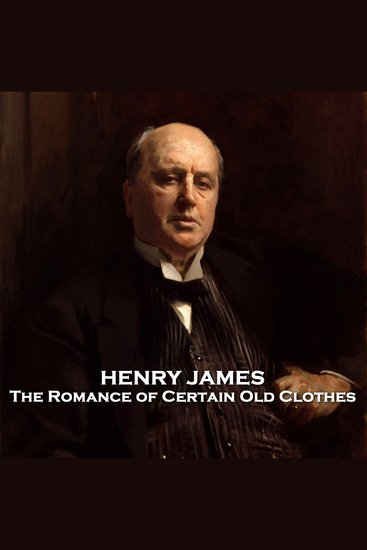
  • The Romance of Certain Old Clothes - From their pens to your ears genius in every story - cover

    The Romance of Certain Old...

    Henry James

    • 0
    • 0
    • 0
    Henry James was born 15th April 1843 in New York City. 
    His youth was spent travelling with his family receiving what was an "extraordinarily haphazard and promiscuous" education as they journeyed through London, Paris, Geneva, Boulogne-sur-Mer and Newport, Rhode Island, according to the father's current interests and publishing ventures. James studied primarily with tutors and only briefly attended schools.    
    Undoubtedly the quality of his writing has ensured his name is enshrined in the American literary tradition.  
    James was a committed Anglophile and spent most of his adult life as an expatriate in Europe.  Many of his novels juxtapose the Old World with the New World. Classics such as ‘The Portrait of a Lady’, ‘Daisy Miller’ and ‘The Ambassadors’, display the entanglement between American and European cultures and mentalities. They highlight the differences between the two worlds through following the experiences of American expatriates in Europe.  
    A prolific author he was able to easily move across genres to create vivid and totally real worlds and situations and to offer sophisticated observations of human relations as well as realistic, social criticism.  
    As a critic James was unafraid to venture into reviews and essays of those other literary giants around him.  These together with his short stories and, of course, classic novels, make Henry James an author to be not only admired but read, and read often.  
    In 1915 Henry James became a British citizen. 
    On 28th February 1916, at the age of 72, Henry James died in Chelsea, London. 
    He was nominated for the Nobel Prize in Literature in 1911, 1912 and 1916. He never won.
    Ver libro
  • Hunchback of Notre-Dame The (Book 8) - cover

    Hunchback of Notre-Dame The...

    Victor Hugo

    • 0
    • 0
    • 0
    Book 8: The Hunchback of Notre-Dame or Notre-Dame de Paris is a French Gothic novel by Victor Hugo, published in 1831. - The story is set in Paris in 1482 during the reign of Louis XI. The gypsy Esmeralda (born as Agnes) captures the hearts of many men, including those of Captain Phoebus and Pierre Gringoire, but especially Quasimodo and his guardian Archdeacon Claude Frollo. Frollo is torn between his obsessive lust for Esmeralda and the rules of Notre Dame Cathedral. He orders Quasimodo to kidnap her, but Quasimodo is captured by Phoebus and his guards, who save Esmeralda. Gringoire, who attempted to help Esmeralda but was knocked out by Quasimodo, is about to be hanged by beggars when Esmeralda saves him by agreeing to marry him for four years.
    Ver libro