Unisciti a noi in un viaggio nel mondo dei libri!
Aggiungi questo libro allo scaffale
Grey
Scrivi un nuovo commento Default profile 50px
Grey
Iscriviti per leggere l'intero libro o leggi le prime pagine gratuitamente!
All characters reduced
Patriarch Power Wanes - cover

Patriarch Power Wanes

Ava Wilson

Traduttore A AI

Casa editrice: Publifye

  • 0
  • 0
  • 0

Sinossi

Patriarch Power Wanes explores the evolving power dynamics within modern families, examining the decline of traditional male dominance. It delves into how factors like women's economic independence and feminist movements are reshaping family relationships, leading to more egalitarian structures. Intriguingly, the book highlights that this shift isn't uniform; it varies across cultures and socioeconomic backgrounds. This transition influences everything from parenting styles to financial management, crucial for anyone interested in family dynamics or social sciences.

 
The book presents information in three parts, beginning with the historical roots of patriarchal families and their cultural underpinnings. Next, it analyzes the key drivers of change, such as women's empowerment and legal reforms promoting gender equality. Finally, it explores the practical implications of these changes, focusing on shifting power dynamics and their influence on family well-being.

 
Using empirical research, including studies on household decision-making and interviews with diverse families, Patriarch Power Wanes provides a nuanced understanding of the current landscape of family relationships.
Disponibile da: 27/02/2025.
Lunghezza di stampa: 73 pagine.


Altri libri che potrebbero interessarti

  • Urban Environment and Health - Sustaining Life in the City (3 in 1) - cover

    Urban Environment and Health -...

    Lyric Vale

    • 0
    • 0
    • 0
    In the rapidly urbanizing world of the 21st century, cities have emerged as the defining habitat for human existence—complex ecosystems where built environments, natural systems, social dynamics, and human health are inextricably intertwined. As urban populations continue to expand globally, the relationship between metropolitan environments and human wellbeing has become one of the most critical frontiers in our collective pursuit of sustainable, equitable development. This comprehensive exploration delves into the multifaceted domains of Urban Environmental Studies, Urban Health, and City Livability—examining how the physical, social, and ecological dimensions of urban spaces fundamentally shape population health outcomes, quality of life, and environmental sustainability. 
    The narrative of urban environmental health transcends traditional disciplinary boundaries; it encompasses the intricate connections between urban design, ecological systems, public health infrastructure, and social determinants that collectively define the healthfulness of city living. By examining the complex interplay between environmental exposures, built environment characteristics, healthcare access, and community resilience, this book illuminates how cities can function either as amplifiers of health inequities or as platforms for promoting wellbeing across diverse populations. Readers will journey through the multidimensional landscapes where urban health manifests—from the microscale of indoor air quality and neighborhood walkability to the macroscale of urban heat islands and metropolitan food systems—while exploring innovative approaches that cities worldwide are adopting to create more livable, healthy, and environmentally sustainable urban futures.
    Mostra libro
  • British Intelligence in the World Wars: The History and Legacy of Britain’s Covert Activities during Both Conflicts - cover

    British Intelligence in the...

    Editors Charles River

    • 0
    • 0
    • 0
    Many members of British society viewed war as a sport, a lethal one admittedly, but one played by gentlemen in the spirit of amateurism and fair play as it had been throughout the British Empire in the preceding decades. The bloody stalemate on the Western Front caught them unprepared for the dark arts of covert warfare which would be needed to avert defeat, gain the initiative, win the war and, ultimately, shape the peace. Those operations would witness the evolution of an ad hoc coalition of stakeholders from the military, the political elite, academics, technical experts, various kinds of industry, the media, and even the artistic community, all of which came together to wage a variety of forms of covert warfare. Many of the programs were technically successful, and in some cases, they undoubtedly saved lives and shortened the war.  
    	Given the nature of war, many operations and many technologies have to be covert in order to be successful, and that imposes limits on democratic oversight, but in the case of the First World War, the boundaries of what was acceptable under the bounds of morality and the laws of war were repeatedly challenged. 
    	World War II was also a conflict in which modern covert operations first hit their stride. From the jungles of Burma to the streets of Paris, spies, saboteurs, and commandos carried out missions built on secrecy and cunning. Precise, self-contained operations could be as important to the outcome of the war as acts of massive destruction, whether it involved targeted assassinations, sabotaging key logistics, or counterintelligence to break up the enemy’s own rings. At the time, most of these operations were hidden from the public since that was the only way they could be successfully carried out, but in the years since, stories about various missions have emerged. They paint a picture of incredible courage and ingenuity, whether in war zones, enemy territory, or far from the front lines.
    Mostra libro
  • Maritime Strike - The Untold Story of the Royal Navy Task Group Off Libya in 2011 - cover

    Maritime Strike - The Untold...

    John Kingwell

    • 0
    • 0
    • 0
    Leadership under pressure: the personal account of the commander of the Royal Naval Task Group deployed to Libya in 2011.In April 2011, the newly created Royal Navy Response Force Task Group deployed to the Mediterranean to provide a range of military options in response to the Arab Spring. For the next six months the group planned and prepared for a range of potential operations including noncombatant evacuations from Libya, Yemen and Syria, maritime interdiction operations off the Libyan coast, and amphibious landings.  On 3 June the group began launching attack helicopter strikes into Libya and in the nights that followed planned 47 and executed 22 strikes destroying a range of targets including: 54 vehicles, 2 rigid hull boats, 2 BM 21 rocket launchers, 4 main battle tanks, 1 zsu antiaircraft vehicle and 3 command and control nodes. The operation saw the first operational use of Apaches from the sea and the first embarkation of US Army combat search and rescue teams and Blackhawk helicopters in an RN warship.  This is a personal account by the Group’s Commander, which brings to life the challenges of command – including authorizing strikes and mitigating risk to UK aircrew – in a complex and challenging environment. It reveals how closely the RN Group worked with its French counterpart, the support provided by the United States, together with the complexity of working alongside NATO and of simultaneously dealing with a range of UK authorities.  This is a story of leadership under pressure and the remarkable professionalism of all involved and the bravery of Army aircrew. It was modern defense and joinery at its best – British Army and USAF helicopters operating from RN ships, supported by Fleet Air Arm aircraft and fixed wing jets as part of a largely air campaign.
    Mostra libro
  • Comic Sans - The Biography of a Typeface - cover

    Comic Sans - The Biography of a...

    Simon Garfield

    • 0
    • 0
    • 0
    A compact and charming history of the font we love to hate by the New York Times bestselling author of Just My Type. 


    Since its improvised creation at Microsoft in the mid-1990s, Comic Sans has become one of the most used and talked-about typefaces of the digital age. The subject of April Fools pranks and endless internet discourse, it has spawned a movement to ban it, inspired revivals and spinoffs, and continues to be widely promoted by educators. In this delightful history, bestselling author Simon Garfield tells the story of how Comic Sans emerged from speech bubbles on educational software to become one of the most recognized—and reviled—typefaces on earth. He considers how the computer transformed type into something that anyone could use and have an opinion on, explores how new fonts emerge with changing times and technology, and meets die-hard Comic Sans adherents and haters. He concludes the book by asking the unimaginable: Could Comic Sans now be the coolest typeface ever made?
    Mostra libro
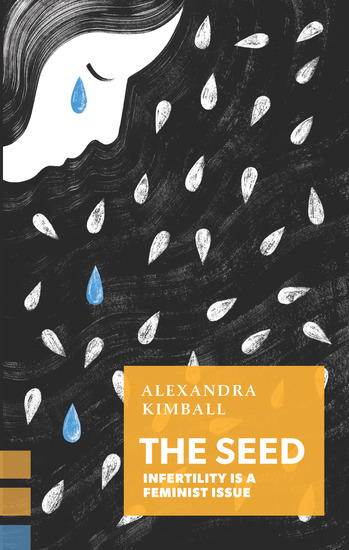
  • The Seed - cover

    The Seed

    Alexandra Kimball

    • 0
    • 0
    • 0
    Notes on desire, reproduction, and grief, and how feminism doesn't support women struggling to have children 
       
    In pop culture as much as in policy advocacy, the feminist movement has historically left infertile women out in the cold. This book traverses the chilly landscape of miscarriage, and the particular grief that accompanies the longing to make a family. Framed by her own desire for a child, journalist Alexandra Kimball brilliantly reveals the pain and loneliness of infertility, especially as a lifelong feminist. Her experience of online infertility support groups - where women gather in forums to discuss IVF, surrogacy, and isolation - leaves her longing for a real life community of women working to break down the stigma of infertility.
       
    In the tradition of Eula Biss's On Immunity and Barbara Ehrenreich's Bright-sided, Kimball marries perceptive analysis with deep reportage - her findings show the lie behind the prevailing, and at times paradoxical, cultural attitudes regarding women's right to actively choose to have children. Braiding together feminist history, memoir, and reporting from the front lines of the battle for reproductive rights and technology, The Seed plants in readers the desire for a world where no woman is made to feel that her biology is her destiny.
    Mostra libro
  • We Become What We Normalize - What We Owe Each Other in Worlds That Demand Our Silence - cover

    We Become What We Normalize -...

    David Dark

    • 0
    • 0
    • 0
    From one of the most respected thinkers and public intellectuals of our day comes a book that is both a cultural critique of the state of our country and a robust summons to resist complicity. As we move through the world, we constantly weigh our conscience against what David Dark calls "deferential fear"—going along just to get along, especially in relation to our cultural, political, and religious conversations. Dark reveals our compromised reality: the host of hidden structures and tacit social arrangements that draw us away from ourselves and threaten to turn us slowly into what we decry in others. 


    We Become What We Normalize counsels a creative, slow, and artful response to the economy of reaction, hurry, shaming, and fearmongering. Dark offers a deep analysis of the ways our conceptions of ourselves and our use of technology often lead us away from what we believe, reinforcing the false narrative that we must humiliate others in order to survive. "I suspect we become what we sit still for, what we play along with, and what we abide in our attempts to access more perceived power and more alleged influence," Dark writes. We Become What We Normalize calls for a new kind of struggle, ethic, witness, and spirit that helps us step away from the infinite loop of normalizing harm into effecting true change for ourselves and the worlds we inhabit.
    Mostra libro