Unisciti a noi in un viaggio nel mondo dei libri!
Aggiungi questo libro allo scaffale
Grey
Scrivi un nuovo commento Default profile 50px
Grey
Iscriviti per leggere l'intero libro o leggi le prime pagine gratuitamente!
All characters reduced
Adopting a Pet- The Ultimate Guide to Finding Your Furry Friend - cover

Adopting a Pet- The Ultimate Guide to Finding Your Furry Friend

Aurora Brooks

Casa editrice: Shuttle Systems

  • 0
  • 0
  • 0

Sinossi

Making a Difference: How to Support Adoption EffortsAre you passionate about making a positive impact in the lives of children and families? If so, ""Making a Difference: How to Support Adoption Efforts"" is the perfect guide for you. This short read book provides valuable insights and practical tips on how you can contribute to adoption efforts and help create a better future for children in need.In ""Making a Difference: How to Support Adoption Efforts,"" you will find a comprehensive table of contents that covers various aspects of supporting adoption. The book begins with a section on raising awareness, highlighting the importance of spreading the word about adoption and its benefits. It then delves into volunteering at adoption centers, where you can offer your time and skills to assist in various tasks.Assisting with administrative tasks is another crucial way to support adoption efforts, and this book provides guidance on how you can contribute in this area. Additionally, it explores the concept of organizing adoption drives, which can help connect potential adoptive parents with children who are in need of a loving home.Becoming a foster parent is a significant commitment, and ""Making a Difference: How to Support Adoption Efforts"" offers insights into the process and the training required. It also emphasizes the importance of creating a safe and nurturing environment for foster children.Supporting adoptive families is another essential aspect covered in this book. It provides information on offering respite care, organizing support groups, and advocating for adoption policies. Writing to legislators and joining advocacy organizations are effective ways to make your voice heard and bring about positive change.The book also highlights the significance of supporting birth parents, whether through providing counseling services or creating support networks. It explores different ways to donate to adoption agencies, including financial contributions and donating goods and services.Furthermore, ""Making a Difference: How to Support Adoption Efforts"" emphasizes the importance of post-adoption services and offers guidance on providing counseling for adopted children and offering parenting workshops.To inspire and encourage others, the book suggests sharing personal adoption stories and highlighting success stories. It also includes a section of frequently asked questions to address any queries or concerns readers may have.If you are ready to make a difference in the lives of children and families, ""Making a Difference: How to Support Adoption Efforts"" is the ultimate guide for you. Get your copy today and start your journey towards becoming a champion for adoption. Have questions or comments? Reach out to us and let us know. Plus, as a bonus, youThis title is a short read. A Short Read is a type of book that is designed to be read in one quick sitting.These no fluff books are perfect for people who want an overview about a subject in a short period of time.
Disponibile da: 12/09/2023.
Lunghezza di stampa: 31 pagine.

Altri libri che potrebbero interessarti

  • Universal Declaration of Human Rights - cover

    Universal Declaration of Human...

    Eleanor Roosevelt

    • 0
    • 0
    • 0
    The Universal Declaration of Human Rights (UDHR) is a landmark document in the history of human rights, and Eleanor Roosevelt played a significant role in its development. The UDHR was adopted by the United Nations General Assembly on December 10, 1948, in Paris. It was drafted by representatives from different legal and cultural backgrounds, including Eleanor Roosevelt, who chaired the United Nations Commission on Human Rights.Eleanor Roosevelt, the widow of President Franklin D. Roosevelt, was a key figure in the drafting process. She played an instrumental role in promoting and advocating for the declaration. Her diplomatic skills and commitment to human rights made her an influential force in the commission.The Universal Declaration of Human Rights consists of 30 articles that outline fundamental human rights and freedoms to be universally protected. It covers a wide range of rights, including civil, political, economic, social, and cultural rights. The UDHR has served as a foundational document for the development of subsequent international human rights treaties and declarations.Eleanor Roosevelt's contributions to the drafting and promotion of the UDHR are widely acknowledged. Her efforts in championing human rights continued beyond the adoption of the declaration, and she remains a prominent figure in the history of human rights advocacy.
    Mostra libro
  • Civil Wars of the Late Roman Republic The: The History of the Conflicts that Made Sulla and Caesar the Dictators of Rome - cover

    Civil Wars of the Late Roman...

    Editors Charles River

    • 0
    • 0
    • 0
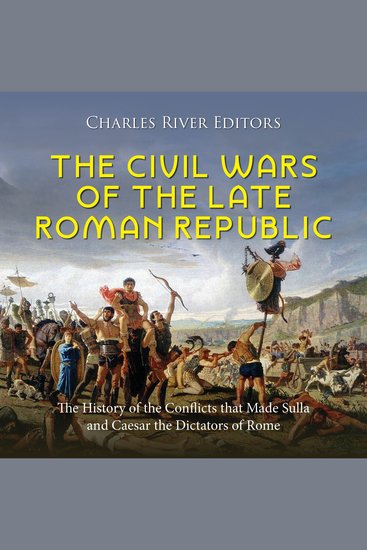
    Julius Caesar is still remembered for winning a civil war and helping bring about the end of the Roman Republic, leaving a line of emperors in its place, but it’s quite possible that none of what Caesar did would’ve happened without the template for such actions being set 40 years earlier. At the time, when Caesar was in his teens, war was being waged both on the Italian peninsula and abroad, with domestic politics pitting the conservative, aristocratic optimates against the populist, reformist populares, and this tension ultimately escalated into an all-out war. One of the leading populares was Caesar’s uncle, Gaius Marius, a military visionary who had restructured the legions and extended the privileges of land ownership and citizenship to legionaries on condition of successful completion of a fixed term of service. In the late 2nd century B.C., Marius had waged a successful campaign against several Germanic tribes, and after earning eternal fame in the Eternal City, Marius was appointed a consul several times. In 88 B.C., he entered into conflict with his erstwhile protégé, the optimate Sulla, over command of the army to be dispatched against Mithridates VI of Pontus, a long-time enemy of Rome and its Greek allies.   
    Ironically, Marius’s reforms had made the legions fiercely loyal to their individual generals rather than the state, which allowed Sulla to march his army against Rome and force Marius into exile. With that, Rome’s first civil war was officially underway, but Sulla’s triumph proved short-lived. Just as Sulla departed for a campaign, Marius returned at the head of a scratch army of veterans and mercenaries, taking over the city and purging it of Sulla’s optimate supporters, and though Marius died in 86 B.C., his party remained in power. 
    Mostra libro
  • Zulu Kingdom - Shaka Zulu's Military Genius and the Rise of a Warrior Nation - cover

    Zulu Kingdom - Shaka Zulu's...

    Rolf Hedger

    • 0
    • 0
    • 0
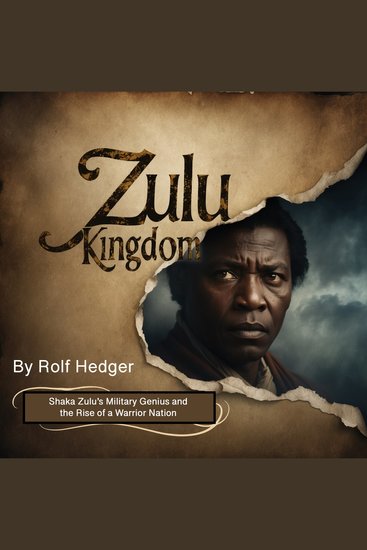
    Shaka Zulu was born in 1787 to Senzangakhona, a minor chief of the Zulu clan, and Nandi, a woman of the Langeni people. His birth was unconventional and shrouded in controversy. As a child born out of wedlock, Shaka and his mother faced rejection and humiliation from Senzangakhona’s family, leading to their exile from the Zulu kingdom. They found refuge among the Langeni and later with the Mthethwa, a powerful kingdom under the leadership of Chief Dingiswayo. These early experiences of hardship, resilience, and survival shaped Shaka’s character, instilling in him a determination to rise above adversity. 
    Growing up, Shaka displayed remarkable physical strength, intelligence, and leadership abilities. Among the Mthethwa, he trained as a warrior under Dingiswayo’s command, where he was exposed to innovative military tactics that later influenced his own strategies. He quickly gained recognition for his bravery and strategic mind, earning a place of prominence within the army. It was during this period that he began developing ideas to revolutionize warfare, questioning the effectiveness of traditional long-range throwing spears and loose battle formations. 
    The political landscape of the time was volatile. Various Nguni-speaking clans, including the Zulu, were engaged in constant skirmishes for power and resources. The Mthethwa, under Dingiswayo, sought to unify smaller groups to strengthen their influence against rival factions like the Ndwandwe, led by Zwide. Shaka’s abilities as a warrior and leader caught Dingiswayo’s attention, and he became a favored protégé. This mentorship provided Shaka with the opportunity to refine his tactical skills and forge alliances that would later aid his own rise to power.
    Mostra libro
  • Troubled by Faith - Insanity and the Supernatural in the Age of the Asylum - cover

    Troubled by Faith - Insanity and...

    Owen Davis

    • 0
    • 0
    • 0
    The birth of psychiatry in the early nineteenth-century fundamentally changed how madness was categorized and understood. A century on, their conceptions of mental illness continue to influence our views today. Beliefs and behavior were divided up into the pathological and the healthy. The influence of religion and the supernatural became significant measures of insanity in individuals, countries, and cultures. Psychiatrists not only thought they could transform society in the industrial age but also explain the many strange beliefs expressed in the distant past. Troubled by Faith explores these ideas about the supernatural across society through the prism of medical history. It is a story of how people continued to make sense of the world in supernatural terms, and how belief came to be a medical issue. This cannot be done without exploring the lives of those who found themselves in asylums because of their belief in ghosts, witches, angels, devils, and fairies, or because they thought themselves in divine communication or were haunted by modern technology. The beliefs expressed by asylum patients were not just an expression of their individual mental health, but also provide a unique reflection of society at the time—a world still steeped in the ideas and imagery of folklore and faith in a fast-changing world.
    Mostra libro
  • Better Places - Building Stronger Communities With Authenticity and Compassion - cover

    Better Places - Building...

    Robert Rasmussen

    • 0
    • 0
    • 0
    Explore the transformative journey of embracing compassion and authenticity in the workplace with Better Places. This story isn't just a blueprint for conflict resolution; it's a call to action for nurturing the joyous, collective human spirit through words that heal rather than harm.
    Mostra libro
  • The Dust Bowl - America's Great Depression - cover

    The Dust Bowl - America's Great...

    Nova Ashford

    • 0
    • 0
    • 0
    The Dust Bowl was one of the most devastating environmental disasters in American history, affecting the Great Plains during the 1930s. A combination of severe drought, poor agricultural practices, and economic hardship led to massive dust storms, which wiped out crops, destroyed farmland, and caused widespread suffering. The impact of the Dust Bowl was felt not only in the affected regions but throughout the nation, as it brought attention to the fragile relationship between human activity and the environment. 
    The Great Plains, which stretches across parts of Oklahoma, Texas, Kansas, Nebraska, and Colorado, was once a region of rich soil and expansive farmland. As settlers moved westward in the late 19th and early 20th centuries, the area became a major agricultural hub, known for wheat production. However, the rapid expansion of farming techniques, including over-plowing and monoculture farming, had unintended consequences. The deep-rooted grasses that once protected the soil from erosion were removed, leaving the land vulnerable to the forces of nature. 
    In the early 1930s, the region experienced a prolonged drought, which exacerbated the situation. Without the natural protection of grasslands, the dry, cracked soil was easily swept up by strong winds, creating massive dust storms that could last for days. These "black blizzards" blotted out the sun and coated everything in a thick layer of dust, suffocating both people and animals. The economic hardships of the Great Depression, which had already affected the nation, further intensified the crisis, leaving farmers struggling to survive.
    Mostra libro