Unisciti a noi in un viaggio nel mondo dei libri!
Aggiungi questo libro allo scaffale
Grey
Scrivi un nuovo commento Default profile 50px
Grey
Iscriviti per leggere l'intero libro o leggi le prime pagine gratuitamente!
All characters reduced
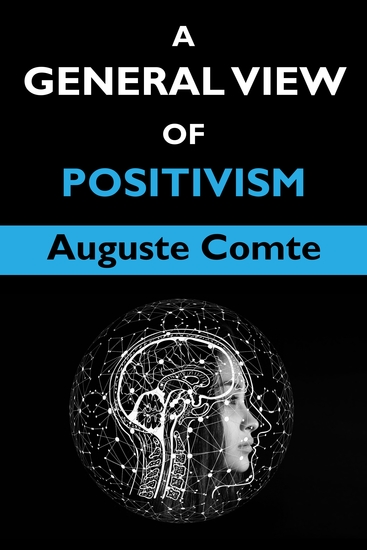
A General View of Positivism - cover

A General View of Positivism

Auguste Comte

Traduttore J. H. Bridges

Casa editrice: CrossReach Publications

  • 0
  • 0
  • 0

Sinossi

Although Positivism has been pretty widely discussed of late, not only by those interested in philosophy and religion, but by the general reader and the public press, perhaps but few of them, whether readers or critics, have exactly grasped the full meaning of it as a system at once of thought and of life. The vast range of the ground it covers and the technical, allusive, and close style of Comte’s writings in the original have made it difficult to master the subject as a whole. It has accordingly been thought that the time has come to add to the “New Universal Library” a translation of The General View of Positivism, i.e., the careful summary of the Positive Polity which Auguste Comte prefixed to the four volumes of his principal work. The translation which was published by Dr. J. H. Bridges in 1865 is at the same time a most accurate version by one of Comte’s earliest followers, and also it is turned in an easy and simpler style, with the references and allusions explained, marginal headings to the paragraphs, and a complete analysis of the contents.Positivism is not simply a system of Philosophy; nor is it simply a new form of Religion; nor is it simply a scheme of social regeneration. It partakes of all of these, and professes to harmonize them under one dominant conception that is equally philosophic and social. “Its primary object,” writes Comte, “is twofold: to generalize our scientific conceptions and to systematize the art of social life.” Accordingly Comte’s ideal embraces the three main elements of which human life consists—Thoughts, Feelings and Actions.Now it is clear that no such comprehensive system was ever before offered to the world. Neither the Gospel nor any known type of religion undertook to give a synthetic grouping of the Sciences. No synthetic scheme of philosophy ever attempted to correlate religion, politics, art, and industry. No system of Socialism, ancient or modern, started with mathematics and led up to an ideal of a human devotion to duty, with a ritual of worship, both public and private.Now Comte’s famous Positive Polity did attempt this gigantic task. And the novelty and extent of such a work explains and accounts for the extreme difficulty met with by readers of the original French, and also for the fascination which it has maintained more than fifty years after the author’s death. It has been talked about, criticized, and even ridiculed, with an ignorance of its true character which can only be excused by the abstract and severe form in which Comte thought right to condense his thoughts. Comte was primarily a mathematician, and neither Descartes nor Newton troubled themselves about “the general reader.” Kepler, they say, declared himself satisfied if he had one convert in a century; and philosophers have seldom had justice done them until some generations have passed. The difficulties presented by the scientific form of Comte’s works have been obviated for English readers by the versions of his English followers, which are at once literal translations, analyses, and elucidations. For the “general reader” nothing could be more serviceable than Bridges’ clear presentation of Comte’s own “general view,” or summary of his system.
Disponibile da: 08/04/2022.
Lunghezza di stampa: 553 pagine.

Altri libri che potrebbero interessarti

  • Where Biology Ends and Bias Begins - Lessons on Belonging from Our DNA - cover

    Where Biology Ends and Bias...

    Shoumita Dasgupta

    • 0
    • 0
    • 0
    A geneticist and internationally recognized anti-racism educator provides a powerful, science-based rebuttal to common fallacies about human difference. 


    Well-meaning physicians, parents, and even scientists today often spread misinformation about what biology can and can't tell us about our bodies, minds, and identities. In this accessible, myth-busting book, geneticist Shoumita Dasgupta draws on the latest science to correct common misconceptions about how much of our social identities are actually based in genetics. 


    Dasgupta weaves together history, current affairs, and cutting-edge science to break down how genetic concepts are misused and how we can approach scientific evidence in a socially responsible way. With a unifying and intersectional approach disentangling biology from bigotry, the book moves beyond race and gender to incorporate categories like sexual orientation, disability, and class. Where Biology Ends and Bias Begins is an invaluable, empowering resource for biologists, geneticists, science educators, and anyone working against bias in their community.
    Mostra libro
  • Mythology and Religion in Ancient Babylon: The History of Babylonian Legends and Religious Practices - cover

    Mythology and Religion in...

    Editors Charles River

    • 0
    • 0
    • 0
    The ancient world was full of many fantastic cities and places, and like today’s major cities, the great ancient cities were hubs of trade, religion, and science. Writing was first invented in ancient cities, and many important scientific discoveries were also made in them, some of which are still used in the modern world. Among the many cities of the ancient world, Rome and Athens may come to mind first, but the city of Babylon in the land of Mesopotamia was already an ancient, venerated city when the others were still inconsequential settlements.  
    	Today, Babylon has become a byword for greed, excess, and licentiousness, mostly due to its mention in the Bible, but a closer examination reveals that Babylon was so much more, and even perhaps the most important city in the ancient world. Ancient Babylon was home to great dynasties that produced some of the world’s most influential leaders, most notably Hammurabi and Nebuchadnezzar, and these rulers invoked their wills on the entire ancient Near East and have been remembered as both progressive and cruel all at the same time. Babylon was also the seat of culture in ancient Mesopotamia and the place where scholars made amazing scientific advances that would not be eclipsed for several centuries. An examination of ancient Babylon demonstrates that it was truly the first great city in the ancient world. 
    	Babylon was also instrumental in the development of the region’s religions, and the religions continue to captivate people for many of the same reasons today’s best known religions and their histories fascinate people. The religion practiced by the ancient Mesopotamians provides a certain mix between the mundane and the surreal, and at the same time aspects of it are both familiar and bizarre to people today. Some find themselves drawn to it based on its preeminent position in religious history as the oldest documented religion in the world.
    Mostra libro
  • The Communist Manifesto - cover

    The Communist Manifesto

    Karl Marx, Friedrich Engels

    • 0
    • 0
    • 0
    Embark on a revolutionary journey into the foundations of modern political thought with "The Communist Manifesto" by Karl Marx and Friedrich Engels, now available as a thought-provoking audiobook. In this seminal work, Marx and Engels articulate their vision for a classless society, where the proletariat rises against capitalist oppression to achieve equality and liberation. 
    Through incisive analysis and impassioned rhetoric, "The Communist Manifesto" critiques the inequalities inherent in the capitalist system and calls for collective action to overthrow the bourgeoisie and establish a society based on cooperation and solidarity. As listeners delve into the pages of this historic document, they'll confront timeless questions about power, justice, and the nature of social change. 
    Perfect for students of political science, history, and economics, this audiobook provides a compelling exploration of the forces that shape our world. Whether you're a staunch advocate of socialism or simply curious about its principles, "The Communist Manifesto" offers valuable insights into the complexities of modern society. 
    So, if you're ready to engage with one of the most influential political treatises ever written, start listening to "The Communist Manifesto" today and discover the enduring relevance of Marx and Engels' revolutionary ideas.
    Mostra libro
  • The Forbidden Psychology Mastery Series - (2 Books In 1) The Dark Psychology Lessons That They Were Afraid to Teach You in School - cover

    The Forbidden Psychology Mastery...

    Madison Taylor, Franklin Keen

    • 0
    • 0
    • 0
    "The Forbidden Psychology Mastery Series: The Dark Psychology Lessons They Were Afraid to Teach You About in School" is a compelling two-in-one volume that delves deep into the often overlooked and darker aspects of human psychology. This series masterfully combines the insights of Madison Taylor and Franklin Keen, offering a comprehensive exploration of the clandestine side of the human psyche. 
    Madison Taylor's contribution to this series uncovers the labyrinth of forbidden psychology. It's a foray into the realms of manipulation, mind control, emotional and mental abuse, and the art of deception. Taylor's work elucidates on the nuances of brainwashing, seduction, and the power of understanding and using these dark psychological tools. More than an academic exploration, it is a practical guide, offering profound insights into how these psychological tactics can be used and, importantly, guarded against. 
    Complementing this, Franklin Keen's work delves into the mechanics of manipulation employed by cult leaders, scam artists, and thieves. It is an eye-opening exposition on the strategies used to exploit and deceive, arming readers with the knowledge to protect themselves from such manipulative tactics. From understanding the intricacies of social engineering to the workings of scams and cults, Keen provides a vital guide to the hidden knowledge often kept from public view. 
    Together, these works form "The Forbidden Psychology Mastery Series," a unique and invaluable resource for anyone interested in understanding the darker, often unspoken aspects of human nature. This two-in-one series is an essential read for those seeking to comprehend, navigate, and potentially utilize the complex and shadowy facets of human psychology, offering both defensive and intellectual insights into a world that is rarely discussed in mainstream education.
    Mostra libro
  • Argentina - Historical Roots and Economic Pathways - cover

    Argentina - Historical Roots and...

    Anya Solace

    • 0
    • 0
    • 0
    Argentina’s economic history is deeply intertwined with its political evolution and the social transformations that have shaped its national identity. From its early days as a Spanish colony to its modern-day status as one of the largest economies in Latin America, Argentina’s economic journey reflects both its potential and its vulnerabilities. The development of Argentina’s economy has been marked by periods of prosperity, such as during the late 19th and early 20th centuries, and periods of profound crisis, including the devastating economic collapse of 2001-2002. This chapter introduces the key historical milestones that have influenced the economic landscape of Argentina, providing a foundation for understanding the complex dynamics of its economic structure. 
    The story of Argentina’s economy begins with the indigenous societies that thrived on the land long before European colonization. Spanish colonization, starting in the 16th century, brought profound changes, introducing new economic systems and reshaping local trade practices. Agriculture became the dominant sector under colonial rule, with the Spanish focusing on extracting resources and establishing a trade-based economy that centered on Buenos Aires as a port for export. However, the colonial legacy of resource extraction and the absence of industrialization laid the groundwork for some of Argentina's long-standing economic challenges. 
    Upon gaining independence from Spain in 1816, Argentina faced the daunting task of creating a stable economic framework. The early post-independence years were marked by internal divisions and external conflicts, which stifled economic development. However, by the late 19th century, Argentina began to establish itself as a key global agricultural exporter. The development of railways and ports enabled the country to transport vast quantities of grain, beef, and other commodities to European markets, ushering in a period of unprecedented economic growth.
    Mostra libro
  • Empire of Rags and Bones - Waste and War in Nazi Germany - cover

    Empire of Rags and Bones - Waste...

    Anne Berg

    • 0
    • 0
    • 0
    Paper, kitchen garbage, rubber, hair, fat, rags, and bones—the Nazi empire demanded its population collect anything that could be reused. Citizens conjured up schemes to squeeze value from waste or invent new purposes for defunct or spent material, no matter the cost to people or the environment. As WWII dragged on, rescued loot—much of it waste—clogged transport routes and piled up in warehouses across Europe. 


    Historicizing the much-championed ideal of zero waste, Anne Berg shows that the management of waste was central to the politics of war and to the genesis of genocide in the Nazi Germany. Destruction and recycling were part of an overarching strategy to redress raw material shortages, procure lebensraum, and cleanse the continent of Jews and others considered undesirable. Resource extending schemes obscured the crucial political role played by virtually all German citizens to whom salvaging, scrapping, and recycling were promoted as inherently virtuous and orderly behaviors. Throughout Nazi occupied-Europe, Jews, POWs, concentration camp inmates, and enemy civilians were forced to recycle the loot, discards, and debris of the Nazi race war. In the end, the materials that were fully exploited and the people who had been bled dry were cast aside, buried, burned, or left to rot. Nonetheless, waste reclamation did not have the power to win the war.
    Mostra libro