Unisciti a noi in un viaggio nel mondo dei libri!
Aggiungi questo libro allo scaffale
Grey
Scrivi un nuovo commento Default profile 50px
Grey
Iscriviti per leggere l'intero libro o leggi le prime pagine gratuitamente!
All characters reduced
The Sun Never Sets - A History of British Global Influence - cover

The Sun Never Sets - A History of British Global Influence

Asif Ahmed Srabon

Casa editrice: BookRix

  • 0
  • 0
  • 0

Sinossi

Prepare to be transported through time and across continents with Asif Ahmed Srabon's "The Sun Never Sets: A History of British Global Influence". This richly detailed narrative immerses you in the epic saga of the British Empire, from its modest origins to the pinnacle of power, weaving a captivating tale of triumphs, challenges, and the indelible legacy that shaped our world.
Disponibile da: 20/12/2023.
Lunghezza di stampa: 53 pagine.

Altri libri che potrebbero interessarti

  • Polish for Beginners: Learn Polish in 30 Days the Easy Way - cover

    Polish for Beginners: Learn...

    Lingo Publishing

    • 0
    • 0
    • 0
    Have you ever wanted to learn Polish but haven't found a comprehensive course that is also easy to understand?  
    Perhaps you have a family member from Poland or Polish friends you'd like to converse with. Maybe you've tried online apps and found them burdensome, one-size-fits-all, or just too fast or slow to enjoy. 
    Are you ready to learn this fascinating language, its roots, its evolution, and how it is spoken today? Poised to learn many everyday phrases, greetings, questions, and travel help? Then, you've come to the right place! 
    This book starts at the beginning with the exciting history behind this lovely language. It takes you to its present-day use without boring or overwhelming you on the way! This book provides a step-by-step way to learn beginning Polish – enough to get around and converse, and an excellent start to an intermediate or more graduated course. 
    Are you ready to:Learn one of the few languages only spoken in its own nation?Find out how to get around in Polish cities/towns with ease?Discover Polish literature and other cultural aspects of Poland?Become comfortable around Poles and handle everyday situations with ease?Build an excellent base for progressing to intermediate lessons?Gain confidence in online situations as well as one-on-one personal encounters? 
    With the help of skill-building exercises and plenty of samples of everyday situations, you'll become comfortable with the spoken language and quickly learn this wonderful country's verbal cues and social norms. You'll be taken on a journey that allows you to easily review and assess your progress, only moving on when you are comfortable with what you've learned.   
    Scroll up and click the “add to cart” button, and start your journey to comfortably interacting online and in person in Polish! 
    Mostra libro
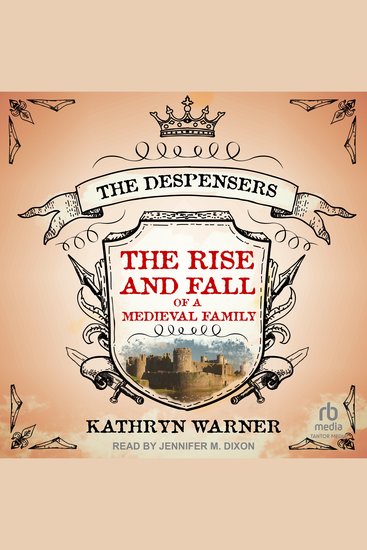
  • The Rise and Fall of a Medieval Family - The Despensers - cover

    The Rise and Fall of a Medieval...

    Kathryn Warner

    • 0
    • 0
    • 0
    The Despensers were a baronial English family who rose to great prominence in the reign of Edward II (1307-27) when Hugh Despenser the Younger became the king's chamberlain, favorite, and perhaps, lover. He and his father Hugh the Elder wielded great influence, and Hugh the Younger's greed and tyranny brought down a king for the first time in English history and almost destroyed his own family. 


    The Rise and Fall of a Medieval Family tells the story of the ups and downs of this fascinating family from the thirteenth to the fifteenth centuries, when three Despenser lords were beheaded and two fell in battle. We begin with Hugh, Chief Justiciar of England, who died rebelling against King Henry III and his son in 1265, and end with Thomas Despenser, summarily beheaded in 1400 after attempting to free a deposed Richard II, and Thomas's posthumous daughter Isabella, a countess twice over and the grandmother of Richard III's queen. 


    From the medieval version of Prime Ministers to the (possible) lovers of monarchs, the aristocratic Despenser family wielded great power in medieval England. Drawing on the popular intrigue and infamy of the Despenser clan, Kathryn Warner's book traces the lives of the most notorious, powerful, and influential members of this patrician family over a 200 year span.
    Mostra libro
  • Allen Dulles: The Life of the CIA’s Most Powerful and Notorious Director - cover

    Allen Dulles: The Life of the...

    Editors Charles River

    • 0
    • 0
    • 0
    The 28-year period from 1933-1961, bracketed on one end by Hitler’s rise to power in Germany and on the other by the very height of the Cold War, was marked by a remarkably stable succession of American presidents. In fact, only three men held office in this period, and that predictability led to a general stability among government agencies. Conversely, the CIA had five different directors in its first 15 years, from 1946-1961, and then nine different directors in the next 20, with four of those directors serving less than a year. But of all the CIA’s directors, none wielded the immense influence or power of Allen Dulles, who, together with his brother, Secretary of State John Foster Dulles, became arguably the two most powerful people in the government after the president.  
    	To this day, Dulles’ eight-year tenure in that office is the longest, and as one of the country’s leading experts in international law, intelligence, and spycraft, he became renowned for his unwavering anti-communist ideology and readiness to take decisive measures to counter what he perceived as a menace to American safety. As such, it would be Dulles who sanctioned many of the CIA’s most notorious operations, including the ousting of Iran's democratically elected government in 1953, spying and experimentation on American citizens, and the disastrous Bay of Pigs. That last episode cost him his job, though he continued to play a role in American political life after President John F. Kennedy forced him out of the CIA in 1961.  
    	By then, however, Dulles had already had an outsized influence on the direction of the country, and to this day his legacy can be felt, even as his reputation continues to be a source of much debate. 
    Mostra libro

  • The Surprised Sprite - cover

    The Surprised Sprite

    Kay Brophy

    • 0
    • 0
    • 0
    Surprise is one of the six core human emotions and can occur in all manner of situations. The Surprised Sprite learns a tough life lesson when her 'bullying' behaviour means her last friend turns against her. To her surprise, she cannot treat people badly and soon learns that kindness and compassion can lead to real friendship and happiness. This is a book for younger readers to help them learn about their emotions and how their behaviour can impact others. Comes complete with reading aids for adults. Beautifully illustrated and written in easy-to-understand rhyme.
    Mostra libro
  • Enslaved Native Americans and the Making Of Colonial South Carolina - cover

    Enslaved Native Americans and...

    D. Andrew Johnson

    • 0
    • 0
    • 0
    A compelling study into the history and lasting influence of enslaved Native people in early South Carolina. 


    In 1708, the governor of South Carolina responded to a request from London to describe the population of the colony. This response included an often-overlooked segment of the population: Native Americans, who made up one-fourth of all enslaved people in the colony. Yet it was not long before these descriptions of enslaved Native people all but disappeared from the archive. 


    In Enslaved Native Americans and the Making of Colonial South Carolina, D. Andrew Johnson argues that Native people were crucial to the development of South Carolina's economy and culture. By meticulously scouring documentary sources and creating a database of over 15,000 mentions of enslaved people, Johnson uses a uniquely interdisciplinary approach to reconsider the history of South Carolina and center the enslaved Native people who were forced to live and work on its plantations. Johnson also employs spatial analysis and examines archaeological evidence to study Native slavery in a plantation context.
    Mostra libro
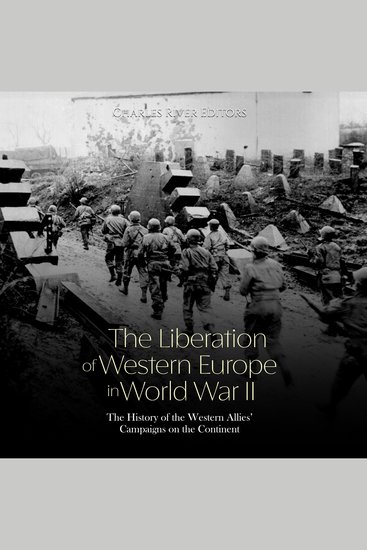
  • Liberation of Western Europe in World War II The: The History of the Western Allies’ Campaigns on the Continent - cover

    Liberation of Western Europe in...

    Editors Charles River

    • 0
    • 0
    • 0
    During World War II, the free world literally hung in the balance, with the Axis and Allies engaging in warfare on an unprecedented scale. Although Hitler’s Nazi Germany had overrun much of the European continent by 1940, the Allies began to reverse the momentum in 1942. By the end of 1943, with Allied forces firmly established in Italy and the Soviets on the verge of turning the tide in Russia, the British and Americans began to plot the invasion that would liberate Europe from the Nazis.  
    	During the first half of 1944, the Americans and British commenced a massive buildup of men and resources in the United Kingdom, while Allied Supreme Commander Dwight D. Eisenhower and military brass planned the details of an enormous and complex amphibious invasion of Europe. Though the Allies used misinformation to try deceiving the Germans, the most obvious place for an invasion was just across the narrow English Channel, and the Germans had built coastal fortifications throughout France to protect against just such an invasion. 
    The invasion across the Channel came in the early morning hours of June 6, 1944. That day, forever known as D-Day, the Allies commenced Operation Overlord by staging the largest and most complex amphibious invasion in human history. After the successful amphibious invasion on D-Day in June 1944, the Allies began racing east toward Germany and liberating France along the way. The Allies had landed along a 50 mile stretch of French coast, and despite suffering 8,000 casualties on D-Day, over 100,000 still began the march across the western portion of the continent.  
    After resisting the German attack, the Allied armies began advancing, and with that, the race to Berlin was truly on. While much has been written of the Battle of the Bulge, Okinawa, Midway, Stalingrad, and many other conflicts of the Second World War, the Battle for Berlin has remained in the shadows for many historians. 
    Mostra libro