Unisciti a noi in un viaggio nel mondo dei libri!
Aggiungi questo libro allo scaffale
Grey
Scrivi un nuovo commento Default profile 50px
Grey
Iscriviti per leggere l'intero libro o leggi le prime pagine gratuitamente!
All characters reduced
Knowledge of the Symbol - cover

Knowledge of the Symbol

Arturo Reghini

Casa editrice: Edizioni Aurora Boreale

  • 0
  • 0
  • 0

Sinossi

Arturo Reghini understood not only the distinction between the authentic Western Tradition and its degenerations and contaminations, but also that between the initiatory and traditional Freemasonry of the origins and the modernistic and pseudo-initiatory Freemasonry of his time, devoted to a generic “progress of humanity” at the expense of the personal/individual initiatory elevation of its members. He was determined to give battle to contribute to a return of the free-masonry institution to its most ancient and authentic origins.Arturo Reghini, as a Freemason and as a Pythagorean, was undoubtedly a master of Symbology. And his essay Knowledge of the Symbol, published for the first time in 1927 in the magazine Ur, still constitutes a milestone for the study of Symbology and its deeper meanings.An authentic initiate cannot fail to know the secrets of Symbology, because symbols are everywhere around us. We see them, we perceive them in every moment of our life, and they speak to us, they are not mute. We only have to listen to their voice and interpret their messages. The studies of Arturo Reghini can be of great help in this great and infinite journey.
Disponibile da: 12/06/2022.
Lunghezza di stampa: 68 pagine.


Altri libri che potrebbero interessarti

  • The Relevance of Emotion Regulation - cover

    The Relevance of Emotion Regulation

    Jim Colajuta

    • 0
    • 0
    • 0
    Daily, we all experience emotions, both happy and negative. Most of us learn how to control, express, and cope with our emotions healthy as youngsters. Emotion regulation is more challenging for some people, sometimes due to terrible childhood events like abuse or trauma, sometimes due to a biological vulnerability to emotional sensitivity, and sometimes due to not being shown or taught how to manage challenging emotions.We can learn to modify what feeling we experience, how intense it is when we have it, and how we react to it since emotions are not absolute and everlasting. Emotion regulation promotes psychological well-being and aids in the management of bad life events and stress.There are various advantages to having better emotion regulation strategies to handle your emotions. Individuals who exercise emotional regulation are more robust and manage better with life's stresses. They have more effective coping mechanisms and are more tolerant of stress. Emotion regulation is a protective factor against anxiety and depressive symptoms. Furthermore, children who can control their emotions have greater flexibility in their thinking and higher focus, impulse control, and problem-solving abilities. These advantages cascade, resulting in more self-assurance, emotional well-being, and general satisfaction.
    Mostra libro
  • Stories on lord Shiva series-15 - From various sources of Shiva Purana - cover

    Stories on lord Shiva series-15...

    Anusha HS

    • 0
    • 0
    • 0
    Lord shiva is adi and he is only the anthya. He is the sole reason for the happenings in both the movable and immovable worlds. Therefore, it is said that not even a spring of grass will move without his permission. He is the one who has given life to all the creatures. He is also the one who takes away the lives of all the creatures. Sadhus sages and aghoraas practice severe penance without minding day and night on Lord Shiva.
    Mostra libro
  • Habit Forming - Drug Addiction in America 1776-1914 - cover

    Habit Forming - Drug Addiction...

    Elizabeth Kelly Gray

    • 0
    • 0
    • 0
    Habitual drug use in the United States is at least as old as the nation itself. Habit Forming traces the history of unregulated drug use and dependency before 1914, when the Harrison Narcotic Tax Act limited sales of opiates and cocaine under US law. Many Americans used opiates and other drugs medically and became addicted. Some tried Hasheesh Candy, injected morphine, or visited opium dens, but neither use nor addiction was linked to crime, due to the dearth of restrictive laws. After the Civil War, American presses published extensively about domestic addiction. Later in the nineteenth century, many used cocaine and heroin as medicine. As addiction became a major public health issue, commentators typically sympathized with white, middle-class drug users, while criticizing such use by poor or working-class people and people of color. When habituation was associated with middle-class morphine users, few advocated for restricted drug access. By the 1910s, as use was increasingly associated with poor young men, support for regulations increased. In outlawing users' access to habit-forming drugs at the national level, a public health problem became a larger legal and social problem, one with an enduring influence on American drug laws and their enforcement.
    Mostra libro
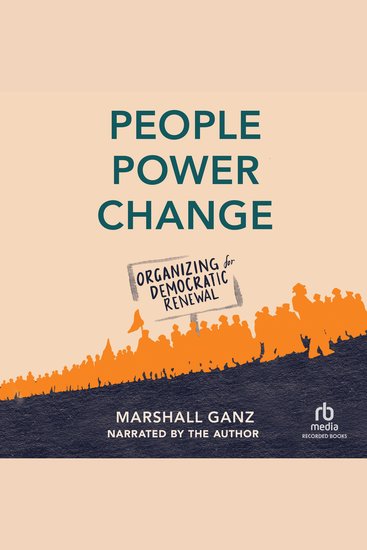
  • People Power Change - Organizing for Democratic Renewal - cover

    People Power Change - Organizing...

    Marshall Ganz

    • 0
    • 0
    • 0
    At a moment in which our everyday practice of democracy has atrophied, and political, economic, and technological forces have weakened our capacity for collective action, People, Power, Change is a once-in-a-generation book for anyone who wants to create real and lasting change. 
     
    Marshall Ganz is one of the world’s leading authorities on democratic leadership, organizing, and action and this book is the culmination of his decades of teaching, research, and practice. In People, Power, Change Ganz offers students, educators, and organizers access to the craft he has learned, adapted, and shared over the last half-century of creating effective collective action. It is not a blueprint, but a road map.  
     
    Ganz explores the values, ideas, and craft core to the practice of organizing and offers an actionable framework for how to actually do it. He focuses the book on the creation and substance of relationships, the fuel of values and narrative, the resources and power of strategy, the necessity of structure, and the accountability of action. Across these five organizing practices, Ganz weaves in his personal experiences from a lifetime of organizing in iconic social movements and campaigns to illustrate how collective action actually works and to build the practices and skills that must be developed to do it with intention and with success. 
     
    “If there was ever a moment when this message needed to be heard, this is it! Read it, and then get to work!”—Bill McKibben, founder of 350.org and Third Act 
     
    This audiobook contains a supplemental PDF.
    Mostra libro
  • Unbelievable True Facts From Across The Globe - A Clever Compendium of Incredible True Facts Weird and Random World History Hilarious Anecdotes and Crazy Things You Didn't Know - cover

    Unbelievable True Facts From...

    Owen Janssen

    • 0
    • 0
    • 0
    Did you know a Cow-Bison hybrid is called a Beefalo? Did you know that a U.S. Navy ship defeated a Japanese submarine during World War II by hurling potatoes at it? Did you know that around 16 million direct descendants of Genghis Khan are alive today? Did you know that people once ate arsenic to improve their skin? Did you know that “Running Amok” is a medically recognized mental condition? 
    ………………. 
    Bored at work and dreaming of something fun and engaging to pass the time? 
    Planning a vacation and looking for the ultimate travel trivia book or road trip reader? 
    Want to crush your opponents at the next trivia games night? 
    Or perhaps you are looking for the perfect gift book for mum, dad, kids, or a friend/family member of any age group? 
    Whatever the reason, Unbelievable True Facts From Across The Globe has it all - and even more! 
    Discover the reality behind those things you have always wondered about and learn crazy things you didn't know and won’t believe! 
    Find incredible trivia and fun facts on a variety of topics you can whip out in any conversation and amaze and entertain your loved ones. Satisfy your curious mind and share the pleasure of reading this compilation of jaw-dropping facts and funny true stories for hours and hours with friends and family, leaving them so intrigued they will Google the information to separate fact from fiction. 
    Unbelievable True Facts From Across The Globe is the most bewildering collection of unbelievable true stories and fascinating facts that will leave you astonished, baffled, and will change your perception of the world you live in.
    Mostra libro
  • Great Gatsby The: The Original 1925 Edition - cover

    Great Gatsby The: The Original...

    F. Scott Fitzgerald

    • 0
    • 0
    • 0
    The Great Gatsby is a 1925 novel by American writer F. Scott Fitzgerald. Set in the Jazz Age on Long Island, near New York City, the novel depicts first-person narrator Nick Carraway's interactions with mysterious millionaire Jay Gatsby and Gatsby's obsession to reunite with his former lover, Daisy Buchanan. 
    The novel was inspired by a youthful romance Fitzgerald had with socialite Ginevra King, and the riotous parties he attended on Long Island's North Shore in 1922. Following a move to the French Riviera, Fitzgerald completed a rough draft of the novel in 1924. He submitted it to editor Maxwell Perkins, who persuaded Fitzgerald to revise the work over the following winter. After making revisions, Fitzgerald was satisfied with the text, but remained ambivalent about the book's title and considered several alternatives. Painter Francis Cugat's cover art greatly impressed Fitzgerald, and he incorporated aspects of it into the novel. 
    After its publication by Scribner's in April 1925, The Great Gatsby received generally favorable reviews, though some literary critics believed it did not equal Fitzgerald's previous efforts. Compared to his earlier novels, Gatsby was a commercial disappointment, selling fewer than 20,000 copies by October, and Fitzgerald's hopes of a monetary windfall from the novel were unrealized. When the author died in 1940, he believed himself to be a failure and his work forgotten.
    Mostra libro