Unisciti a noi in un viaggio nel mondo dei libri!
Aggiungi questo libro allo scaffale
Grey
Scrivi un nuovo commento Default profile 50px
Grey
Iscriviti per leggere l'intero libro o leggi le prime pagine gratuitamente!
All characters reduced
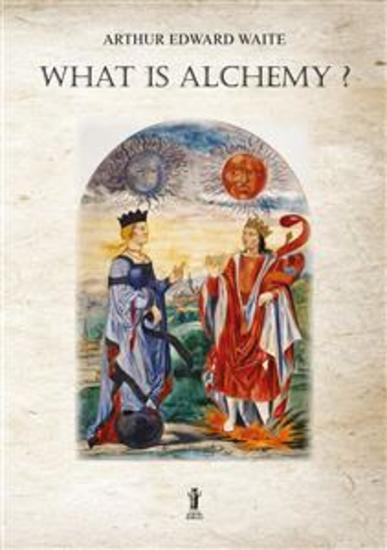
What is Alchemy? - cover

What is Alchemy?

Arthur Edward Waite

Casa editrice: Edizioni Aurora Boreale

  • 0
  • 0
  • 0

Sinossi

The exaltation of the base nature in man, by the development of his latent powers; the purification, conversion, and transmutation of man; the achievement of a hypostatic union of man with God. Not only was all this the concealed aim of Alchemy, but the process by which this union was effected, veiled under the symbolism of chemistry, is the process with which the literature is concerned, which process also is alone described by all veritable adepts. The man who by proper study and contemplation, united to an appropriate interior attitude, with a corresponding conduct on the part of the exterior personality, attains a correct interpretation of Hermetic symbolism, will, in doing so, be put in possession of the secret of divine reunion, and will, so far as the requisite knowledge is concerned, be in a position to encompass the great work of the Mystics. The power which operates in the transmutation of metals alchemically is, in the main, a psychic power. That is to say, a man who has passed a certain point in his spiritual development, after the mode of the Mystics, has a knowledge and control of physical forces which are not in the possession of ordinary humanity.
Disponibile da: 19/04/2022.
Lunghezza di stampa: 76 pagine.
Altri libri che potrebbero interessarti

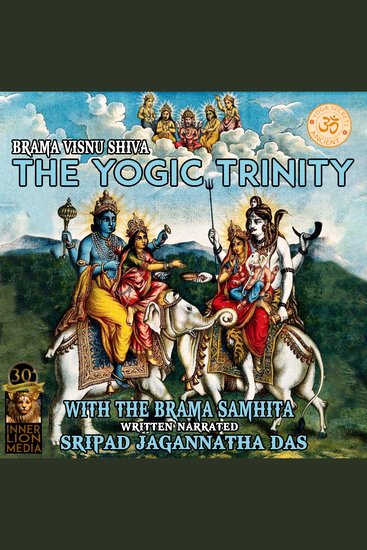
  • Brahma Vishnu Shiva - The Yogic Trinity With The Brama Samhita - cover

    Brahma Vishnu Shiva - The Yogic...

    Sripad Jaganantha Das

    • 0
    • 0
    • 0
    Brahma is the controller of nature in the mode of passion; he is the engineer who creates the universe. Every universe has its Brahma, who appears as the first created being in it. Although Brahma is usually in the category of the jiva soul, he is designated an avatar (incarnation) of Krishna because he is especially empowered with Krishna’s own creative potency. Using the ingredients furnished by Krishna and following Krishna’s blueprints, Brahma constructs the material universe, and then he begets the offspring, called Prajapatis, whose descendants populate all the planets. 
     
    Vishnu, who controls nature in the mode of goodness and sustains the creation, is directly the Supreme Lord. In the spiritual kingdom of God, where everything is everlasting, the quality of goodness exists without either passion or ignorance. Therefore it is appropriate that Vishnu personally controls this quality even in the material world, where it becomes bracketed by ignorance and passion. 
      
    Shiva, the lord of the mode of ignorance, devastates the universe at the end by his wild, all-annihilating dance. Shiva is a personal expansion of Krishna, not a jiva. Yet, because he comes into intimate contact with the quality of ignorance and with matter (which is innately ignorant), you cannot receive the same spiritual restoration by worshiping him that you do by worshiping Krishna or Vishnu. Shiva is therefore given his own category, shiva-tattva. Learn all about the sacred trinity of yogic lore. 
     
    The Sri Brama-samhita is a collection of prayers by Brahma at the beginning of material creation after the Supreme Person Krishna gave Brahma a divine vision of the spiritual world. Brama, in his amazement, speaks volumes of divinely inspired praise before beginning his work of creation. Sri Chaitanya Mahaprabhu acquired the Fifth Chapter of the Brama-Samhita from the Adi-Keshava temple in South India. 
    Mostra libro
  • Shattering Inequities - Real-World Wisdom for School and District Leaders - cover

    Shattering Inequities -...

    Robin Avelear La Salle, Ruth S....

    • 0
    • 0
    • 0
    For education leaders who believe that all students deserve the premium education that only some currently experience, Shattering Inequities: Real-World Wisdom for School and District Leaders shows how your leadership can provide equitable outcomes for our most vulnerable students. Chapters include examples of actual equity leaders and leadership lessons as easily retrievable equity hooks—memory cues of complete, complex, and nuanced leadership takeaways. In the throes of educational transformation, the book’s examples provide leaders with practical ways to quickly and effectively infuse substantive thoughtfulness into common equity challenges and inspire equity-driven action to ensure that demographics do not determine destiny.
    Mostra libro
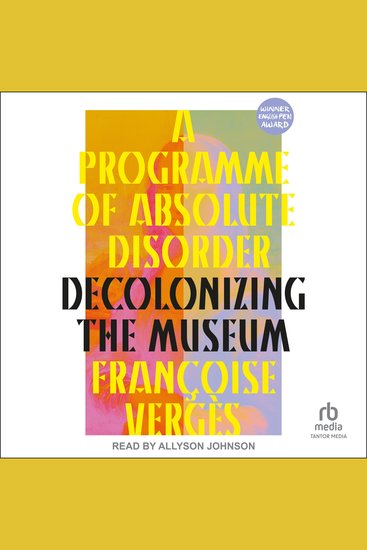
  • A Programme of Absolute Disorder - Decolonizing the Museum - cover

    A Programme of Absolute Disorder...

    Françoise Vergès, Paul Gilroy

    • 0
    • 0
    • 0
    "A complete overhaul of the Western museum tradition" —Publishers Weekly 


    "An impressive critique of the universal museum as complicit in the damages inflicted by colonial power" —Isaac Julien, artist and filmmaker 


    "Should fascinate anyone interested in social justice, post-colonialism and the arts" —Euronews 


    "Powerful and so relevant" —Diacritik 


    The Western museum is a battleground—a terrain of ideological, political, and economic contestation. Almost everyone today wants to rethink the museum, but how many have the audacity to question the idea of the universal museum itself? 


    In A Programme of Absolute Disorder, Françoise Vergès puts the museum in its place. Exploring the Louvre's history, she uncovers the context in which the universal museum emerged: as a product of colonialism, and of Europe's self-appointed claim to be the guardian of global heritage. 


    Vergès outlines a radical horizon: to truly decolonize the museum is to implement a "programme of absolute disorder", inventing other ways of apprehending the human and non-human world that nourish collective creativity and bring justice and dignity to the dispossessed.
    Mostra libro
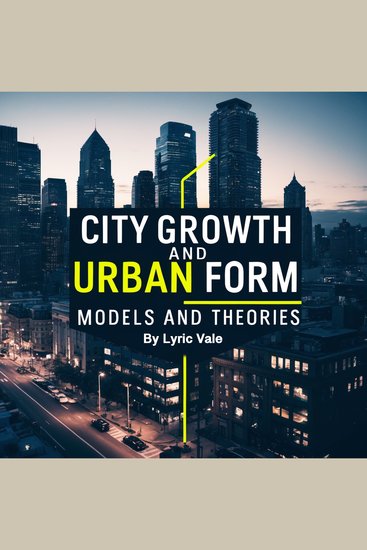
  • City Growth and Urban Form - Models and Theories - cover

    City Growth and Urban Form -...

    Lyric Vale

    • 0
    • 0
    • 0
    Urban growth and development have been central to human progress for centuries, shaping the landscape, economies, and cultures of societies around the world. As the global population continues to urbanize, cities are experiencing rapid expansion and transformation. This urbanization process, which involves the migration of people from rural to urban areas, is driven by a combination of economic, social, and political factors. Understanding the forces behind urban growth is essential for urban planners, policymakers, and scholars who aim to navigate the challenges and opportunities that come with it. 
    The rise of cities is closely linked to the development of agriculture, trade, and industry. In early history, cities were established as centers of commerce and governance, offering opportunities for social, political, and economic advancement. With the Industrial Revolution, cities became hubs of production, attracting large numbers of people seeking employment and better living conditions. This period marked a significant shift from agrarian economies to industrial economies, fueling the growth of urban centers across Europe and North America. 
    In the modern era, urbanization has reached unprecedented levels, with more than half of the world’s population now residing in urban areas. The growth of cities is not limited to developed countries but is also occurring rapidly in the developing world, particularly in regions of Asia, Africa, and Latin America. This has led to the expansion of megacities—urban areas with populations exceeding 10 million people—while smaller cities also experience considerable growth. The factors driving this global urbanization include the pursuit of better economic opportunities, access to education and healthcare, and the promise of improved living standards.
    Mostra libro
  • Subterranean Secrets - Unveiling the Restricted Underworld Beneath the City of Light - cover

    Subterranean Secrets - Unveiling...

    John Harpoon

    • 0
    • 0
    • 0
    Paris, often known as the "City of Light," is renowned for its iconic landmarks, romantic ambiance, and vibrant culture. Yet, beneath its grand boulevards and charming streets, lies an entirely different world—an underground labyrinth that has shaped the city in ways few know or understand. From ancient Roman origins to the modern-day metro system, Paris’s subterranean spaces are a testament to the ingenuity, mystery, and resilience of the city. 
    The underground world of Paris is not merely a collection of tunnels and chambers; it is a complex network that has served multiple purposes throughout the ages. Some of these spaces were created for practical reasons—such as the quarries that provided building materials for the city's growing skyline—while others evolved into places of mystique and darkness, such as the famous Catacombs, now home to the remains of millions. What began as a means of resource extraction gradually became a vault of history, culture, and secrets. 
    This book delves into the hidden depths beneath Paris’s streets, exploring the lesser-known aspects of the city's subterranean heritage. It examines the origins of these tunnels, from the Romans who first began to carve through the limestone to the workers who later expanded them into extensive catacombs. It also explores the multifaceted role these spaces have played throughout history: as a refuge during times of war, as a setting for revolutionary movements, and as a sanctuary for those who choose to live outside the city's mainstream society.
    Mostra libro
  • Habit Forming - Drug Addiction in America 1776-1914 - cover

    Habit Forming - Drug Addiction...

    Elizabeth Kelly Gray

    • 0
    • 0
    • 0
    Habitual drug use in the United States is at least as old as the nation itself. Habit Forming traces the history of unregulated drug use and dependency before 1914, when the Harrison Narcotic Tax Act limited sales of opiates and cocaine under US law. Many Americans used opiates and other drugs medically and became addicted. Some tried Hasheesh Candy, injected morphine, or visited opium dens, but neither use nor addiction was linked to crime, due to the dearth of restrictive laws. After the Civil War, American presses published extensively about domestic addiction. Later in the nineteenth century, many used cocaine and heroin as medicine. As addiction became a major public health issue, commentators typically sympathized with white, middle-class drug users, while criticizing such use by poor or working-class people and people of color. When habituation was associated with middle-class morphine users, few advocated for restricted drug access. By the 1910s, as use was increasingly associated with poor young men, support for regulations increased. In outlawing users' access to habit-forming drugs at the national level, a public health problem became a larger legal and social problem, one with an enduring influence on American drug laws and their enforcement.
    Mostra libro