Unisciti a noi in un viaggio nel mondo dei libri!
Aggiungi questo libro allo scaffale
Grey
Scrivi un nuovo commento Default profile 50px
Grey
Iscriviti per leggere l'intero libro o leggi le prime pagine gratuitamente!
All characters reduced
The Crime of the Congo - Enriched edition - cover

The Crime of the Congo - Enriched edition

Arthur Conan Doyle

Casa editrice: DigiCat

  • 0
  • 0
  • 0

Sinossi

In "The Crime of the Congo," Arthur Conan Doyle presents a powerful and impassioned critique of the brutal exploitation and atrocities perpetrated during King Leopold II's rule over the Congo Free State. Employing a journalistic style infused with a moral urgency, Doyle blends vivid narrative with meticulous documentation, allowing readers to grasp the chilling reality of colonial violence. The book emerges in the context of early 20th-century imperialism and humanitarian movements, urging global awareness and accountability for the Congo's plight. Doyle's compelling arguments highlight the intersection of ethics and empire, making a significant literary contribution to the ongoing discourse surrounding colonialism and human rights. Arthur Conan Doyle, best known for his creation of Sherlock Holmes, was a man of diverse interests and deep humanitarian convictions. His exposure to the struggles of the Congolese people arose from a growing concern regarding moral responsibility and social justice. Witnessing the impact of imperialism, Doyle felt compelled to leverage his platform as a prominent author to shine a light on the suffering inflicted upon innocent populations, showcasing his evolution from a writer of fiction to one of a social commentator. For readers interested in historical injustices, colonial criticism, or the role of literature in advocacy, "The Crime of the Congo" is an essential read. This book not only chronicles a dark chapter in history but also serves as a poignant reminder of the enduring human spirit and the necessity for accountability. Doyle's incisive critique resonates profoundly in contemporary discussions on ethical governance and global responsibility.

In this enriched edition, we have carefully created added value for your reading experience:
- A succinct Introduction situates the work's timeless appeal and themes.
- The Synopsis outlines the central plot, highlighting key developments without spoiling critical twists.
- A detailed Historical Context immerses you in the era's events and influences that shaped the writing.
- An Author Biography reveals milestones in the author's life, illuminating the personal insights behind the text.
- A thorough Analysis dissects symbols, motifs, and character arcs to unearth underlying meanings.
- Reflection questions prompt you to engage personally with the work's messages, connecting them to modern life.
- Hand‐picked Memorable Quotes shine a spotlight on moments of literary brilliance.
- Interactive footnotes clarify unusual references, historical allusions, and archaic phrases for an effortless, more informed read.
Disponibile da: 20/07/2022.
Lunghezza di stampa: 129 pagine.


Altri libri che potrebbero interessarti

  • Rebel Educator - cover

    Rebel Educator

    Tanya Sheckley

    • 0
    • 0
    • 0
    As a caring, dedicated teacher, parent, or educational professional, are you feeling more and more frustrated by the confines of today’s educational environment?  Rebel Educator takes a tough, honest look at our modern educational system while providing actionable insights and ideas to fill the classroom with imagination and curiosity. Anyone who works with children will feel the possibilities and excitement as they learn how to shift their approach—and the mindset of their students—from traditional memorization to active inquiry, problem-solving, and collaboration through interdisciplinary, project-based learning.Grounded in neuroscience yet presented without academic jargon, making it inviting and accessible to parents and teachers alike, Rebel Educator makes a strong, compelling argument for a new educational model for our children—one that teaches them to enjoy learning, bolsters their confidence, and prepares them with the teamwork skills that are vital to long-term life success.
    Mostra libro
  • Telekinesis: A Guide to Moving Objects and Psychic Energy Manipulation for Beginners - cover

    Telekinesis: A Guide to Moving...

    Mari Silva

    • 0
    • 0
    • 0
    Understand everything there is to know about the power of psychic energy and telekinesis.  
    Have you ever been intrigued by the power of telekinesis? 
    Do you strongly believe in what it is and what it can do?  
    Do you think you have what it takes to awaken this inherent power?  
    If that is the case, this is just the audiobook for you! With the help of this well-crafted and highly informative audiobook, uncover all the secrets associated with manipulating psychic energy and using it to move objects.  
    With this audiobook, you will:Learn the basics of telekinesis, including its origin and historyDiscover just how telekinesis worksLearn all about telekinesis in Hinduism and how it is viewed in the scientific worldMaster the fundamentals of telekinesisDiscover the importance of believing in yourself when planning to learn and master telekinesisLearn all about meditation, its benefits, and its role in practicing telekinesisMaster different breathing techniques and discover their significance in the practice of telekinesisMaster preparing for telekinesis practice through meditation and visualizationMaster various meditation and visualization exercises you can use to hone your telekinetic powersMaster various exercises to improve your concentrationDiscover what a psi ball and a psi wheel are and how you can use themLearn additional telekinesis exercises using different objects, including a candle’s flame, pendulum, pen, and a bottle 
    This audiobook will leave a positive impression on you, inspiring you to unravel your inherent powers. With easy-to-follow instructions, you can bring yourself closer to your dream of becoming a telekinesis expert.  
    So click the “add to cart” button and experience an enlightening journey like no other! 
    Mostra libro
  • Thinking Historically - A Guide to Statecraft and Strategy - cover

    Thinking Historically - A Guide...

    Francis J. Gavin

    • 0
    • 0
    • 0
    It seems obvious that we should use history to improve policy. If we have a good understanding of the past, it should enable better decisions in the present, especially in the extraordinarily consequential worlds of statecraft and strategy. But how do we gain that knowledge? How should history be used? Sadly, it is rarely done well, and historians and decision-makers seldom interact. But in this remarkable book, Francis J. Gavin explains the many ways historical knowledge can help us understand and navigate the complex, often confusing world around us. Good historical work convincingly captures the challenges and complexities the decisionmaker faces. At its most useful, history is less a narrowly defined field of study than a practice, a mental awareness, a discernment, and a responsiveness to the past and how it unfolded into our present world—a discipline in the best sense of the word. Gavin demonstrates how a historical sensibility helps us to appreciate the unexpected; complicates our assumptions; makes the unfamiliar familiar and the familiar unfamiliar; and requires us, without entirely suspending moral judgment, to try to understand others on their own terms. This book is a powerful argument for thinking historically as a way for listeners to apply wisdom in encountering what is foreign to them.
    Mostra libro
  • The Thirty Years’ War - The Most Destructive Religious War in European History - cover

    The Thirty Years’ War - The Most...

    Kelly Mass

    • 0
    • 0
    • 0
    The Thirty Years' War, a protracted and catastrophic conflict, raged from 1618 to 1648, primarily within the borders of the Holy Roman Empire. Often regarded as one of the most devastating wars in European history, it is estimated that between 4.5 to 8 million people perished as a result of the conflict, with some regions of Germany experiencing population losses exceeding 50%. This war, though often thought of in isolation, was deeply interconnected with several other significant European conflicts, including the Eighty Years' War, the War of the Mantuan Succession, the Franco-Spanish War, and the Portuguese Restoration War. 
    For much of the history of the conflict, historians regarded the Thirty Years' War as a continuation of the religious struggles that had begun during the Reformation and were seemingly concluded with the Peace of Augsburg in 1555. The Peace of Augsburg had divided the Holy Roman Empire into Catholic and Lutheran states, but the rapid spread of Protestantism, particularly beyond these established boundaries, steadily eroded Imperial authority in the years that followed. While religion undeniably played a role in sparking the conflict, scholars generally agree that the broader struggle for European supremacy between the Habsburgs of Austria and Spain, and the House of Bourbon in France, fueled the war's escalation and far-reaching impact.
    Mostra libro
  • The Shocking Truth about Cultural Appropriation - cover

    The Shocking Truth about...

    Zoey Fraisers

    • 0
    • 0
    • 0
    Cultural appropriation is the act of taking or borrowing elements of one culture by members of another culture, typically without permission or proper understanding. This often occurs when a dominant culture adopts aspects of a marginalized or minority culture, without recognizing the significance or history behind these cultural symbols, practices, or traditions. While some might argue that cultural exchange is a natural part of globalization, cultural appropriation is controversial because it is frequently associated with power imbalances, exploitation, and the erasure of the identities of those whose culture is being borrowed. 
    At its core, cultural appropriation is not about borrowing something for appreciation or respect, but rather taking something from another culture in a way that is exploitative or disrespectful. For example, wearing traditional garments like a kimono or a Native American headdress as fashion statements, without understanding their cultural importance or context, is often cited as an example of cultural appropriation. These items are not just clothes or accessories; they carry deep meanings and are often tied to spiritual, ceremonial, or political significance. 
    One of the key aspects that distinguishes cultural appropriation from cultural appreciation is power dynamics. The group that appropriates tends to have more social, political, or economic power, while the culture being appropriated is often marginalized. This power imbalance is evident in many cases where elements of minority cultures are commodified and turned into trends or products, while the people from those cultures continue to face oppression, discrimination, and lack of recognition.
    Mostra libro
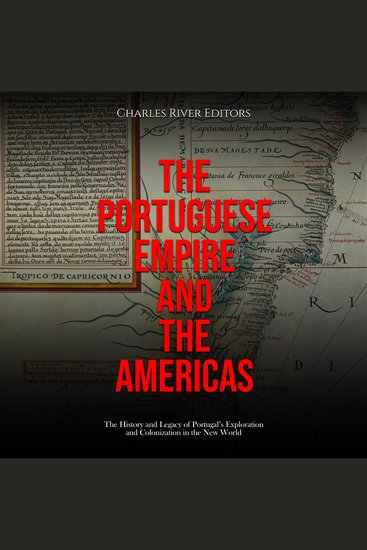
  • Portuguese Empire and the Americas The: The History and Legacy of Portugal’s Exploration and Colonization in the New World - cover

    Portuguese Empire and the...

    Editors Charles River

    • 0
    • 0
    • 0
    By the start of the 15th century, ships were now much larger and able to support long distance travel with a minimum number of crew aboard. With that, the Portuguese started exploring the west coast of Africa and the Atlantic under orders from Prince Henry the Navigator. At this point, Europeans had not yet been capable of navigating completely around Africa since the ships being built were not yet fully capable of being able to sail very far from the coast and navigation in open waters was difficult, but the Portuguese continued pushing down the western African coast looking for ways to bypass the Ottomans and Muslims of Africa who had been making overland trade routes difficult. In 1451, Prince Henry the Navigator helped fund and develop a new type of ship, the caravel, that featured triangular lateen sails and would be able to travel in the open ocean and sail against the wind. In 1488, Bartholomew Diaz rounded the southern tip of Africa, named the Cape of Good Hope by King John of Portugal, and entered the Indian Ocean from the Atlantic.  
    	One explorer, Christopher Columbus, sought funding from the Portuguese to search for a passage to Asia by sailing westwards, but he was rejected. At this time in the late 15th century, Portugal’s domination of the western African sea routes prompted the neighboring Crown of Castile and the Catholic monarchs in modern Spain to search for an alternative route to south and east Asia (termed Indies), so they provided Columbus with the funding he required. Ultimately, Columbus discovered the Americas in 1492, and European settlements would soon follow. At the same time, when it became clear Columbus hadn’t landed in Asia, it was understood by everyone that this was not necessarily the route the Europeans were searching for, the Portuguese continued to send explorers around the world in several directions in an attempt to reach the East Indies. 
    Mostra libro