Junte-se a nós em uma viagem ao mundo dos livros!
Adicionar este livro à prateleira
Grey
Deixe um novo comentário Default profile 50px
Grey
Assine para ler o livro completo ou leia as primeiras páginas de graça!
All characters reduced
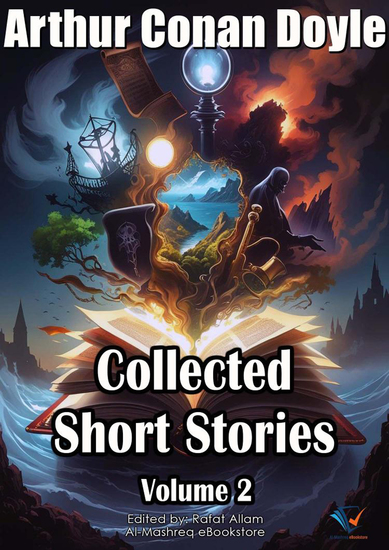
Collected Short Stories Volume 2 - Volume 2 - cover
LER

Collected Short Stories Volume 2 - Volume 2

Arthur Conan Doyle

Editora: Al-Mashreq eBookstore

  • 0
  • 0
  • 0

Sinopse

Collected Short Stories, Volume 2 continues to showcase Arthur Conan Doyle's versatility with another selection of his short fiction. This volume delves deeper into the 1890s, a period where Doyle experimented boldly with storytelling. Readers will find a mix of adventurous exploits and thought-provoking tales. Military and war stories stand alongside medical dramas and tales of science and invention, reflecting Doyle's varied interests. For instance, one story follows a British soldier's daring act in colonial New Zealand, while another, such as "The Surgeon of Gaster Fell," explores a doctor's unsettling experience in a remote moor (a story cited as an example of Doyle's emerging). Volume 2 also includes lighter fare – romantic sketches and witty social commentaries – balancing the collection's tone. Taken together, these stories illustrate Doyle's growing confidence in shorter fiction, blending adventure, mystery, and a touch of moral insight.
Disponível desde: 01/08/2025.
Comprimento de impressão: 320 páginas.

Outros livros que poderiam interessá-lo

  • The Festival - cover

    The Festival

    H. P. Lovecraft

    • 0
    • 0
    • 0
    Christmas with the family takes a dark turn in this chilling short story by the acclaimed author of “The Call of Cthulhu”.Beckoned by his family, a man travels to a snowy, seaside Massachusetts town to observe an ancient festival. His family has long celebrated it since the days when it was forbidden. But when he arrives, he notices something is off about this community . . . little details that just don’t add up. What the man witnesses at his family’s house does little to comfort him. Soon he is drawn into a world unlike any he has known, and its sights will haunt him for the rest of his life . . .
    Ver livro
  • White Trash & Recycled Nightmares - cover

    White Trash & Recycled Nightmares

    Rebecca Rowland

    • 0
    • 0
    • 0
    A workaholic splits his time between home and hotel rooms until an anonymous cryptic message arrives, setting off a wrinkle in the time continuum and slowly shredding his sanity. Elsewhere, a woman's jealousy over her spouse's connection with their only child boils over, leading her to see monsters everywhere except the mirror. University fraternity brothers discover that a cruel prank has dire consequences but the full extent of their punishment is yet to come, while an intrepid hiker explores an abandoned Cold War facility hidden within a Massachusetts mountain only to realize that military secrets aren't the only things buried within. From witches, wendigos, and werecats to sirens, sadists, and serial killers, Rebecca Rowland serves readers a twenty-tale meal of cosmic, creature, and quiet horror in platters heaping with unsettling trepidation. In Rowland's long-awaited follow-up to The Horrors Hiding in Plain Sight, a lighted room provides no safe haven, and in the darkest corner of the basement waits a ravenous dread. The most sinister objects of fear are never truly discarded...just repurposed. Includes a foreword by Mary SanGiovanni.
    Ver livro
  • The Clusterf*ck Collection - cover

    The Clusterf*ck Collection

    Elliot Grey

    • 0
    • 0
    • 0
    The ClusterF*ck Collection is it's namesake. It's a collection of works that have no rhyme or reason. Some poems are about love and some are about healing. Some short stories are about trauma and some excerpts are more horror themed. It's a well rounded approach at giving the world a glimpse into my own. As a neurodivergent, Native American and trans author I could not be more proud to bring these parts of me to more people.
    Ver livro
  • Unfamiliar Ports - cover

    Unfamiliar Ports

    Marc Everitt

    • 0
    • 0
    • 0
    Unfamiliar Ports 
    Step on board for a journey. We’ll find ourselves dropping anchor in new harbours and we’ll see things we haven’t seen before. Destinations that are surprising, and ones that are often dangerous. Along the way, we’ll reconnect with a couple of travellers we might have met elsewhere, and we’ll cross paths with a lot of new faces; not all of whom will prove to be the most congenial company. 
    Nine short stories set in the past, the present and the future.
    Ver livro
  • New Eve and Old Adam - cover

    New Eve and Old Adam

    D H Lawrence

    • 0
    • 0
    • 0
    'New Eve and Old Adam' was written by D H Lawrence in 1912.  The story is largely autobiographical, telling the simple tale of an argument between a husband and wife, reflecting the difficult time Lawrence and his new wife Frieda were having. What was the place of a woman to be in a modern marriage? Lawrence argued that it was the woman's place to submit or unhappiness would ensue at it did in this story. The wife is unable to submit to her husband and the marriage disintegrates.
    Ver livro
  • Twenty-Six Men and a Girl - From their pens to your ears genius in every story - cover

    Twenty-Six Men and a Girl - From...

    Maxim Gorky

    • 0
    • 0
    • 0
    Alexei Maximovich Peshkov was born on 28th March 1868, in Nizhny Novgorod, Russia. 
    Better known as Maxim Gorky he was orphaned at 11 and ran away from home at 12.  At 19 he had already attempted suicide and thereafter travelled, by foot, across the Russian Empire for 5 years. 
    His first book ‘Essays & Stories’ in 1898 was a sensation and so began a long career as an author of short stories, novels and plays.  Gorky saw writing as a moral and political act that would help to change the unjust world around him.  He was an ardent early advocate of the emerging Marxist movement and publicly opposed the Tsarist regime leading several times to his arrest.  
    In 1904 he began his own theatre but the censor banned every play and Gorky was forced to abandon the project. 
    But Gorky was a financially successful author, editor, and playwright and gave monies to political parties as well as for civil rights and social reform.  The brutal shooting of workers, which set in motion the Revolution of 1905, pushed Gorky more decisively toward radical solutions.  
    In 1906 he went to the United States to raise funds for the Bolsheviks. Those experiences including a scandal over travelling with his lover and not his wife deepened his contempt for the ‘bourgeois soul.’ 
    Gorky now moved to Capri in Italy, both for health reasons and to escape the increasingly repressive times in Russia.  
    An amnesty for the 300th anniversary of the Romanov dynasty saw him return to Russia in 1914. His politics remained close to the Bolshevik cause.  But soon, after the 1918 revolution, his essays referred to Lenin as a tyrant for his senseless arrests and repression.  He was soon appealing to the outside world for food aid after the catastrophic crop failure. 
    In October 1921 Gorky returned to Italy, now in Fascist hands, and settled in Sorrento until 1932.  His health worsened with the onset of tuberculosis. 
    He wrote several successful books there but now decided to find an understanding with the communist regime. Stalin invited him home and his return was hailed as a major propaganda victory.  He was decorated with the Order of Lenin, and a province, a park, and various streets re-named in his honour. 
    But he had his faults too.  In 1933, Gorky co-edited a book on the White Sea-Baltic Canal and denied even a single prisoner died during its construction, but thousands had. As well, knowing that some Nazis were homosexual, a phrase was attributed to him that said ‘exterminate all homosexuals and fascism will vanish’.  Although he was himself was quoting another he was decidedly homophobic. 
    With the increase of Stalinist repression in 1935 Gorky was placed under unannounced house arrest. 
    Maxim Gorky died on the 18th June 1936 from pneumonia.  He was 68. 
    Stalin and Molotov were among those who carried Gorky's urn of ashes at his funeral.
    Ver livro