Unisciti a noi in un viaggio nel mondo dei libri!
Aggiungi questo libro allo scaffale
Grey
Scrivi un nuovo commento Default profile 50px
Grey
Iscriviti per leggere l'intero libro o leggi le prime pagine gratuitamente!
All characters reduced
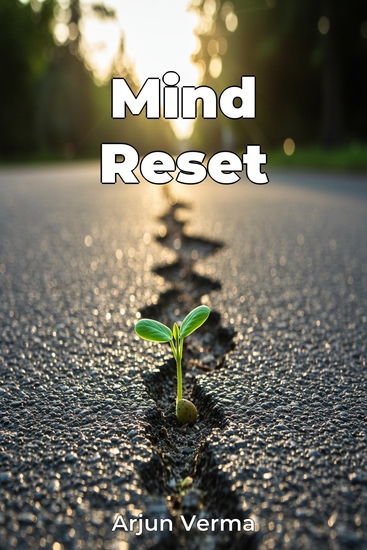
Mind Reset - cover

Mind Reset

Arjun Verma

Traduttore A Ai

Casa editrice: Publifye

  • 0
  • 0
  • 0

Sinossi

"Mind Reset" offers a practical guide to mental wellness, focusing on breaking negative thought patterns and fostering a growth mindset. Grounded in psychology, the book introduces concepts like cognitive restructuring and neuroplasticity, highlighting how the brain can be rewired for positivity. Readers will learn how to challenge negative thoughts and build resilience, understanding that mental wellness is a dynamic process achievable through targeted techniques.

 
The book begins by exploring the impact of negative thinking, drawing from cognitive behavioral therapy and research on stress. It argues that mental wellness can be cultivated through understanding thought patterns and adopting strategies for change. Major sections include exercises for self-compassion, resilience, and goal-setting. 

 
"Mind Reset" uniquely combines scientific rigor with actionable strategies, bridging academic research and everyday life to empower readers on their personal growth journey, ultimately providing a roadmap for lasting happiness.
Disponibile da: 14/03/2025.
Lunghezza di stampa: 113 pagine.
Altri libri che potrebbero interessarti

  • Complex Ptsd Recovery - cover

    Complex Ptsd Recovery

    Brittany Forrester

    • 0
    • 0
    • 0
    Post-traumatic stress disorder (PTSD) is a psychiatric disorder that may occur in people who have experienced or witnessed a traumatic event such as a natural disaster, a severe accident, a terrorist act, war/combat, or rape or who have been threatened with death, sexual violence or severe injury.PTSD can occur in all people of any ethnicity, nationality, culture, and age. PTSD affects approximately 3.5 percent of U.S. adults every year. An estimated one in 11 people will be diagnosed with PTSD in their lifetime. Women are twice as likely as men to have PTSD. People with PTSD have intense, disturbing thoughts and feelings related to their experience that last long after the traumatic event. They may relive the event through flashbacks or nightmares; they may feel sadness, fear, or anger; and they may feel detached or estranged from other people. People with PTSD may avoid situations or people that remind them of the traumatic event, and they may have strong adverse reactions to something as ordinary as a loud noise or an accidental touch.People with a diagnosis of PTSD are defended and insecure about many things in life. It is essential to create a safe place where people can explore and share their experiences and understand why they are experiencing life as they do to begin the healing process in a therapeutic environment. This book may offer much to promote the healing and growth of those affected by complex trauma.
    Mostra libro
  • If We Had No Belief What Would Happen to Us? - Ojai 1949 - Public Talk 3 - cover

    If We Had No Belief What Would...

    Jiddu Krishnamurti

    • 0
    • 0
    • 0
    If we had no belief what would happen to us? - 23 July 1949 
    • Without self-knowledge we cannot go beyond the self-projected illusions of the 
    mind. 
    • It’s only in relationship that one can know oneself as one is. 
    • A mind that is filled with beliefs, dogmas, assertions and quotations is an un 
    creative, repetitive mind. 
    • Can we look at ourselves without beliefs? 
    • A mind that is quiet because it understands fear and understands itself is 
    creative. 
    • Q: Our mind knows only the known. What is it in us that drives us to find the 
    unknown, reality, or God?
    Mostra libro
  • All About Weather - cover

    All About Weather

    Kim Mitzo Thompson, Karen Mitzo...

    • 0
    • 0
    • 0
    Kids will love this playful story about weather words and seasons. Simple sentence structures and repetitive words will encourage young children to fall in love with learning to read.  Kids will enjoy following along word-for-word with the recorded story that features sound effects and professional voices to help children develop vocabulary and improve listening skills.  This reader features adorable art showing diversity to help children form a sense of acceptance and understanding of different races and individual differences.
    Mostra libro
  • A Very British Cult - Rogue Priests and the Abode of Love - cover

    A Very British Cult - Rogue...

    Stuart Flinders

    • 0
    • 0
    • 0
    A secluded country house. A rogue Anglican Priest. Ceremonial sex and mislaid fortunes.
    
    This is the almost-forgotten story of Victorian Britain's strangest religious sect and its wealthy, mostly female, followers who believed they could ascend directly to heaven. Henry James Prince was a rogue Anglican Priest with a flare for the dramatic, and the founder of the Agapemone, or 'Abode of Love'. He also claimed to be the immortal conduit of The Holy Spirit and purportedly engaged in free love and ceremonial sex with his mostly female followers. But Prince's eventual death didn't mark the end of this strange set... he was promptly replaced by another. John Hugh Smyth-Pigott - otherwise known as the Clapton Messiah.
    
    The Abode transformed a sleepy, rural corner of Somerset into one of England's most notorious locations. While the followers shut themselves away and waited patiently for the end of the world, outrage grew - the word 'Agapemone' because a byword for licentiousness or idleness, used by Charles Dickens and Ford Maddox Ford. The reclusive Clapton Messiah became a fixture in the nation's papers, with frenzied efforts to discredit the organisation and undermine its leader. And still the cult grew.
    
    Expertly drawing on primary sources to tell the story of the Agapemonites in details for the first time, Stuart Flinders shines a light on the people drawn to the cult - the forced marriages; the swindled fortunes; the women condemned to asylums; and those who managed to escape from the Abode. It is also the story of two extraordinary men, whose claims of divinity were at the heart of this very British cult.
    Mostra libro
  • Managing a Difficult Spouse in a Godly Way - cover

    Managing a Difficult Spouse in a...

    Dr. Fatima Asapokhai

    • 0
    • 0
    • 0
    Dive into a transformative guide that navigates the complexities of managing challenging relationships through a lens of faith and grace. "Managing a Difficult Spouse in a Godly Way" is an insightful manuscript that delves into the intricacies of dealing with a challenging partner, offering profound wisdom and practical solutions rooted in divine principles. Explore the nuanced behaviors/characteristics that define a difficult spouse. From poor communication and lack of empathy to stubbornness and criticism, uncover the layers that strain relationships and hinder understanding. Discover an array of faith-based strategies to manage challenging relationships with grace and resilience. Embrace humility, gentleness, and patience as cornerstones for fostering constructive communication, while upholding forgiveness and unconditional love as transformative forces. Uncover the divine principles of obedience and responsibility within relationships. Prioritize spiritual growth, mutual respect, and selflessness, laying the groundwork for a harmonious and fulfilling partnership anchored in faith. Tackle sensitive topics like abuse with compassion and practicality. Learn to recognize signs, ensure safety, seek support, and embark on a journey toward healing and recovery, fostering emotional well-being and rebuilding self-worth after leaving an abusive relationship. Witness the transformative journey toward healing, restoration, and wholeness. This manuscript provides a roadmap for emotional recovery, practical steps for rebuilding self-worth, and establishing healthy boundaries for a life rooted in faith and resilience. "Managing a Difficult Spouse in a Godly Way" is a beacon of hope and guidance, offering a profound understanding of navigating challenging relationships while upholding the virtues of faith, compassion, and grace. Embark on a journey of healing and transformation, embracing faith-centered approaches to manage difficult relationships with wisdom and strength.
    Mostra libro
  • Olmec Civilization - The First American Empire and Giant Stone Heads of Mesoamerica - cover

    Olmec Civilization - The First...

    Rolf Hedger

    • 0
    • 0
    • 0
    The Olmec civilization, often regarded as the "Mother Culture" of Mesoamerica, emerged around 1200 BCE in the tropical lowlands of present-day southern Mexico, specifically in the Gulf Coast region. This area, rich in natural resources, served as the cradle for one of the earliest and most influential cultures in the Americas. The Olmec are best known for their monumental stone heads, intricate artwork, and the development of many foundational aspects of Mesoamerican civilization. 
    The origins of the Olmec civilization can be traced back to a combination of environmental factors, agricultural innovations, and the development of social structures. The region’s fertile lands provided an abundant supply of food, particularly maize, which became the cornerstone of Olmec agriculture. The availability of other crops, such as beans, squash, and cassava, further supported the growth of a settled society. The Olmec were skilled farmers, and their ability to adapt to the challenging conditions of the tropical lowlands allowed them to create surplus food, leading to population growth and the emergence of more complex social and political systems. 
    One of the defining features of the Olmec civilization was the rise of their urban centers, most notably San Lorenzo, La Venta, and Tres Zapotes. These cities became hubs of political and religious activity, with powerful rulers who controlled vast territories. The creation of these urban centers marked a shift from small, scattered villages to larger, more centralized societies. The Olmec rulers established authority through both political power and religious influence, often associating themselves with divine figures and acting as intermediaries between the gods and the people. This centralization of power allowed for the coordination of large-scale construction projects, such as the creation of the colossal stone heads and other monumental sculptures.
    Mostra libro