Unisciti a noi in un viaggio nel mondo dei libri!
Aggiungi questo libro allo scaffale
Grey
Scrivi un nuovo commento Default profile 50px
Grey
Iscriviti per leggere l'intero libro o leggi le prime pagine gratuitamente!
All characters reduced
Oroonoko - cover

Oroonoko

Aphra Behn

Casa editrice: The Ebook Emporium

  • 0
  • 0
  • 0

Sinossi

"A man that has all the virtues that can adorn a human mind."

Oroonoko, a powerful African prince and brilliant general, falls deeply in love with the beautiful Imoinda. Their romance is shattered when they are both betrayed and sold into slavery, eventually reuniting on a sugar plantation in the English colony of Surinam. Renamed "Caesar" by his captors, Oroonoko cannot be broken by the chains of his station. Aphra Behn's narrative is a searing, tragic exploration of the "noble savage," the cruelty of the colonial system, and the indomitable spirit of a man born to rule.

A Landmark in Literary History: As one of the earliest examples of the English novel, Oroonoko is a fascinating blend of travelogue, memoir, and epic tragedy. Behn claims the authority of an eyewitness, painting a vivid—and often brutal—picture of life in the 17th-century Caribbean. The novel challenges the moral justifications of slavery by presenting a protagonist who possesses more honor and nobility than his "civilized" Christian masters.

The Tragedy of the Heroic Ideal: The story culminates in a desperate and violent rebellion as Oroonoko seeks to win freedom for his family. It is a profound meditation on the conflict between natural law and man-made systems of oppression. Oroonoko remains a critical text for understanding the origins of the novel form and the long history of social justice in literature.

Witness the strength of a royal heart in chains. Purchase "Oroonoko" today and discover a foundational work of English prose.
Disponibile da: 06/01/2026.
Lunghezza di stampa: 387 pagine.
Altri libri che potrebbero interessarti

  • What Happened to Belén - The Unjust Imprisonment That Sparked a Women’s Rights Movement - cover

    What Happened to Belén - The...

    Ana Elena Correa

    • 0
    • 0
    • 0
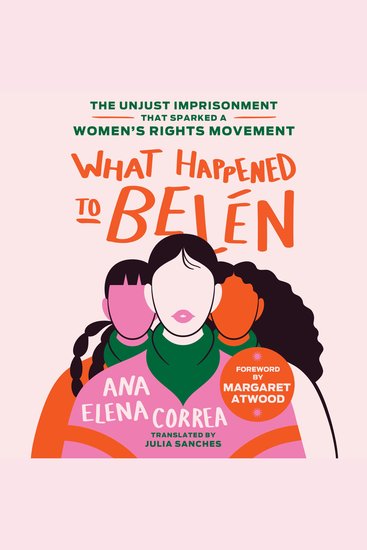
    ""There are many women like Belén whose names we don’t know, but whose stories are just as important. An uplifting chronicle of one woman’s fight for justice.""—Kirkus Reviews (starred review) 
    Foreword by Margaret Atwood 
    The heartbreaking true story of an Argentinian woman imprisoned for having a miscarriage—an injustice that galvanized a feminist movement and became a global rallying cry in the fight for reproductive rights. 
    In 2014, Belén, a twenty-five-year-old woman living in rural Argentina, went to the hospital for a stomachache—and soon found herself in prison. While at the hospital she had a miscarriage—without knowing she was pregnant. Because of the nation’s repressive laws surrounding abortion and reproductive rights, the doctors were forced to report her to the authorities. Despite her protestations, Belén was convicted and sentenced to two years for homicide. 
    Belén’s imprisonment is a glaring example of how women’s health care has become increasingly criminalized, putting the most vulnerable—BIPOC, rural, and low-income—women at greater risk of prosecution. Belén’s cause became the centerpiece of a movement to achieve greater protections for all women. After two failed attempts to clear her name, Belén met feminist lawyer Soledad Deza, who quickly rallied Amnesty International and ignited an international feminist movement around #niunamas—not one more—symbolized by thousands of demonstrators around the globe donning white masks, the same kind of mask Belén wore when leaving prison. The #niunamas movement was instrumental in pressuring Argentine president Alberto Fernández to decriminalize abortion in 2021.  
    In this gripping and personal account of the case and its impact on local law, Ana Correa, one of Argentina’s leading journalists and activists, makes clear that what happened to Belén could happen to any woman—and that we all have the power to raise our collective voices and demand change. 
    Translated by Julia Sanches
    Mostra libro
  • From the Memoirs of Satan - From their pens to your ears genius in every story - cover

    From the Memoirs of Satan - From...

    William Hauff

    • 0
    • 0
    • 0
    The bookshelves of European literature are incredible collections that have gathered together centuries of very talented authors.  From this continent their fame spread and whilst among their number many are now forgotten or neglected their talents endure.  Among them is William Hauff.
    Mostra libro
  • In Affection and Esteem - From their pens to your ears genius in every story - cover

    In Affection and Esteem - From...

    Mary Webb

    • 0
    • 0
    • 0
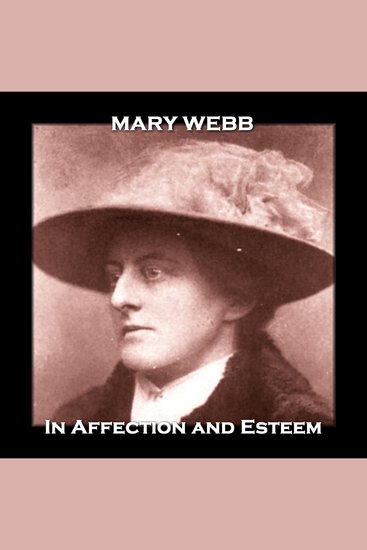
    Mary Gladys Meredith was born on 25th March 1881 at Leighton Lodge in the village of Leighton, near Shrewsbury in Shropshire.  
    Mary was home-schooled by her father before being sent to a finishing school in Southport in 1895. Her longs walks in the countryside helped her develop a heightened sense of observation and description, of both people and places, which later infused both her poetry and prose. 
    When she was 20 she developed symptoms of Graves' disease, a thyroid disorder that caused bulging protuberant eyes and throat goitre. This caused life-long ill health and was a possible contributor to her early death.  
    Mary was first published as a teenager when her brother sent to a local newspaper her poem on a recent rail accident.  Mary, who was in the habit of destroying her work was appalled though placated when she discovered that it had received some positive appreciation in readers letters. 
    1912 brought marriage to Henry Bertram Law Webb, a teacher. He supported her literary work which, in 1917, resulted in the publication of her novel ‘The Golden Arrow.’ 
    A few years later they acquired a property in London where, it was hoped, recognition of her literary talents would be more easily recognised.   
    Her 1924 novel, ‘Precious Bane’, won the Prix Femina Vie Heureuse, the prestigious French literary prize awarded by an all-female jury. 
    Most of her poetry and various other works were only published after her death. 
    By 1927 her health was deteriorating and her marriage failing.   
    Mary Webb died on 8th October 1927 at St Leonards-on-Sea, East Sussex.  She was 46.
    Mostra libro
  • Edward Vernon-Harcourt - The Last Aristocratic Archbishop of York - cover

    Edward Vernon-Harcourt - The...

    Tony Vernon-Harcourt

    • 0
    • 0
    • 0
    Edward Vernon-Harcourt (1757–1847) was Archbishop of York from 1807 until his death at the age of 90.
    
     
    As a younger son of a wealthy land-owning family, Archbishop Harcourt depended on good family and political connections to make progress in the Church. He had to combine his responsibility for one of the largest dioceses in the Church of England with his duties in parliament and at court and with providing for his family of 16 children. More supportive of reform of both parliament and the church than most of his fellow bishops, Harcourt took steps to improve the training of ordinands in his diocese, encouraged the building of over 100 new churches to cope with population growth in the industrial towns of the West Riding and made some progress in tackling pluralism and non-residence. He was not afraid to stand up for a cause he believed to be right.
    
     
    In this biography, Tony Vernon-Harcourt examines the professional and family life of one of the last aristocratic bishops in the Church of England.
    Mostra libro
  • True Crime Case Histories - Volume 16 - 12 Disturbing True Crime Stories of Murder Deception and Mayhem - cover

    True Crime Case Histories -...

    Jason Neal

    • 0
    • 0
    • 0
    Evil often hides behind ordinary faces in quiet towns and neighborhoods. 
    True Crime Case Histories - Volume 16 brings you twelve shocking true crime stories that never made major headlines but are just as disturbing as the most famous cases. 
    In “The Highway of Tears,” a simple traffic stop reveals bloody tools and a suspiciously calm driver. Police soon learn he wasn’t just killing women along remote highways—he was hunting them. 
    “Sacred Trust” exposes how a respected church leader fooled everyone for fifty years. When his dark secrets finally came to light, an entire community was left in shock. 
    Follow the cunning killer who changed her identity across fourteen states, believing that “No Body, No Crime” would keep her free—until one last violent act brought everything crashing down. 
    In “The Krug Park Killers,” a morning jogger finds a brutally murdered young woman. Investigators uncover a disturbing pact where murder became a twisted form of sacrifice. 
    “Apartment 9” tells the story of a college student who thought she was safe until a friend walked into her unlocked apartment to find blood, bleach, and a body. The killer had been hiding in plain sight all along. 
    “The Bedroom Basher” stalked and attacked women in their homes while an innocent man went to jail for his crimes. How did the system fail so badly, and how many more victims suffered because of it? 
    From small-town Australia to middle America, these stories show how random meetings can lead to terrible crimes, and how justice eventually catches up—even if it takes decades. 
    Every case has been carefully researched using court documents, police reports, and personal accounts, giving you a real look at the darker side of human nature.
    Mostra libro
  • Anathema - From their pens to your ears genius in every story - cover

    Anathema - From their pens to...

    Alexander Kuprin

    • 0
    • 0
    • 0
    Alexander Kuprin was born in Narovchat, Penza in Russia on 7th September 1870. 
    At 3 his Father died and he and mother moved to Moscow. By 10 he was enrolled at the Second Moscow Military High School and there his interest in literature began. The Alexander Military Academy followed and two years later he was a sub-lieutenant and posted to an Infantry Regiment for a further four years. 
    Despite his duties he was a now a keen writer and published his first short story at this time. His military duties also garnered him experiences for his breakthrough work ‘The Duel’.  Leaving the military he left for Kiev to work for local newspapers.  He continued to publish both stories and novels and by 1901 he was in St Petersburg becoming part of a group that included Chekhov, Ivan Bunin, Maxim Gorky and Leonid Andreyev.  
    In the years that followed further controversial works and acclaim followed.  His comments on the regime meant he was also put under secret police surveillance.   
    As World War I erupted, Kuprin opened a military hospital but was then given command of an infantry company in Finland. He was soon discharged on grounds of ill health.  
    The October Revolution saw him praise Lenin, but he warned that the Bolsheviks threatened Russian culture and might cause further widespread suffering to the peasants.  As Civil War raged he took his family to Helsinki and then on to Paris. 
    Exile saw his talents decline further and his succumbing to alcoholism. He became lonely and withdrawn. The family's poverty increased his malaise.   
    In May 1937, the Kuprin’s returned to Moscow.  He now saw his work published but wrote almost nothing new.  In 1938 his health rapidly deteriorated.  Already suffering from a kidney problems and sclerosis, he had now developed cancer of the oesophagus.  
    Alexander Kuprin died on 25th August 1938.
    Mostra libro