Unisciti a noi in un viaggio nel mondo dei libri!
Aggiungi questo libro allo scaffale
Grey
Scrivi un nuovo commento Default profile 50px
Grey
Iscriviti per leggere l'intero libro o leggi le prime pagine gratuitamente!
All characters reduced
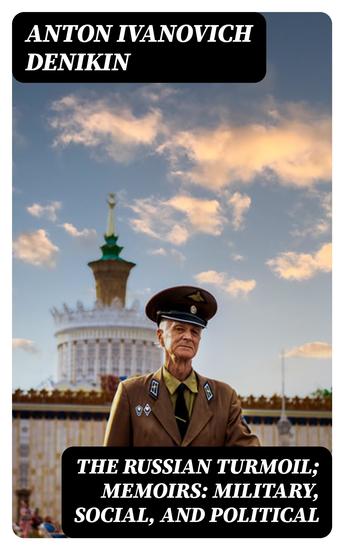
The Russian Turmoil; Memoirs: Military Social and Political - cover

The Russian Turmoil; Memoirs: Military Social and Political

Anton Ivanovich Denikin

Casa editrice: DigiCat

  • 0
  • 0
  • 0

Sinossi

In "The Russian Turmoil; Memoirs: Military, Social, and Political," Anton Ivanovich Denikin provides a profound reflection on the tumultuous years surrounding the Russian Revolution and Civil War. Written with a blend of introspection and analytical rigor, Denikin's memoirs offer a first-hand account of the complexities of military strategy, social upheaval, and the political landscape of early 20th-century Russia. His literary style is marked by clarity and a keen sensitivity to the human experience, providing readers insights into not only the events that transpired but also the moral dilemmas faced by individuals caught in the chaos. The memoir situates itself within the larger context of Russian history, shedding light on the factors that precipitated such a significant transformation in society and governance. Denikin himself was a prominent military leader and a key figure in the White movement, which opposed the Bolsheviks. Having experienced the war from the frontlines and engaged in the socio-political discourse of his time, Denikin's insights are deeply informed by his extensive military career and his subsequent exile. His personal experiences reflect a commitment to preserving a Russia rooted in traditional values, which profoundly influenced his narrative. This book is highly recommended for readers interested in Russian history, military strategy, and the effects of war on society. Denikin's memoirs not only serve as a crucial primary source for scholars but also engage general readers seeking to understand the intricate dynamics of a nation in profound crisis. His reflections encapsulate the tragedy of a civilization on the brink, making it an essential read for anyone wishing to grasp the complexities surrounding the Russian Civil War.
Disponibile da: 29/05/2022.
Lunghezza di stampa: 363 pagine.
Altri libri che potrebbero interessarti

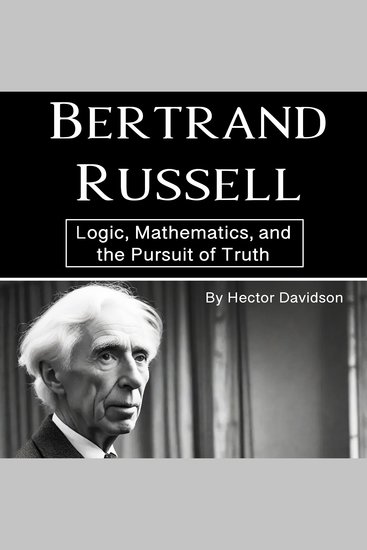
  • Bertrand Russell - Logic Mathematics and the Pursuit of Truth - cover

    Bertrand Russell - Logic...

    Hector Davidson

    • 0
    • 0
    • 0
    Bertrand Russell, born on May 18, 1872, in Trellech, Monmouthshire, Wales, was a British philosopher, logician, mathematician, and social critic. Coming from a prominent aristocratic family, with his grandfather, Lord John Russell, having served as a British Prime Minister, Russell had an influential upbringing. He attended Cambridge University, where he studied under Alfred North Whitehead, a notable logician and philosopher. Russell was deeply influenced by the works of Gottlob Frege and David Hilbert. 
    One of his most significant contributions to philosophy and mathematics was the co-authorship of "Principia Mathematica" with Alfred North Whitehead. This monumental work aimed to derive all mathematical truths from a set of axioms using symbolic logic, laying the groundwork for much of modern mathematical logic and philosophy. Russell also developed the theory of logical atomism, proposing that the world consists of atomic facts that can be represented by logical propositions. His emphasis on logical rigor and clarity had a profound impact on the development of analytic philosophy.
    Mostra libro
  • Learn Chinese With Music - cover

    Learn Chinese With Music

    Innovative Language Learning, ...

    • 0
    • 0
    • 0
    Can learning Chinese be as simple as listening to music?


    And as easy as remembering song lyrics?


    Just think. You remember song lyrics because lyrics are catchy, repeated throughout the song, and go with the music, right? Now, if you stuck in Chinese, you'd easily learn Chinese words and phrases the same way!


    So, yes, learning Chinese is as easy as listening to music' with the Learn Chinese With Music Audiobook.


    Just press play, and you'll hear Chinese words and phrases repeated to the beat of upbeat and cheerful music. And' follow along!


    You'll learn 180+ most common Chinese words and phrases' while relaxing at home, or while driving to work.


    Learn Chinese With Music is the easiest way to start learning Chinese.. without getting overwhelmed by complicated explanations. Perfect for new learners with little to no language learning experience.


    What will you learn?
     
    180+ Words & Phrases Including...
     
    - Basic Greetings
     
    - Numbers
     
    - Common Questions and Answers
     
    - Parts of the Body & Talking About Your Wellbeing
     
    - Common Hobbies
     
    - And much more


    Learn Chinese With Music includes...
     
    - 15 Songs/Lessons Inside (Each is about 7 minutes long)
     
    - Fast-Paced Review Section at the End of Each Lesson
     
    - 1 Hour 50 Minutes in Total
     
    - Accompanying PDF eBook with the Words, Phrases and Translations


    Download the PDF and read along
    Mostra libro
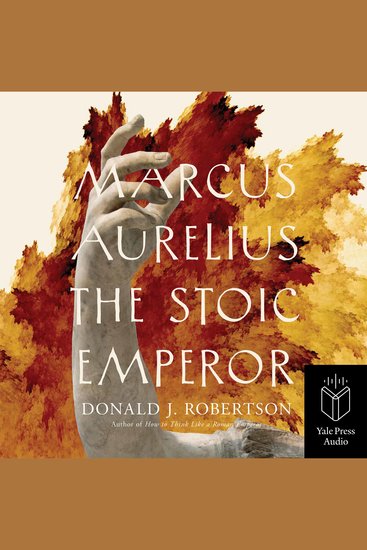
  • Marcus Aurelius - The Stoic Emperor - cover

    Marcus Aurelius - The Stoic Emperor

    Donald J. Robertson

    • 0
    • 0
    • 0
    Experience the world of Roman emperor Marcus Aurelius and the tremendous challenges he faced and overcame with the help of Stoic philosophy 
     
    This novel biography brings Marcus Aurelius (121–180 CE) to life for a new generation of readers by exploring the emperor’s fascinating psychological journey. Donald J. Robertson examines Marcus’s relationships with key figures in his life, such as his mother, Domitia Lucilla, and the emperor Hadrian, as well as his Stoic tutors. He draws extensively on Marcus’s own Meditations and correspondence, and he examines the emperor’s actions as detailed in the Augustan History and other ancient texts. 
     
    Marcus Aurelius struggled to reconcile his philosophy and moral values with the political pressures he faced as emperor at the height of Roman power. Robertson examines Marcus’s attitude toward slavery and the moral dilemma posed by capturing enemies in warfare; his attitude toward women; the role of Stoicism in shaping his response to the threat of civil war; the treatment of Christians under his rule; and the naming of his notorious son Commodus as his successor.  
     
    Throughout, the Meditations is used to shed light on the mind of the emperor—his character, values, and motives—as Robertson skillfully weaves together Marcus’s inner journey as a philosopher with the outer events of his life as a Roman emperor. 
     
    Donald J. Robertson, a cognitive-behavior psychotherapist and writer, is a founding member of the organization Modern Stoicism and the president and founder of the Plato’s Academy Centre nonprofit. The author of How to Think Like a Roman Emperor: The Stoic Philosophy of Marcus Aurelius and Stoicism and the Art of Happiness, he lives in Canada and Greece.
    Mostra libro
  • Beyond Good and Evil - cover

    Beyond Good and Evil

    Friedrich Nietzsche

    • 0
    • 0
    • 0
    "He who fights with monsters should look to it that he himself does not become a monster. And if you gaze long into an abyss, the abyss also gazes into you."
    
    
    In 1886, Friedrich Nietzsche released a "prelude to a philosophy of the future" that would shatter the foundations of Western ethics. Beyond Good and Evil is a fierce, poetic, and uncompromising attack on the "dogmatism" of traditional philosophers and the herd mentality of modern society. Nietzsche invites the reader to step out of the shadows of inherited values and into the sunlight of intellectual independence.
    
    
    The Will to Power: Moving beyond the simple binaries of "good" and "evil," Nietzsche introduces the Will to Power—the fundamental driving force of all living things to grow, dominate, and create. He argues that morality is not a universal truth but a tool used by different classes to assert their will. Through a series of 296 searing aphorisms, he challenges us to become "Free Spirits" capable of creating our own values in a world without absolute certainties.
    
    
    A Blueprint for the Individual: Nietzsche's prose is a "hammer" meant to test the resonance of existing idols. He critiques everything from the "prejudices of philosophers" to the rise of nationalism and democracy, which he views as a leveling of human potential. Beyond Good and Evil remains one of the most provocative works in history, essential for anyone brave enough to question the very fabric of their reality and the origin of their convictions.
    
    
    Challenge everything you believe. Purchase "Beyond Good and Evil" today and begin your journey toward the Overman.
    Mostra libro
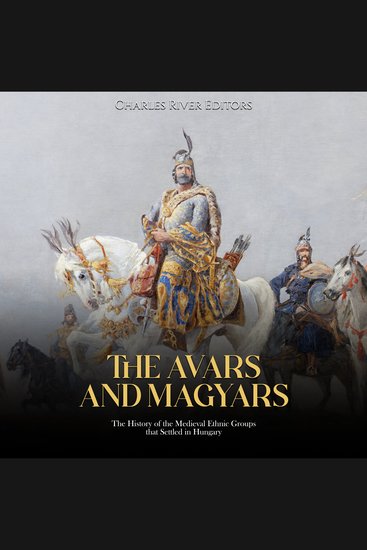
  • Avars and Magyars The: The History of the Medieval Ethnic Groups that Settled in Hungary - cover

    Avars and Magyars The: The...

    Editors Charles River

    • 0
    • 0
    • 0
    The Avars entered Eastern Europe from the Central Asian steppes in the 6th century, and like the Huns before them and the Cumans and Magyars after them, the Avars were raiders and warriors who lived on their horses. The Avars’ impact on Europe was immediately felt, and from the Byzantine Empire to the Merovingian Kingdom in Gaul, some of Europe’s strongest powers had to learn how to deal with these new people through a combination of diplomacy and warfare. Eventually, the Avars established themselves in what is today Hungary and played an important role in the development of European history during its transitional period by earning a reputation as a fearsome and sometimes avaricious group. The medieval sources described the Avars as efficient and brutal horseback warriors who could devastate entire kingdoms in a matter of days and leave just as quickly. 
    Of all the steppe peoples in the medieval period, perhaps none were more important to European history than the Magyars. Like the Huns and Avars before them and the Cumans and Mongols after them, the Magyars burst into Europe as a destructive, unstoppable horde, taking whatever they wanted and leaving a steady stream of misery in their wake. They used much of the same tactics as the other steppe peoples and lived a similar, nomadic lifestyle. The Magyars also had many early cultural affinities with other steppe peoples, following a similar religion and ideas of kingship and nobility, among other things. That said, as similar as the Magyars may have been to other steppe nomads before and after them, they were noticeably different in one way: the Magyars settled down and became a part of Europe and Western Civilization in the Middle Ages. The Magyars exploded onto the European cultural scene in the late 9th century as foreign marauders, but they made alliances with many important kingdoms in less than a century.
    Mostra libro
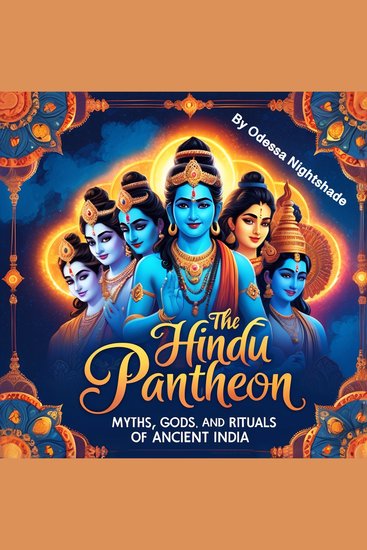
  • The Hindu Pantheon - Myths Gods and Rituals of Ancient India - cover

    The Hindu Pantheon - Myths Gods...

    Odessa Nightshade

    • 0
    • 0
    • 0
    Hindu mythology is one of the oldest and most complex religious traditions in the world. With a vast pantheon of gods, goddesses, and celestial beings, it weaves together myths, legends, and philosophical concepts that have shaped the spiritual landscape of India for thousands of years. Unlike many monotheistic traditions, Hinduism does not center around a single deity but instead embraces a diverse array of divine figures, each representing different aspects of existence. These deities are not merely supernatural beings but embodiments of cosmic principles, making Hindu mythology a unique fusion of religion, philosophy, and storytelling.  
      
    The foundation of Hindu mythology lies in its sacred texts, particularly the Vedas and Puranas. The Vedas, composed over 3,000 years ago, contain hymns and rituals dedicated to early Vedic deities, forming the spiritual bedrock of Hindu belief. The Puranas, written centuries later, expanded upon these traditions, introducing detailed narratives about the lives, battles, and divine exploits of gods like Vishnu, Shiva, and Devi. Together, these texts provide an extensive mythological framework that continues to influence Hindu practices and beliefs to this day.  
      
    One of the central themes in Hindu mythology is the concept of dharma, or cosmic order. The gods play a crucial role in maintaining balance in the universe, ensuring that righteousness prevails over chaos. Myths often depict the eternal struggle between good and evil, with divine beings intervening in the world through incarnations known as avatars. The most well-known avatars belong to Vishnu, who manifests as Rama, Krishna, and other heroic figures to restore harmony when disorder threatens creation. This belief in divine intervention reinforces the idea that morality and duty must be upheld in human life, as they are reflections of the cosmic law. 
    Mostra libro