Unisciti a noi in un viaggio nel mondo dei libri!
Aggiungi questo libro allo scaffale
Grey
Scrivi un nuovo commento Default profile 50px
Grey
Iscriviti per leggere l'intero libro o leggi le prime pagine gratuitamente!
All characters reduced
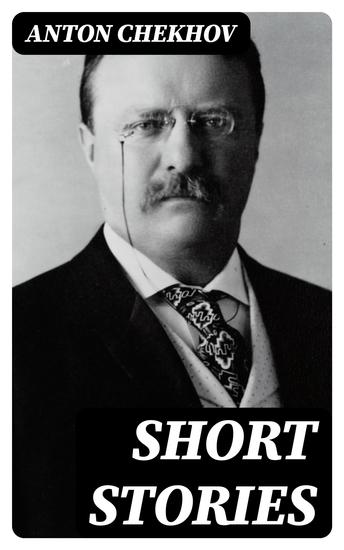
Short Stories - cover

Short Stories

Anton Chekhov

Traduttore Julian Hawthorne, Constance Garnett, Thomas Seltzer, Marian Fell, Herman Bernstein, Robert Edward Crozier Long, C.E. Bechhofer Roberts, S.S. Koteliansky, Gilbert Cannan, J. M. Murry, B. Roland Lewis, Julius West

Casa editrice: DigiCat

  • 0
  • 0
  • 0

Sinossi

Anton Chekhov's collection of "Short Stories" embodies the essence of late 19th-century Russian literature, characterized by its keen psychological insight and nuanced portrayal of everyday life. These stories demonstrate Chekhov's mastery of brevity and subtlety, often revolving around themes of existential ennui, human fragility, and the complexities of interpersonal relationships. His use of naturalistic dialogue and vivid imagery creates a space where characters grapple with their mundane realities, resonating with the philosophical undercurrents of the time, such as the search for meaning in a rapidly changing society. Anton Chekhov, a physician by training, often drew from his observations of the human condition in both his medical practice and his writing, granting his characters authenticity and depth. Living during a period marked by social upheaval and intellectual ferment in Russia, Chekhov's experiences in varied socio-economic circles informed his exploration of diverse human experiences. Considered a pioneer of the modern short story form, his influence extends to a multitude of literary figures and genres, cementing his legacy as one of literature's great masters. "Short Stories" is essential reading for anyone seeking to understand the intricacies of human nature through the lens of masterful storytelling. Chekhov's ability to evoke profound emotions with understated prose invites readers to reflect on their lives, making this collection not just a literary accomplishment, but an invitation to introspection and empathy.
Disponibile da: 11/10/2022.
Lunghezza di stampa: 2500 pagine.
Altri libri che potrebbero interessarti

  • A Christmas Carol - cover

    A Christmas Carol

    Charles Dickens

    • 0
    • 0
    • 0
    A Christmas Carol recounts the story of Ebenezer Scrooge a miserly old business tycoon who hates Christmas. On Christmas Eve, Scrooge is visited by the ghost of his deceased partner, Jacob Marley, who warns him that he will be visited by three ghosts. Following the ghosts visits, Scrooge becomes a kinder, more generous man. 
    This immortal Christmas classic is brought to life with character voices, sound effects and original music.
    Mostra libro
  • A Midsummer Night's Dream - cover

    A Midsummer Night's Dream

    William Shakespeare

    • 0
    • 0
    • 0
    "Midsummer Night's Dream" is Shakespeare's classic tale of two couples who can't quite pair up to everyone's satisfaction. Demetrius and Lysander love Hermia. Hermia loves Lysander but has been promised to Demetrius by her father. Hermia's best friend Helena loves Demetrius, but in his obsession for Hermia Demetrius barely even notices her smitten friend. When Hermia and Lysander plan to elope all four find themselves in the forest late at night where the fairy Puck and his lord Oberon wreck havoc on the humans with a love potion that causes the victim to fall in love with the first thing they see upon waking. -     Some Books of Shakespeare:    - Romeo and Juliet (1597)    - Hamlet (1599)    - Macbeth (1606)    - Julius Caesar (1599)    - Othello (1603)    - The Merchant of Venice (1598)    - Much Ado About Nothing (1600)    - King Lear (1606    - The Taming of the Shrew (1594)    - The Comedy of Errors (1594)
    Mostra libro
  • Psychology - cover

    Psychology

    Katherine Mansfield

    • 0
    • 0
    • 0
    "Psychology" is a 1920 short story by Katherine Mansfield. It was first published in Bliss and Other Stories.
    A man visits a woman for tea. He tells her this is the only place he pays attention to in terms of its furniture and so on. He also loves her 'little boy'. They then talk about the state of the novel as a literary genre - coming to the conclusion that the psycho-novel is shoddy. She feels anguished about possibly having failed in not following suit with that genre however, and he leaves...
    Mostra libro
  • The Secret Garden - cover

    The Secret Garden

    Frances Hodgson Burnett

    • 0
    • 0
    • 0
    "The Secret Garden," written by Frances Hodgson Burnett in the late 19th century, tells the story of Mary Lennox, a spoiled and unhappy child who becomes orphaned and is sent to live with her reclusive uncle at the mysterious Misselthwaite Manor. As Mary explores the manor's enchanting yet neglected gardens, including a hidden garden that has been locked away for years, she begins a journey of self-discovery, healing, and friendship. 
    At the beginning of the book, we meet Mary Lennox, who is left alone in a foreign land after a cholera outbreak claims her parents' lives. Sent to England to live with her uncle, Mary soon realizes she is largely forgotten and left to her own devices. The opening chapters illustrate her initial experiences with the manor, highlighting her disdain for her new environment and her feelings of loneliness. This sets the stage for her growth and the adventures that lie ahead as she uncovers the garden's hidden beauty and forms connections with others, ultimately transforming her character and outlook on life.
    Mostra libro
  • The Black Moth - A Romance of the 18th Century - cover

    The Black Moth - A Romance of...

    Georgette Heyer

    • 0
    • 0
    • 0
    When the notorious Lord Tracy Belmanoir, Duke of Andover and also the infamous Black Moth, is caught attempting to abduct the dark-haired Diana Beauleigh by estranged Jack Carstares, the rightful Earl of Wyncham, he's sent scurrying after a thrilling sword fight. Injured in battle, Jack relies on Diana to nurse his wounds and, as their feelings for each other blossom, realizes that he must return to Wyncham, clear his name of previous accusations, and rightly take over as earl. But the Black Moth waits patiently to take what he wants—and he is relentless. Can Jack take over as earl, defeat the Black Moth, and finally be with the woman he loves?
    Mostra libro
  • A Legend - From their pens to your ears genius in every story - cover

    A Legend - From their pens to...

    Alexander Kuprin

    • 0
    • 0
    • 0
    Alexander Kuprin was born in Narovchat, Penza in Russia on 7th September 1870. 
    At 3 his Father died and he and mother moved to Moscow. By 10 he was enrolled at the Second Moscow Military High School and there his interest in literature began. The Alexander Military Academy followed and two years later he was a sub-lieutenant and posted to an Infantry Regiment for a further four years. 
    Despite his duties he was a now a keen writer and published his first short story at this time. His military duties also garnered him experiences for his breakthrough work ‘The Duel’.  Leaving the military he left for Kiev to work for local newspapers.  He continued to publish both stories and novels and by 1901 he was in St Petersburg becoming part of a group that included Chekhov, Ivan Bunin, Maxim Gorky and Leonid Andreyev.  
    In the years that followed further controversial works and acclaim followed.  His comments on the regime meant he was also put under secret police surveillance.   
    As World War I erupted, Kuprin opened a military hospital but was then given command of an infantry company in Finland. He was soon discharged on grounds of ill health.  
    The October Revolution saw him praise Lenin, but he warned that the Bolsheviks threatened Russian culture and might cause further widespread suffering to the peasants.  As Civil War raged he took his family to Helsinki and then on to Paris. 
    Exile saw his talents decline further and his succumbing to alcoholism. He became lonely and withdrawn. The family's poverty increased his malaise.   
    In May 1937, the Kuprin’s returned to Moscow.  He now saw his work published but wrote almost nothing new.  In 1938 his health rapidly deteriorated.  Already suffering from a kidney problems and sclerosis, he had now developed cancer of the oesophagus.  
    Alexander Kuprin died on 25th August 1938.
    Mostra libro