Unisciti a noi in un viaggio nel mondo dei libri!
Aggiungi questo libro allo scaffale
Grey
Scrivi un nuovo commento Default profile 50px
Grey
Iscriviti per leggere l'intero libro o leggi le prime pagine gratuitamente!
All characters reduced
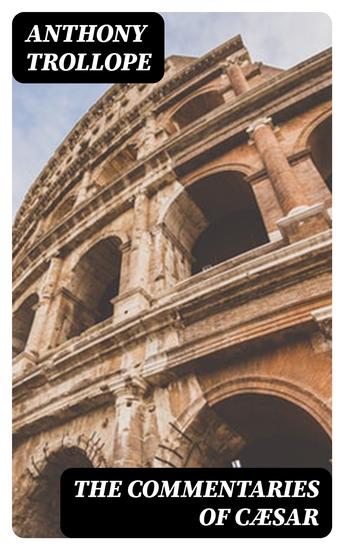
The Commentaries of Cæsar - cover

The Commentaries of Cæsar

Anthony Trollope

Casa editrice: DigiCat

  • 0
  • 0
  • 0

Sinossi

In "The Commentaries of Cæsar," Anthony Trollope provides a compelling modern interpretation of Julius Cæsar's own writings on his military campaigns, weaving together a blend of historical analysis and literary critique. Unlike traditional historical narratives, Trollope employs a vivid, engaging prose style that captures the intricacies of Roman warfare and the political machinations of the time. He contextualizes Cæsar's account within the broader tapestry of 19th-century thought, shedding light on issues of imperialism, leadership, and ethics, all while maintaining an accessible narrative that encourages critical reflection among readers. Anthony Trollope, a prominent Victorian novelist known for dissecting societal norms, was deeply influenced by his understanding of political history and its implications on contemporary society. His extensive travels and experiences in the British civil service enriched his perspectives on power dynamics and governance. This background informed his approach to Cæsar's writings, allowing him to draw parallels between ancient and modern leadership challenges, ultimately enriching our understanding of Cæsar as a historical figure with enduring relevance. This edition of "The Commentaries of Cæsar" is a must-read for anyone interested in the intersections of history, literature, and politics. Trollope's insightful commentary not only brings Cæsar's military campaigns to life but also invites readers to reflect on leadership traits that resonate through the ages, making this work an indispensable addition to the canon of historical literature.
Disponibile da: 15/08/2022.
Lunghezza di stampa: 129 pagine.

Altri libri che potrebbero interessarti

  • Technology in Education - Enhancing Learnings Experiences - cover

    Technology in Education -...

    Craig Dames

    • 0
    • 0
    • 0
    Technology has played a crucial role in transforming education, evolving from simple tools like chalk and slates to modern digital platforms that facilitate learning in new and dynamic ways. As society has advanced, so has the need for more innovative teaching methods that enhance students’ understanding, engagement, and accessibility to knowledge. The journey of educational technology is a testament to human creativity and the desire to improve learning experiences across generations. 
    In the early stages of formal education, teaching methods relied heavily on oral instruction, handwritten texts, and rudimentary visual aids. With the invention of the printing press in the 15th century, books became more widely available, revolutionizing how information was shared and retained. This breakthrough allowed for the standardization of curricula and the spread of literacy on a much larger scale. Over time, blackboards and chalk became staple tools in classrooms, offering a way for teachers to visually illustrate lessons. 
    The 20th century marked a significant shift in educational technology. The introduction of radio and television into learning environments allowed educators to reach wider audiences, particularly in remote areas. In the 1960s and 1970s, computers began appearing in schools, though their use was initially limited to basic programming and computational tasks. As the digital revolution progressed, personal computers became more accessible, paving the way for multimedia presentations, digital research, and interactive learning experiences.
    Mostra libro
  • Dividing Lines - How Transportation Infrastructure Reinforces Racial Inequality - cover

    Dividing Lines - How...

    Deborah N. Archer

    • 0
    • 0
    • 0
    Our nation's transportation system is crumbling. But as acclaimed scholar and ACLU president Deborah Archer warns in Dividing Lines, before we can think about rebuilding and repairing, we must consider the role race has played in transportation infrastructure, from the early twentieth century and into the present day. 


    As Archer demonstrates, the success of the Civil Rights movement and the fall of Jim Crow in the 1960s did not mean the end of segregation. With state-sanctioned racism no longer legal, officials across the country turned to transportation infrastructure to keep Americans divided. A wealthy white neighborhood could no longer be "protected" by racial covenants and segregated shops, but a multilane road, with no pedestrian crossings, could be built along its border to make it difficult for people from a lower-income community to visit. Highways could not be routed through Black neighborhoods based on the race of their residents, but those neighborhoods' lower property values—a legacy of racial exclusion—could justify their destruction. 


    Drawing on a wealth of sources, including interviews with people who now live in the shadow of highways and other major infrastructure projects, Archer presents a sweeping, national account—from Atlanta and Houston to Indianapolis and New York City—of our persistent divisions.
    Mostra libro
  • The Psychic Abilities of Being an Empath - cover

    The Psychic Abilities of Being...

    S. C. Rowse

    • 0
    • 0
    • 0
    Before you can embrace your full psychic potential, you first need to unlock the true secrets to coping as an empathHave you been told you are just “too sensitive” your whole life?Are you an emotional victim to all sorts of people who leech off you, drain you, and leave you feeling raw?Do you know deep down that your empathic abilities are actually a gift, but you have no idea how to get past the pain and access it fully?Just dealing with the normal range of your own emotions is already hard enough, so when you’re an empath, being exposed to the emotions and energy of everyone around you can be extremely confusing and overwhelming.And the worst thing is that empaths often suffer a range of emotional, mental, and sometimes even physical trauma before they learn how to protect themselves and work with this amazing ability safely.You may have tried to solve your problems on your own, and perhaps that is what has gotten you this far, but tried-and-tested, expert advice will help you to take your empathic abilities to the next level.In this supportive and practical book, you will discover:What it really means to be an empath, and how this can impact your life if you don’t learn to manage this abilityWhat kind of empath you may be — and how to develop your unique skills for your own and others’ benefit8 common problems most empaths struggle with, and what to do about themHow to awaken, handle, and develop your psychic abilities and harness the energy of the universe to work for youHow to recognize energy vampires, opportunists, users, and abusers and protect yourself from themSimple, yet powerful exercises to develop your “clair” senses and strengthen your ability to shield and protect yourself from unwanted, external energiesHow to recover from past trauma and set healthy physical, emotional, and energetic boundaries in place for goodWhat you need to do to establish a better connection with your higher self and spirit guidesAnd much more!
    Mostra libro
  • Social Psychology - The Interplay between Society and Individual Behavior - cover

    Social Psychology - The...

    Fred Grandsen

    • 0
    • 0
    • 0
    Social psychology is the scientific study of how individuals think, feel, and behave in social contexts. It explores the dynamic interaction between the individual and society, examining how social influences shape attitudes, perceptions, and actions. Unlike sociology, which focuses on large-scale social structures, or personality psychology, which emphasizes individual traits, social psychology is concerned with the situational and environmental factors that influence behavior. By understanding these processes, social psychology helps explain why people conform to social norms, how prejudices form, and what drives human interactions. 
    One of the core principles of social psychology is that human behavior is largely shaped by the presence, actions, or even imagined influence of others. This concept is central to theories of conformity, persuasion, and group behavior. Classic experiments, such as Solomon Asch’s studies on conformity and Stanley Milgram’s research on obedience, illustrate how individuals often adjust their behavior in response to social pressures. These findings demonstrate that while people may believe they act independently, their decisions and actions are frequently influenced by external social forces. 
    Another key area of social psychology is the study of social cognition—how people perceive, interpret, and remember information about themselves and others. Cognitive biases, such as the fundamental attribution error and self-serving bias, shape how individuals understand social interactions and make judgments about others. These mental shortcuts can lead to errors in reasoning and contribute to stereotypes and misunderstandings. By exploring these cognitive processes, social psychology helps explain how individuals navigate their social environments and how they sometimes misinterpret reality.
    Mostra libro
  • Thanks for Your Service - The Causes and Consequences of Public Confidence in the US Military - cover

    Thanks for Your Service - The...

    Peter D. Feaver

    • 0
    • 0
    • 0
    A definitive study on the decades-long run of high public confidence in the military and why it may rest on some shaky foundations. 


    What explains the high levels of public confidence in the US military and does high confidence matter? In Thanks for Your Service, the eminent civil-military relations scholar Peter D. Feaver addresses this question and focuses on what it means for the military. Proprietary survey data show that confidence is partly based on public beliefs about the military's high competence, adherence to high professional ethics, and a determination to stand apart from the bitter divisions of partisan politics. However, as Feaver argues, confidence is also shaped by a partisan gap and by social desirability bias, the idea that some individuals express confidence in the military because they believe that is the socially approved attitude to hold. Not only does Feaver help us understand how and why the public has confidence in the military, but he also exposes problems that policymakers need to be aware of. Specifically, this book traces how confidence in the institution shapes public attitudes on the use of force and may not always reinforce best practices in democratic civil-military relations.
    Mostra libro
  • Writing the Shadow - Turn Your Inner Darkness Into Words - cover

    Writing the Shadow - Turn Your...

    Joanna Penn

    • 0
    • 0
    • 0
    Do you want to connect with readers on a deeper level? 
    Do you want your books to stand out in a sea of content by being authentic and personal in your writing whatever the genre?  
    Are you interested in creative self-development? 
    If yes, Writing the Shadow is for you.  
    This is a book of my heart and it contains many personal stories — but this book is really about helping you reach readers with your words — and move to the next level in your writing.We all long to write boldly, without filters or fear.  
    To spin stories that capture the messy beauty of what it means to be human. Tales that lay bare the truth of living — darkness and all.  
    But something holds us back.  
    Whispers of “Who do you think you are?” and “You don’t have permission to write that.” Our own self-censorship and the judgment of others keep us from writing freely — and sometimes, from living fully. 
    But all great art taps into darkness, and your most compelling work emerges when you embrace your full humanity—both light and Shadow. 
    In Writing the Shadow, I’ll guide you on an intimate journey to explore the darkness and discover the gold lying hidden in its depths. Gold that may be the source of your best creative work in the years ahead. 
    The Shadow is calling. It’s time to turn your inner darkness into words. 
    “I love everything Joanna Penn does, but Writing the Shadow is the icing on the cake. Ms Penn has found the gold within the darkness and has lit a candle to show us the way.” Steven Pressfield, author of The War of Art
    Mostra libro