Unisciti a noi in un viaggio nel mondo dei libri!
Aggiungi questo libro allo scaffale
Grey
Scrivi un nuovo commento Default profile 50px
Grey
Iscriviti per leggere l'intero libro o leggi le prime pagine gratuitamente!
All characters reduced
Twin Bodhi Diamond Trees - Eternal Golden Apricot Tree - TKC-VH Diary T42-C2 - cover

Twin Bodhi Diamond Trees - Eternal Golden Apricot Tree - TKC-VH Diary T42-C2

Anonimo

Casa editrice: Khac Cuong Tran

  • 0
  • 0
  • 0

Sinossi

❄️ Poetic Prelude🌼 Eternal SpringTwo souls — rooted as one,blossom as twin flowers in the same light.In the hush, they recall an ancient vow —to meet again,where time has closed its doors,yet the heart opens to the dawn of countless lives.Twin Bodhi Diamond Treesbloom wide across the boundless garden of Eternity.(Excerpt from the Opening of “Twin Bodhi Diamond Trees”) 🌸Publisher DescriptionTwin Bodhi Diamond Trees – The Eternal Golden Apricot Tree invites readers into a spiritual odyssey through the Twin-Soul Universe — a realm where love transcends the limits of form, and the golden light of awakening blooms through every heart.Blending poetic vision with cosmic insight, the book unfolds the luminous path of two intertwined souls seeking the eternal source of love and creation. Within its pages, ancient symbolism and meditative rituals harmonize with metaphysical dialogues, weaving a living mandala of unity, compassion, and self-realization.Each reflection reveals the resonance between Heaven and Earth, between the visible and the unseen — reminding us that love, in its purest vibration, is both the seed and the flower of all existence.This work is not merely a book to read, but a mirror to awaken — a whisper for those who long to rediscover the one eternal love within themselves, within another, and within the vast cosmos that binds them both.Main Contents🌼 Principles — Twin-Soul Love as the ground of the cosmos❄️ Opening Ritual — A shared chant that unlocks the gate of light🌸 Great Mantra of Union — The oneness of all realities🌼 Blossoming & Fulfillment — The complete flower of Twin-Soul❄️ Eternal Union — The Throne of the Undying Spring
Disponibile da: 19/12/2025.
Lunghezza di stampa: 186 pagine.
Altri libri che potrebbero interessarti

  • وهكذا تحلو الحياة Life Getting Sweeter - cover

    وهكذا تحلو الحياة Life Getting...

    Azza Bayomy

    • 0
    • 0
    • 0
    الماركات يوجد منهم أصيل وتقليد، ً وأيضا األشخاص يوجد منهم أصيل وتقليد، ٍ فاألصيل هو من له فكر وعقل راق تراه يف أخالقه وعند معاشرته.. أما التقليد هو شخص يتكلم وقد يتحدث بالشعارات، ولكن مجرد كلام لا وجود له عىل أرض الواقع، فانتبه وتأن في علاقتك وكن دوماً أصلياً واحذر التقليد 
    There are original brands and replicas. Likewise, some people are original while others are mere replicas. The originals are those who have a classy mindset and mentality shining through their manners and interactions. The replicas are those who pay a lip service to some slogans but when it comes to application, it is all words and no deeds. Thus, be alert and patient when it comes to your relations. Be always an original and beware replicas!
    Mostra libro
  • Scimitar into Stanley - One Soldier's Falklands War - cover

    Scimitar into Stanley - One...

    Roger Field

    • 0
    • 0
    • 0
    In May 1982, Captain Roger Field, The Blues and Royals, attached to HQ 5th Infantry Brigade, sailed on the Queen Elizabeth 2 as part of the second wave to liberate the Falkland Islands. Surprised by what he saw at Brigade HQ, he started writing a diary. 
    His journey took him to Fitzroy as the Argentinean aircraft struck the landing ships Sir Galahad and Sir Tristram. A chance meeting led him to fighting alongside the Commanding Officer of 2 Para at the Battle of Wireless Ridge. When the commander of one of the four attached armoured cars of The Blues and Royals was knocked out part way through the battle, Roger took command of that Scimitar. Next day his Scimitar was at the very tip of the spear as 2 Para and The Blues and Royals led the victorious charge into Port Stanley. 
    ‘Revisionist’ in places and always refreshingly candid, this account is unique as it describes the War from the viewpoint of a staff officer, infanteer and armoured vehicle commander. A gripping listen.
    Mostra libro
  • Forbidden - A 3000-Year History of Jews and the Pig - cover

    Forbidden - A 3000-Year History...

    Jordan D. Rosenblum

    • 0
    • 0
    • 0
    Jews do not eat pig. This (not always true) observation has been made by both Jews and non-Jews for more than three thousand years and is rooted in biblical law. Though the Torah prohibits eating pig meat, it is not singled out more than other food prohibitions. Horses, rabbits, squirrels, and even vultures, while also not kosher, do not inspire the same level of revulsion for Jews as the pig. The pig has become a symbol for people to signal their Jewishness, non-Jewishness, or rebellion from Judaism. 


    Starting with the Hebrew Bible, Jordan D. Rosenblum historicizes the emergence of the pig as a key symbol of Jewish identity, from the Roman persecution of ancient rabbis, to the Spanish Inquisition, to Shakespeare's writings, to modern memoirs of those leaving Orthodox Judaism. The pig appears in debates about Jewish emancipation in eighteenth-century England and in vaccine conspiracies; in World War II rallying cries, when many American Jewish soldiers were "eating ham for Uncle Sam;" and in recent deliberations about the kosher status of Impossible Pork. 


    All told, there is a rich and varied story about the associations of Jews and pigs over time, both emerging from within Judaism and imposed on Jews by others. Expansive yet accessible, Forbidden offers a captivating look into Jewish history and identity through the lens of the pig.
    Mostra libro
  • Sipahi The: The History and Legacy of the Ottoman Empire’s Elite Cavalry - cover

    Sipahi The: The History and...

    Editors Charles River

    • 0
    • 0
    • 0
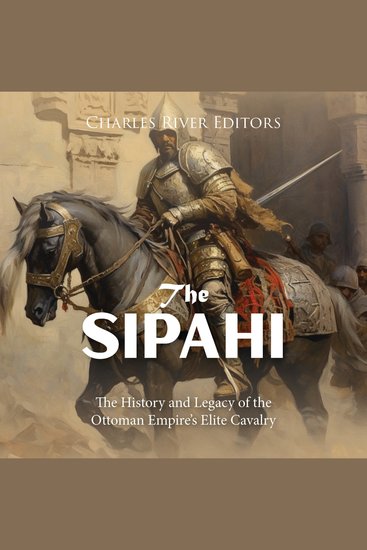
    Among those who were responsible for the projection of Ottoman power, few deserve as much credit as the Sipahi. Civilizations across the steppes and the Middle East relied heavily on cavalry, and the Sipahi were elite cavalry units during medieval times for a couple of powers. That said, they were a massive contributor to the success of Ottoman warfare, and during good times for the empire, the Sipahi were rewarded, to the extent that they became their own social class, much like the Janissaries. In fact, much the way the Janissaries became less effective over time as being one denoted social status, the Sipahi and Janissaries had class resentments among each other, one of the various cracks in the Ottoman Empire that would help bring about its decline.  
    	As a result, the Sipahi’s private lives in the Ottoman Empire were varied and complex, depending on their social status, wealth, education, and religion. Their homes were often luxuriously decorated, and they were usually portrayed as highly-educated and sophisticated people. The Sipahi frequently had several wives and concubines, and their houses were equipped to accommodate their many guests. They had harems, where they kept their concubines and slaves, and the maintenance of their harems was important for each Sipahi's reputation and status. Their wives and concubines were often confined to the harem, and they did not have much freedom, but in some cases, especially in wealthier families, the women were educated and had an active social life. Furthermore, the Sipahi were often involved in art, music, and writing poetry. They had castles and villas they used for parties and social events, and they were also known for organizing hunts and other sporting activities. Many of them were also highly educated and engaged in the sciences, such as mathematics, astronomy, and philosophy.
    Mostra libro
  • Skirts - Fashioning Modern Femininity in the Twentieth Century - cover

    Skirts - Fashioning Modern...

    Kimberly Chrisman-Campbell

    • 0
    • 0
    • 0
    In a sparkling social history, Skirts traces the shifting roles of women over the twentieth century through the era's most iconic and influential dresses. 


    While the story of women's liberation has often been framed by the growing acceptance of pants over the twentieth century, the most important and influential female fashions of the era featured skirts. Suffragists and soldiers marched in skirts; the heroines of the Civil Rights Movement took a stand in skirts. As women made strides towards equality in the vote, the workforce, and the world at large, their wardrobes evolved with them. 


    Kimberly Chrisman-Campbell's Skirts looks at the history of twentieth-century womenswear through the lens of game-changing styles like the little black dress and the Bar Suit, as well as more obscure innovations like the Taxi dress or the Pop-Over dress, which came with a matching potholder. These influential garments illuminate the times in which they were first worn—and the women who wore them—while continuing to shape contemporary fashion and even opening the door for a genderfluid future of skirts. At once an authoritative work of history and a delightfully entertaining romp through decades of fashion, Skirts charts the changing fortunes, freedoms, and aspirations of women themselves.
    Mostra libro
  • Second Forgetting - Remembering the Power of the Gospel during Alzheimer’s Disease - cover

    Second Forgetting - Remembering...

    Dr. Benjamin T. Mast, Scotty Smith

    • 0
    • 0
    • 0
    There is hope in Alzheimer's disease, but it isn't where most people look for it... 
    Any form of dementia is terrifying and lonely for both the one suffering it and for those close to them. How do our relationships with those we love change with loss of memory or clarity of thought? What happens to our relationship with God? 
    For those suffering from early-stage Alzheimer's, for their friends and family, community and church, this book will help you understand the disease itself, how to love and care for those affected by it, and how to see the hope that's greater than it: we may forget, but God always remembers. 
    With pastoral tenderness and gospel confidence, Dr. Benjamin Mast shares his expertise on the subject and displays the power of the gospel that remains intact even when memory fades. Second Forgetting provides:Up-to-date answers to common questions about the disease and its effect on personal identity and faith.Personal stories of those affected and the loved ones who care for them and what their experiences were like—where they found hope and how they most needed support.Practical suggestions for how the church can come alongside families and those struggling or hurting. 
    When a person is diagnosed with Alzheimer's, they face great uncertainty, knowing that they can expect to live their remaining years with increasing confusion and progressively greater reliance upon other people to care for them. Dr. Mast will help you see how Alzheimer's disease cannot have the final say on God's unforgotten children. 
    Reflection questions are included in the audiobook companion PDF download.
    Mostra libro