Join us on a literary world trip!
Add this book to bookshelf
Grey
Write a new comment Default profile 50px
Grey
Subscribe to read the full book or read the first pages for free!
All characters reduced
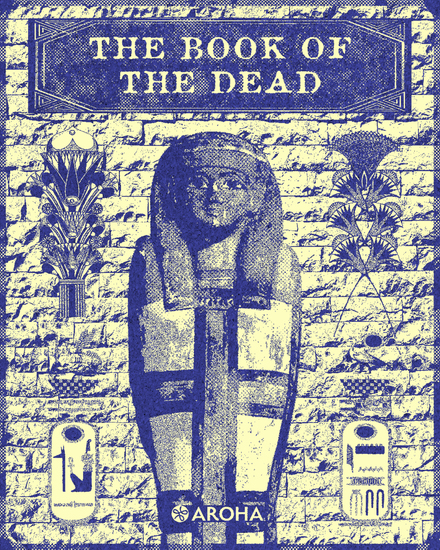
The Book of the Dead - cover

The Book of the Dead

Anonymous

Publisher: Aroha

  • 0
  • 0
  • 0

Summary

"The Book of the Dead," also known as the ''Book for Going forth into the Day,"" is a collection of ancient Egyptian funerary texts that provides instructions and prayers to guide the soul of the deceased through the journey of the afterlife and ensure its transformation into a divine being. Composed of a series of chapters or incantations, the book describes the rituals and ceremonies necessary to ensure the individual's survival in the afterlife and eventual union with the gods.
The texts of the Book of the Dead include magical formulas to protect the deceased from the dangers of the underworld, as well as invocations to obtain the help of the gods in the final judgment, where the life of the deceased will be evaluated and his or her eternal destiny determined. In addition, the book contains pictorial representations of scenes from the afterlife and the judgment of Osiris, the god of the afterlife.
In short, the Book of the Dead is a spiritual and ritual guide that offers solace and guidance to the deceased on their journey into the afterlife, as well as a fascinating insight into ancient Egyptian religious beliefs and practices surrounding death and the afterlife."
Available since: 02/12/2025.
Print length: 224 pages.

Other books that might interest you

  • The Use of Pleasure - Volume 2 of The History of Sexuality - cover

    The Use of Pleasure - Volume 2...

    Michel Foucault

    • 0
    • 0
    • 0
    In this sequel to The History of Sexuality, Volume I: An Introduction, the brilliantly original French thinker who died in 1984 gives an analysis of how the ancient Greeks perceived sexuality. 


    Throughout The Use of Pleasure Foucault analyzes an irresistible array of ancient Greek texts on eroticism as he tries to answer basic questions: How in the West did sexual experience become a moral issue? And why were other appetites of the body, such as hunger, and collective concerns, such as civic duty, not subjected to the numberless rules and regulations and judgments that have defined, if not confined, sexual behavior?
    Show book
  • Hitler's Boy Soldiers - How My Father's Generation Was Trained to Kill and Sent to Die for Germany - cover

    Hitler's Boy Soldiers - How My...

    Helene Munson

    • 0
    • 0
    • 0
    Helene Munson resurrects her father’s WWII journals and embarks on a meticulous investigation, exposing how the Nazis trained 300,000 impressionable children as soldiers. In 1937, Munson’s father, Hans, was enrolled in an elite German school whose students were destined to take leadership roles in the Reich. At fifteen, he was drafted as an antiaircraft gunner—along with the rest of the Hitler Youth—and assigned to an SS unit. As the war was being lost, Hans and his schoolmates were ordered to the front lines. Few returned. A personal lens into a nation’s shameful past, Hitler’s Boy Soldiers documents the history of the largest army of child soldiers in recent memory. Munson explores the lifelong effects on brainwashed children coerced to join a party they didn’t understand. Both a modern narrative and an important historical contribution, Hitler’s Boy Soldiers grapples with inherited trauma, the nature of being victim or perpetrator, and the burden of guilt.
    Show book
  • India Inspiration: Chakra Balancing - Guided Meditations Music & Affirmations for Inner Peace Mindfulness Divine Connection & Self-Love - cover

    India Inspiration: Chakra...

    Nikki Goldstein

    • 0
    • 0
    • 0
    India Inspirations: Chakra Balancing - Guided Meditations, Music, Mantras & Affirmations for Inner Peace, Mindfulness, Stress Relief & Self-Love is a beautifully crafted
    collection of guided meditations, mantras, affirmations, and ambient
    soundscapes designed to help you reconnect with your breath, your body, your
    heart—and the sacred.
     
    Inspired by the timeless traditions of Yoga, Ayurveda, and Indian spiritual philosophy,
    this audio journey is both grounding and expansive. Each track is a sensory
    experience: gentle voice guidance, soft sitar melodies, flowing affirmations,
    and the subtle pulse of Shakti energy woven throughout.
     
    Whether you’re new to meditation or returning to your inner world, this audiobook offers a
    nurturing space to unwind, reflect, and realign.
     
    You’ll experience:
     
    5 immersive guided meditations exploring self-love, divine connection, feminine energy,
    chakra balance, and inner sanctuary
     
    Sanskrit mantras paired with English affirmations to calm the mind and energize the soul
     
    Soundscapes and music to support deep relaxation and inner clarity
     
    A spiritual yet accessible tone—infused with reverence but free of dogma
     
    This offering is not about religion. It’s about remembering—the peace that
    lives within you, the beauty of your breath, and the power of presence.
     
    Created
    with deep respect for Indian wisdom traditions and years of personal practice, India
    Inspirations is a modern meditation companion that brings ancient tools
    into everyday life.
     
    Let this be your sanctuary.
     
    Let this be your return.
    Show book
  • Beneath The Radar - cover

    Beneath The Radar

    N Jessop

    • 0
    • 0
    • 0
    This audiobook is narrated by an AI Voice.   
    In her deeply personal memoir, Beneath the Radar, Naomi Jessop takes readers on an intimate journey through the labyrinth of her life—a path marked by judgment, influence, and the often painful process of carving out an identity distinct from the narratives imposed upon her. 
    Exploring struggles with depression, anxiety, and PTSD, this memoir sheds light on the dark corners of the mind and the quiet strength it takes to keep going. It also dives into the complexities of LGBTQ+ identity and self-acceptance in a world that often resists both. 
    At its heart, Beneath the Radar is a story about family—about longing for connection, navigating fractured relationships, and finding love and understanding amidst chaos. 
    With unflinching honesty and emotional depth, Naomi reveals what it truly means to grow, heal, and find yourself in a world eager to define you. 
    Beneath the Radar is more than a memoir—it’s a mirror for anyone who’s ever felt misunderstood, mislabelled, or misplaced. It’s an invitation to see the human story beneath the surface—and a testament to the strength it takes to rise, to speak, and to be seen.
    Show book
  • The First Emperor of China - cover

    The First Emperor of China

    Jonathan Clements

    • 0
    • 0
    • 0
    The First Emperor 


    In 1974, Chinese peasants made the discovery of the century . . . Thousands of terracotta soldiers guarding the tomb of a tyrant. 


    Ying Zheng was born to rule the world, claiming descent from gods, crowned king while still a child. He was the product of a heartless, brutal regime devoted to domination, groomed from an early age to become the First Emperor of China after a century of scheming by his ancestors. 


    He faked a foreign threat to justify an invasion. He ruled a nation under twenty-four-hour surveillance. He ordered his interrogators to torture suspects. He boiled his critics alive. He buried dissenting scholars. He declared war on death itself. 


    Jonathan Clements uses modern archaeology and ancient texts to outline the First Emperor's career and the grand schemes that followed unification: the Great Wall that guarded his frontiers and the famous Terracotta Army that watches over his tomb. 


    This revised edition includes updates from a further decade of publications, archaeology and fictional adaptations, plus the author's encounter with Yang Zhifa, the man who discovered the Terracotta Army.
    Show book
  • Roman Astronomy and Astrology: The History of Celestial Observations in Ancient Rome - cover

    Roman Astronomy and Astrology:...

    Charles River Editors

    • 0
    • 0
    • 0
    The development of Roman astronomy evolved over the centuries, embracing the ideas of many cultures as the Romans conquered much of the known world, soaking up knowledge from Asia, Europe, and Africa. Each civilization brought distinct traditions and scientific understanding, and Rome was a bridge, preserving and spreading the concepts and technologies of its conquered lands, including astronomy. For example, After Cyrus the Great conquered Babylon in 539 BCE, he appointed Chaldean astronomers to his Persian court and safeguarded the detailed Babylonian star charts. The skill of predicting eclipses using these historical charts and mathematics passed from the Persians to the Greeks, and finally to the Romans.  
    Roman astronomy had practical purposes, like timekeeping, and Roman ships used the stars for navigation. The Romans oriented monuments, temples, tombs, and cities with specific constellations, and like most ancient people, the Romans believed in astrology. They thought the Sun, Moon, planets, and stars influenced human lives and earthly events, and most Romans viewed astrology as a natural extension of astronomy. They gave the names of their deities to the planets and stars, and they thought the stars, moon, and planets had mystical power and represented the deities. Thus, they studied the movements of the stars and planets to discern their personal fortunes and the will of their gods. The five planets that can be seen with the naked eye still have the names of Roman gods: Mercury, Venus, Mars, Jupiter, and Saturn, and modern astronomers use Roman records of solar storms, comets, and eclipses, along with consulting ancient Roman data to analyze Earth’s climate history, orbital mechanics, and long-term patterns for the 11-year solar cycle. 
    Show book