Unisciti a noi in un viaggio nel mondo dei libri!
Aggiungi questo libro allo scaffale
Grey
Scrivi un nuovo commento Default profile 50px
Grey
Iscriviti per leggere l'intero libro o leggi le prime pagine gratuitamente!
All characters reduced
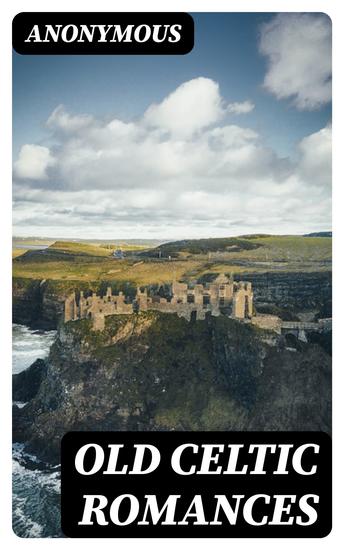
Old Celtic Romances - cover

Old Celtic Romances

Anonimo

Traduttore P. W. Joyce

Casa editrice: DigiCat

  • 0
  • 0
  • 0

Sinossi

In "Old Celtic Romances," the anonymous author delves into the rich tapestry of early Celtic literature, offering a collection of ancient tales that encapsulate the heroic spirit, magical realism, and cultural values of the Celtic world. Written in a lyrical and evocative style, the romances transport readers to a bygone era where brave warriors, enigmatic fairies, and tragic love stories intertwine. This volume is set within a broader context of medieval oral traditions, showcasing the preservation and transformation of narratives that were foundational to Celtic identity. The anonymity of the author speaks to the communal nature of Celtic storytelling, reflecting a tradition steeped in folklore and history. Drawing from mythological sources such as the Mabinogion and the Táin Bó Cúailnge, the author captures the essence of the Celtic imagination. Influenced by the oral nature of these tales and the cultural shifts occurring in medieval Europe, the author weaves stories that resonate with themes of honor, fate, and the interplay between the human and the supernatural. Readers are encouraged to immerse themselves in the captivating worlds depicted in "Old Celtic Romances," as it offers profound insights into Celtic heritage and invites reflection on universal themes of love and valor. This collection is essential for scholars of literature and enthusiasts of myth, serving as a gateway to understanding the enduring power of storytelling in shaping cultural identity.
Disponibile da: 15/09/2022.
Lunghezza di stampa: 301 pagine.
Altri libri che potrebbero interessarti

  • Idleness - A Philosophical Essay - cover

    Idleness - A Philosophical Essay

    Brian O'Connor

    • 0
    • 0
    • 0
    The first book to challenge modern philosophy’s case against idleness, revealing why the idle state is one of true freedomFor millennia, idleness and laziness have been regarded as vices. We're all expected to work to survive and get ahead, and devoting energy to anything but labor and self-improvement can seem like a luxury or a moral failure. Far from questioning this conventional wisdom, modern philosophers have worked hard to develop new reasons to denigrate idleness. In Idleness, the first book to challenge modern philosophy's portrayal of inactivity, Brian O'Connor argues that the case against an indifference to work and effort is flawed--and that idle aimlessness may instead allow for the highest form of freedom.Idleness explores how some of the most influential modern philosophers drew a direct connection between making the most of our humanity and avoiding laziness. Idleness was dismissed as contrary to the need people have to become autonomous and make whole, integrated beings of themselves (Kant); to be useful (Kant and Hegel); to accept communal norms (Hegel); to contribute to the social good by working (Marx); and to avoid boredom (Schopenhauer and de Beauvoir). O'Connor throws doubt on all these arguments, presenting a sympathetic vision of the inactive and unserious that draws on more productive ideas about idleness, from ancient Greece through Robert Burton's Anatomy of Melancholy, Schiller and Marcuse's thoughts about the importance of play, and recent critiques of the cult of work. A thought-provoking reconsideration of productivity for the twenty-first century, Idleness shows that, from now on, no theory of what it means to have a free mind can exclude idleness from the conversation.
    Mostra libro
  • The Soul of a Lion - Reflections on a life lived with animals - cover

    The Soul of a Lion - Reflections...

    Willie Labuschagne

    • 0
    • 0
    • 0
    The Soul of a Lion, an engaging memoir by Willie Labuschagne, is an exhilarating journey which begins with the young conservationist's unique experiences with wild animals. From his groundbreaking research on the desert cheetah's behaviour and ecology to becoming an internationally respected consultant on environmental and wildlife-related issues, he holds the reader's attention with all the skill of the master storyteller.
    The numerous occasions when Willie faced potentially life-threatening situations with wild animals are vividly recounted, many of them wryly humorous while others evoke deep emotion.
    But not all animal encounters took place in the wild. A significant and poignant encounter that further inspired Willie's approach to conservation occurred when, during his time as director of the Johannesburg Zoo, he and his family hand-raised a newborn lion cub that had been rejected by its mother.
    He recalls the countless obstacles put in his way by the bureaucratic nature of his own species during his tenure at the zoo. But despite numerous challenges he persisted in his goal of transforming and improving zoological institutions. A driving force behind the changing nature of professionally managed zoological gardens, Willie's book reminds us that, while many of the world's zoos should be unconditionally closed, progressive modern zoos are becoming increasingly aligned to wildlife conservation: they are vital for ensuring the survival of threatened species.
    Willie shares his entertaining and often moving life experiences with warmth and understanding, whether it is sleeping under the stars with the bushmen of the Kgalagadi desert or observing the traditions of the Zulu Royal House. His travels in the African landscape in particular are an exciting panorama of many distinctive habitats, from the relentless desert of the Skeleton Coast in Namibia to the pristine beauty of the Tsitsikamma Forest and the breathtaking vastness of the African bushveld.
    Importantly, he is forthright in his view of the critical position of the world we live in and the future it holds for mankind and believes that we are all part of a custodianship which should do everything in its power to protect our fragile environment.
    Willie Labuschagne, a man with the soul of a lion, is a dedicated and internationally celebrated wildlife conservationist who holds a master's degree in wildlife management. For more than five decades he has been actively involved in the conservation of threatened species for which he has received national and international recognition, culminating in numerous awards.
    Mostra libro
  • Constantine the Great - The Roman Emperor Who Made Christianity the Main Religion - cover

    Constantine the Great - The...

    Kelly Mass

    • 0
    • 0
    • 0
    Constantine I, often called Constantine the Great, was one of the most significant emperors of ancient Rome, reigning from 306 to 337 AD. Born in Naissus, in the province of Dacia Mediterranea (modern-day Niš, Serbia), he was the son of Flavius Constantius, a Roman army officer and a prominent figure in the Tetrarchy, and Helena, a woman of humble Greek origins. His father's position as one of the four emperors in the Tetrarchy was instrumental in shaping Constantine's early life and military career. Under emperors Diocletian and Galerius, Constantine demonstrated his military prowess, initially fighting against barbarian tribes and the Persians in the eastern provinces. In 305 AD, he was summoned to the West to aid his father in campaigns in Britain, where he earned further distinction. 
    Following the death of his father in 306 AD, Constantine’s soldiers declared him emperor at Eboracum (modern York, England). Over the next two decades, he would overcome rival emperors, such as Maxentius and Licinius, in a series of civil wars, eventually becoming the sole ruler of the Roman Empire by 324 AD. His reign marked a period of significant transformation, both militarily and administratively. 
    To strengthen the empire, Constantine initiated a series of reforms. He reorganized the imperial administration, separating civil and military powers to create a more efficient system of governance. Acknowledging the need for economic stability, he introduced the solidus, a new gold coin that helped curb inflation. This currency would become the standard for Byzantine and European economies for nearly a millennium. He also restructured the Roman army, creating specialized units that could respond swiftly to internal threats and barbarian invasions.
    Mostra libro
  • Breaking the Bombers - How the hunt for Pagad created a crack police unit - cover

    Breaking the Bombers - How the...

    Mark Shaw

    • 0
    • 1
    • 0
    'Mark Shaw is the foremost analyst of organised crime in SA.' – Jonny Steinberg
    At the dawn of the country's brave new democracy, Cape Town was at war. Pagad, which began as a community protest action against crime, had mutated into a sinister vigilante group wreaking death and destruction across the city. Between 1996 and 2001, there were hundreds of bomb blasts – most infamously at the Planet Hollywood restaurant at the VA Waterfront – and countless targeted hits on druglords and gang bosses.
    The police scrambled desperately to respond. The new ANC government was shaken. Citizens of Cape Town lived in fear. Who could save the city?
    Mark Shaw tells the incredible tale of how former foes – struggle cadres and the apartheid security apparatus – pulled together to break the Pagad death squads. Out of this crisis emerged the elite law enforcement unit, the Scorpions.
    It is a story that has never been told in full. Now many involved have broken their silence about this pivotal chapter in South Africa's history, which offers far-reaching lessons on how to deal with organised crime today.
    Mostra libro
  • Polio Story A: Davy Crockett Rock 'n' Roll and the Devil's Disease - cover

    Polio Story A: Davy Crockett...

    Dave Eubanks

    • 0
    • 0
    • 0
    They were part of the Baby Boomer vanguard, three boys thrown together in a 1950s Southern California subdivision looking like most other boys of that era. Under coonskin hats they ran free all summer long inventing their own games and endless challenges, fought imaginary Indians and pirates in a nearby orange grove, and on occasion battled a neighborhood bully or two. Their greatest enemy, however, was an infectious disease called polio – a paralyzing scourge that maimed and too-often killed little kids. 
    This is a coming-of-age tale based on actual events and the experiences of real people. Told chiefly through the eyes of a child, at times it will warm your soul as well as, perhaps, break your heart. Then, too, there will be plenty of twists and turns that will leave you laughing out loud. 
    So, let us journey now back to that long-ago time and see what it was really like – with hula hoops, bouffant hair and flat tops with wings; “American Bandstand,” “Ozzie and Harriet” and “Davy Crockett” on TV; Chuck Berry, Buddy Holly and Elvis electrifying the up-and-coming Boomer generation – and a nation as terrified by the threat of nuclear war with the Russians as by a crippling and deadly microscopic bug. 
    ©2024 Dave Eubanks (P)2025 Dave Eubanks
    Mostra libro
  • Final Exam - A Surgeon's Reflections on Mortality - cover

    Final Exam - A Surgeon's...

    Pauline W. Chen

    • 0
    • 0
    • 0
    When Pauline Chen began medical school, she dreamed of saving lives. What she didn't count on was how much death would be a part of her work. Final Exam follows Chen over the course of her training, as she struggles to reconcile a shared humanity with her patients and to separate ideals about healing from a fierce desire to cure. Chen's transfixing and beautiful rumination on how doctors negotiate the ineluctable fact of death becomes, in the end, a brilliant questioning of how we should live. Moving and provocative, informed equally by clinical expertise and extraordinary personal grace, this is a piercing and compassionate journey into the heart of a world that is hidden and yet touches all of our lives.
    Mostra libro