Unisciti a noi in un viaggio nel mondo dei libri!
Aggiungi questo libro allo scaffale
Grey
Scrivi un nuovo commento Default profile 50px
Grey
Iscriviti per leggere l'intero libro o leggi le prime pagine gratuitamente!
All characters reduced
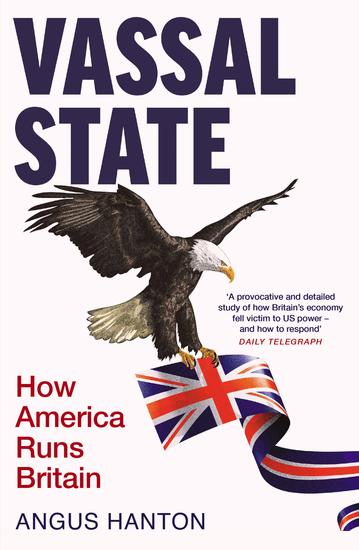
Vassal State - How America Runs Britain - cover

Vassal State - How America Runs Britain

Angus Hanton

Casa editrice: Swift Press

  • 0
  • 0
  • 0

Sinossi

'Provocative and detailed ... Excellent' The Telegraph
'Shocking and meticulous' Danny Dorling
'An eye-opening revelation ... a must-read' Joel Bakan
THE TELEGRAPH BEST BOOKS OF 2024
British politicians love to vaunt the benefits of the UK's supposed 'special relationship' with the US. But are we really America's economic partner – or its colony?
Vassal State lays bare the extent to which US corporations own and control Britain's economy: how American business chiefs decide what we're paid, what we buy and how we buy it. US companies have carved up Britain between them, siphoning off enormous profits, buying up our most lucrative firms and assets, and extracting huge rents from UK PLC – all while paying little or no tax. Meanwhile, policymakers, from Whitehall mandarins to NHS chiefs, shape their decisions to suit the whims of our American corporate overlords.
Based on his 40 years of business experience, devastating new research and interviews with the major players, Angus Hanton exposes why Britain has become the poor transatlantic relation – and what we can do to change it.
Disponibile da: 11/04/2024.
Lunghezza di stampa: 304 pagine.
Altri libri che potrebbero interessarti

  • Compassion - The Heart of Connection - cover

    Compassion - The Heart of...

    Esther Jameson

    • 0
    • 0
    • 0
    Compassion is a fundamental human quality, one that transcends individual differences and connects us to one another in profound ways. It is often described as the ability to feel and show concern for the suffering of others, accompanied by a desire to alleviate that suffering. At its core, compassion involves recognizing the pain or distress someone else is experiencing and responding with kindness, empathy, and support. This emotional response is not just about feeling for someone else; it is about acting in ways that may help them through their difficult times. 
    The essence of compassion lies in empathy, which is the ability to deeply understand and share the feelings of another. When we empathize with someone, we can put ourselves in their shoes, imagining their emotional and physical states. Compassion takes this a step further, as it compels us to act in a way that can alleviate or ease their suffering. It is more than simply being moved by someone’s pain; it is the drive to do something about it, whether through words of encouragement, acts of service, or offering comfort. 
    It is important to distinguish compassion from sympathy. Sympathy involves feeling pity or sorrow for someone else's misfortune, but it lacks the proactive component that characterizes compassion. While sympathy may evoke a response such as feeling sad for someone, compassion urges us to take action in a positive way. Compassion connects us to others through action and intention, and it is through this action that we create genuine bonds and meaningful relationships.
    Mostra libro
  • World War II in 1941: The History of the War’s Most Pivotal Year - cover

    World War II in 1941: The...

    Editors Charles River

    • 0
    • 0
    • 0
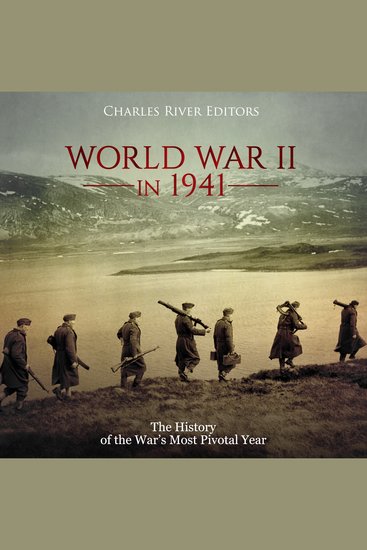
    At the beginning of 1941, it was unclear whether the Allies would be able to remain in the war for much longer. British Prime Minister Winston Churchill had already immortalized the men of the Royal Air Force with one of the West’s most famous war-time quotes, but the potential of a German invasion of Britain still loomed. With the comfort of hindsight, historians now suggest that the picture was actually more complex than that, but the Battle of Britain, fought throughout the summer and early autumn of 1940, was unquestionably epic in scope.  
    In the warm predawn darkness of June 22, 1941, 3 million men waited along a front hundreds of miles long, stretching from the Baltic coast of Poland to the Balkans. Ahead of them in the darkness lay the Soviet Union, its border guarded by millions of Red Army troops echeloned deep throughout the huge spaces of Russia. This massive gathering of Wehrmacht soldiers from Adolf Hitler's Third Reich and his allied states – notably Hungary and Romania – stood poised to carry out Operation Barbarossa, Hitler's surprise attack against the country of his putative ally, Soviet dictator Joseph Stalin. 
    All Americans are familiar with the “day that will live in infamy.” At 9:30 a.m. on Sunday, December 7, 1941, Pearl Harbor, the advanced base of the United States Navy’s Pacific Fleet, was ablaze. It had been smashed by aircraft launched by the carriers of the Imperial Japanese Navy. All eight battleships had been sunk or badly damaged, 350 aircraft had been knocked out, and over 2,000 Americans lay dead. Indelible images of the USS Arizona exploding and the USS Oklahoma capsizing and floating upside down have been ingrained in the American conscience ever since. In less than an hour and a half the Japanese had almost wiped out America’s entire naval presence in the Pacific.
    Mostra libro
  • On Liberty - cover

    On Liberty

    John Stuart Mill

    • 0
    • 0
    • 0
    On Liberty by John Stuart Mill is a powerful and enduring philosophical essay that explores the nature and boundaries of individual freedom in society. Written in 1859 during a period of political and intellectual upheaval, Mill makes an impassioned case for the sanctity of personal liberty—arguing that individuals should be free to act, think, and express themselves as they choose, so long as they do not harm others. 
    Mill’s central thesis, often referred to as the "harm principle," remains one of the cornerstones of liberal political thought: that the only justification for societal or governmental interference in a person’s life is to prevent harm to others. With remarkable clarity, he examines the relationship between authority and autonomy, tackling issues like free speech, individuality, moral policing, and the role of dissent in democratic society. 
    Narrated with depth and thoughtfulness by Luke Oldham, this audiobook brings to life one of the most influential works in political philosophy—a timeless defense of freedom and a clarion call for the courage to think for oneself.
    Mostra libro
  • Underwater Ruins of Civilization - cover

    Underwater Ruins of Civilization

    Martin K. Ettington

    • 0
    • 0
    • 0
    The level of Earth’s Oceans have changed many times over the millennia. 
     Global sea level rose by a total of more than 120 meters (360 feet) as the vast ice sheets of the last Ice Age melted back. This melt-back lasted from about 19,000 to about 6,000 years ago, meaning that the average rate of sea-level rise was roughly 1 meter per century. 
     Since many early cities and civilizations were built near the coast, there must be many submerged ruins around the world we are not yet familiar with. The study of these ruins is one of the great unmapped needs for future archeology. 
     We do know about a few of these ruins and are learning much more. This book is a summary of what we know or think we know today about these lost civilizations, cities, and towns. 
     I’ve also included the stories of many legendary cities or locations like Atlantis and Lemuria.
    Mostra libro
  • Churchill's War - How Winston Churchill Led Britain through Its Darkest Hours - cover

    Churchill's War - How Winston...

    Sage Winters

    • 0
    • 0
    • 0
    Winston Churchill is remembered as one of history’s most formidable leaders, a man whose unwavering resolve and stirring oratory inspired a beleaguered nation to withstand its darkest hour. Rising to prominence during one of humanity’s most perilous times, Churchill’s leadership during World War II not only shaped the fate of Britain but left an indelible mark on the global landscape. His life and career encapsulate the qualities of resilience, vision, and adaptability that are crucial during moments of profound crisis.  
      
    Born into an aristocratic family in 1874, Churchill's early life was one of privilege, yet his path to greatness was anything but guaranteed. Despite academic struggles and initial failures, he demonstrated remarkable tenacity, carving out a career as a soldier, journalist, and eventually a politician. His varied experiences—whether charging on horseback in colonial campaigns or reporting from the frontlines—imbued him with a deep understanding of courage and strategy, traits that would serve him well in the years to come.  
      
    Churchill’s rise to the role of wartime Prime Minister was far from linear. By the late 1930s, his political career seemed to be in decline. His outspoken criticism of appeasement policies and his relentless warnings about Adolf Hitler’s ambitions rendered him an isolated figure, often dismissed as a relic of an earlier age. Yet, as Europe hurtled toward war, Churchill’s foresight and defiance became assets too valuable to ignore. In 1940, as Nazi Germany’s forces swept across the continent, Churchill was called upon to lead. 
    Mostra libro
  • Shakey's Madness - cover

    Shakey's Madness

    Robert P Boog

    • 0
    • 0
    • 0
    Want to discover why William Shakespeare did NOT write the poems, plays and sonnets attributed to him? Using the internet during the COVID-19 pandemic to doublecheck what past experts have told us about William Shakespeare, author Robert Boog uses a fresh set of eyes to view the facts.  Because of all the fainting found in the poems and plays, Mr. Boog believes that the "real" author of the works probably suffered from epilepsy at a young age. Boog counted nine instances of fainting, but a British physician in 2006 counted 18 episodes of fainting with another 13 instances of "near" fainting. Why so much fainting? Did fainting morph into bipolar disorder when he was older? Boog claims BD symptoms can be found in the works while the man from Stratford never did. For this reason, a person close to Queen Elizabeth who showed symptoms of bipolar disorder and was called "the best playwright for comedy in Queen Elizabeth's court" makes the best choice for author.  Also, back in Elizabethan days, the Queen or King could behead anyone who "imagined the death of a ruler" so why would ANYONE in their right mind, write a play about the death of a ruler? Yet Hamlet, Anthony & Cleopatra and Richard II, all feature rulers who die. So writing under a pen name makes sense - esp in these days of fake Twitter handles and online cat-fishing.Mr. Boog suggests we approach the mystery of William Shakespeare's authorship like a modern-day "cold case" mystery. So, get ready to have fun listening and learning about a compelling case for the true authorship of the Shakespeare canon? A fun and informative audio book that includes humorous stories. It is read by the author from Los Angeles who has a wicked sense of humor."
    Mostra libro