Unisciti a noi in un viaggio nel mondo dei libri!
Aggiungi questo libro allo scaffale
Grey
Scrivi un nuovo commento Default profile 50px
Grey
Iscriviti per leggere l'intero libro o leggi le prime pagine gratuitamente!
All characters reduced
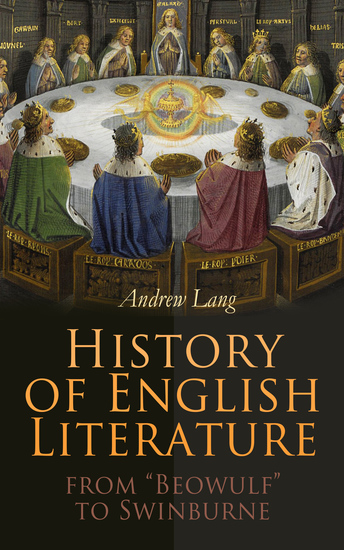
History of English Literature from "Beowulf" to Swinburne - cover

History of English Literature from "Beowulf" to Swinburne

Andrew Lang

Casa editrice: e-artnow

  • 0
  • 0
  • 0

Sinossi

The book 'History of English Literature from "Beowulf" to Swinburne' is written by Andrew Lang. Lang was a Scottish writer and literary critic who is best known as a collector of folk and fairy tales. His academic interests extended beyond the literary and he was a noted contributor to the fields of anthropology, folklore, psychical research, history, and classic scholarship, as well as the inspiration for the University of St. Andrew's lectures. A prolific author, Lang published more than 100 works during his career, including twelve fairy books, in which he compiled folk and fairy tales from around the world.
Excerpt:
"The literature of every modern country is made up of many elements, contributed by various races; and has been modified at different times by foreign influences. Thus, among the ancient Celtic inhabitants of our islands, the peoples whom the Romans found here, the Welsh have given us the materials of the famous romances of King Arthur, and from the Gaelic tribes of Ireland and Scotland come the romances of heroes less universally known, Finn, Diarmaid, Cuchulain, and the rest. But the main stock of our earliest poetry and prose, like the main stock of our language, is Anglo-Saxon. The Anglo-Saxon tribes who invaded Britain, and after the departure of the Romans (411) conquered the greater part of the island, must have had a literature of their own, and must have brought it with them over sea."
Disponibile da: 27/02/2022.
Lunghezza di stampa: 645 pagine.

Altri libri che potrebbero interessarti

  • Jean-Jacques Rousseau - The Social Contract and Natural Man - cover

    Jean-Jacques Rousseau - The...

    Hector Davidson

    • 0
    • 0
    • 0
    Jean-Jacques Rousseau, one of the most influential philosophers of the 18th century, reshaped the landscape of political and social theory. His ideas, particularly those outlined in The Social Contract and Discourse on the Origin and Basis of Inequality Among Men, have had a profound impact on modern thought, influencing the French Revolution, the development of democratic ideals, and the evolution of social theory. Rousseau's philosophy is a reflection of his deep concern with the relationship between individuals and society, the nature of human freedom, and the consequences of civilization. 
    At the heart of Rousseau’s thought is his concept of the "state of nature," a condition in which humans existed before the corrupting influence of society. In this natural state, Rousseau argued, humans were free, equal, and solitary. Their basic needs were limited, and they acted primarily on instinct, guided by compassion and self-preservation. However, with the rise of private property, inequality began to emerge, leading to the social contract—a mechanism through which individuals could unite to form a collective body politic, agreeing to follow the “general will” for the common good. This social contract was Rousseau's answer to the problem of how to create a just society that respects both individual liberty and collective harmony. 
    Rousseau rejected the view that human beings are inherently selfish, as suggested by other philosophers like Hobbes. Instead, he believed that while civilization introduced inequality and competition, it also created the potential for true human freedom, which could only be realized in a political community that was based on the collective will of its people. Rousseau’s idea of the general will is central to his political theory. The general will is not simply the sum of individual desires but represents the collective interests that transcend personal ambitions, aiming for the common good.
    Mostra libro
  • A Realistic Path to Peace - From Genocide to Global War and How We Can Stop It - cover

    A Realistic Path to Peace - From...

    Dee Charles Knight

    • 0
    • 0
    • 0
    This book delves into genocide in Palestine, and the war crisis in eastern Europe, West Asia and East Asia. It examines the role of the Big Lie in blunting popular opposition, and describes ways countries around the world and the general public are pressing for peace.  
    The world is in a crisis now. As its empire declines toward collapse, the United States leadership is making a series of disastrous errors. The “neocons” in Washington, DC, are determined to maintain U.S. global domination regardless of what it might take. The stakes are high for them. They seem to believe that if they “allow” any other 
    country to challenge their global leadership, their whole system could fall apart. 
    So they are prepared to do whatever it takes. Supporting genocide in Israel—by providing weapons, money, and a bizarre “moral justification” for horrific genocidal bombing—is a sign of what it takes. Blowing up the Nord Stream pipeline was another sign of what it can take. 
    Western European leaders have been rounded up and bludgeoned into a unified NATO alliance against Russia, and in support of Israeli genocide against Palestinians. This alliance—originally composed of “north Atlantic” countries under U.S. leadership at the end of World War II—is now also being extended to Asia. It’s a quest to curb China’s historic economic success, which threatens Western domination of global trade. 
    A new peace movement is emerging. It faces enormous obstacles, including a gigantic wave of war hysteria engineered in Washington, magnified exponentially by a captive mainstream media that seems to have abandoned all pretense of critical journalistic independence and objectivity. But as facts emerge and truth surfaces, the movement for peace will intensify. 
    Combined with the horrific results of sanctions and war, these facts and truths can be expected to bring ever greater waves of opposition and resistance into the fray.
    Mostra libro
  • Wired Wisdom - How to Age Better Online - cover

    Wired Wisdom - How to Age Better...

    Eszter Hargittai, John Palfrey

    • 0
    • 0
    • 0
    A surprising window into the online lives of people sixty and over—offering essential insights, no matter your age. 
     
    Many popular accounts say the older you are, the greater your tech struggles. And it’s worrying to think of loved ones emailing cringe-worthy misinformation, falling for phishing attacks, or becoming lonelier with increasing time spent online.  
     
    But in their eye-opening book on the internet’s fastest-growing demographic, researchers Eszter Hargittai and John Palfrey offer a more nuanced picture—debunking common myths about older adults’ internet use to offer hope and a necessary call to action. Incorporating original interviews and survey results from thousands of people sixty and over, Wired Wisdom shows that many, in fact, use technology in ways that put younger peers to shame. Over-sixties are often nimble online and quicker to abandon social media platforms that don’t meet their needs. Despite being targeted more often, they also may be less likely to fall for scams than younger peers. And fake news actually fools fewer people over sixty, who have far more experience evaluating sources and detecting propaganda. Still, there are unseen risks and missed opportunities for this group. Hargittai and Palfrey offer practical advice and show that our stereotypes can be hurdles that keep us from building intergenerational support communities, helping loved ones adopt new technology that may improve their lives, and thriving together online.
    Mostra libro
  • Kublai Khan: The Life and Legacy of the Legendary Mongolian Emperor of China - cover

    Kublai Khan: The Life and Legacy...

    Editors Charles River

    • 0
    • 0
    • 0
    Aside from Genghis, the most famous of the Mongolian rulers was Genghis’s grandson, Kublai Khan, who was raised as Mongolian in the traditional way, but also exposed to Chinese culture. Kublai’s father Tolui made sure all of his sons could ride and hunt, but he was apparently also concerned that they understood the characteristics and possibilities of the more settled regions under Mongolian rule. Thus, while Kublai and his brothers were still boys, his grandfather Genghis arranged a great Mongolian hunt. This traditional event involved many thousands of riders starting in a great circle and gradually moving into the center, driving the game in front of them. It was a hunt, but it was also a traditional kind of practice military exercise. Kublai killed a couple of small animals, and Genghis is reported to have been pleased with his grandsons.  
    	As Great Khan, Kublai Khan ruled the Mongolian Empire from his capital in modern-day Beijing, with a court that included Mongolians, Arabs, and Persians from throughout his empire. While Genghis may have been a warrior, Kublai was a man of culture, intellect and curiosity, and his court was a luxurious one rich in art, music, and goods. Under his reign, trade along the Silk Road was both easier and more efficient than ever before. Toll gates were removed, and traders could move freely from place to place. It was said that even women could travel safely with goods without fear of harm.  
    	Kublai was clearly an influential ruler, but what helped his legacy endure was that he hosted the famous Italian traveler Marco Polo, who stayed in China for years and described what he saw in detail. When Marco Polo’s travelogue was published back in Europe, it immediately became one of the most famous works on the continent, and while modern historians still debate which parts were factual and fictional, there can be no question that Kublai Khan was a monumental leader in Asia. 
    Mostra libro
  • Eco-Anxiety (and What to Do About It) - Practical Tips to Allay Your Fears and Live a More Environmentally Friendly Life - cover

    Eco-Anxiety (and What to Do...

    Harriet Dyer

    • 0
    • 0
    • 0
    Be kind to the planet, but most of all, be kind to yourself 


    When you feel the weight of the world on your shoulders, grab this book for a dose of calm and courage. Packed with reassuring tips and advice, from mindfulness exercises to practical steps you can take to make a difference, this guide will ease your eco-anxiety and help you to live a more environmentally friendly life.
    Mostra libro
  • Counting: Humans History and the Infinite Lives of Numbers - cover

    Counting: Humans History and the...

    Benjamin Wardhaugh

    • 0
    • 0
    • 0
    WHAT DOES IT MEAN TO COUNT? WHY ARE HUMANS THE ONLY SPECIES ON EARTH THAT CAN DO IT? WHERE DID COUNTING COME FROM? HOW HAS IT SHAPED SOCIETIES ALONG THE WAY? AND WHY DOES IT MATTER? 
    Counting is an innovative, erudite, world-wrapping journey through humanity’s marvellous ability to impose numbers on things. Acclaimed historian and mathematician Benjamin Wardhaugh draws on stories from the Stone Age to cyberspace in pursuit of the elusive, fascinating, endlessly diverse history of human counting. 
    Starting with the roots of counting in human brains, bodies and environments, Wardhaugh tours us around the world and through time while exploring the different flavours of counting that have developed over millennia. We meet the makers of bead necklaces in ancient South Africa, the inventors of writing in the world ’ s first metropolis, and the ‘counter culture’ of classical Athens. We see counting used – and changed – by Indian scholars, Chinese peasants and Papuan shopkeepers; we meet the distinctive numerate agendas of Mayan kings, US governments and Korean vloggers. 
    Weaving these stories together, Wardhaugh shows how cultures have shaped counting, and how counting has shaped culture, in a rich tapestry spanning thousands of years. This is the vast story of human attempts to find some order in an unruly world; or, perhaps, to impose on a reluctant world the order that humans find within themselves. It is a history as wide, deep and tangled as that of humanity itself 
    This best non-fiction book by Wardhaugh is a deep dive into the philosophy and technology behind counting. His teaching style and comprehensive study of mathematics make this book a standout in its genre. 
    For fans of David Spiegelhalter (The Art of Uncertainty), Cat Bohannon (Eve), Rory Stewart (The Marches), Anne Applebaum (Autocracy, Inc), and Peter Frankopan (The New Silk Roads). 
    HarperCollins 2024
    Mostra libro