Unisciti a noi in un viaggio nel mondo dei libri!
Aggiungi questo libro allo scaffale
Grey
Scrivi un nuovo commento Default profile 50px
Grey
Iscriviti per leggere l'intero libro o leggi le prime pagine gratuitamente!
All characters reduced
Tech Addiction Concerns - cover

Tech Addiction Concerns

Ami Wright

Traduttore A AI

Casa editrice: Publifye

  • 0
  • 0
  • 0

Sinossi

Tech Addiction Concerns explores the growing issue of technology dependence among young people, examining its psychological and behavioral consequences. In today's hyper-connected world, children and adolescents are increasingly trading real-world experiences for digital interactions, raising concerns about the long-term effects on their development. The book dives into the neurobiological aspects of tech addiction, revealing how digital stimuli can trigger reward pathways in the brain, similar to traditional addictions. It also investigates the impact of constant online engagement on self-esteem and social skills, often leading to isolation and anxiety. This book provides a comprehensive overview of how technology use has evolved and become deeply ingrained in young people's lives. Starting with a definition of technology addiction, it progresses through the neurological and psychological impacts, using case studies and research to illustrate real-world effects. What sets this book apart is its approach to providing practical, evidence-based strategies for parents, educators, and therapists to mitigate the negative effects of excessive technology use and promote healthy digital habits.
Disponibile da: 22/02/2025.
Lunghezza di stampa: 79 pagine.
Altri libri che potrebbero interessarti

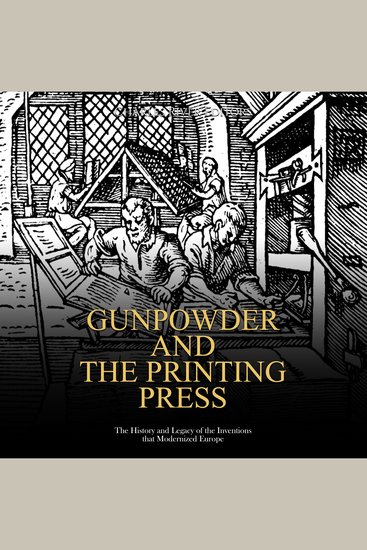
  • Gunpowder and the Printing Press: The History and Legacy of the Inventions that Modernized Europe - cover

    Gunpowder and the Printing...

    Editors Charles River

    • 0
    • 0
    • 0
    In addition to the wheelbarrow, the seismograph, the waterwheel, deep drilling, suspension bridges, and ship rudders, among countless other life-changing contraptions, the Chinese developed what were later dubbed the “Four Great Inventions of China.” Two of those were gunpowder and printing, which both spread through South Asia and the Middle East before making it to Europe.  
    For a time, gunpowder was a mere curiosity, but its destructive power and military potential would be realized quickly. The first record of a cannon in Europe comes from a manuscript written in 1326, which has an illustration showing an armored man with what looks like a slow match lighting a vase-shaped object. This crude cannon was called a pot de fer in French and vasi in Italian. While medieval engineers developed new types of cannons and explosives capable of destroying walls and castles, others were making the first handguns possible. European sources first mentioned the widespread use of handgonnes, as they were often called, in the late 14th century, precisely the time when gunpowder became cheaper.  
    	The history of printing was for ancient Asia an advancement in culture and communication, but for Europe in the 15th century, it was much more, plunging the continent into a new paradigm and aligning it for the modern world. Its importance is often overlooked, but the timeliness of the printing machine was equivalent to the invention of alphabets in antiquity and ranks up there with the digital revolution and the introduction of the internet. Put simply, it made the Renaissance possible and led to the modernization of Europe. Based on earlier Asian principles, Johannes Gutenberg’s movable type printing press propelled an industry that led to the education of the West and ultimately removed the tight grip of the Vatican from daily European life. 
    Mostra libro
  • Discourse on the Arts and Sciences - cover

    Discourse on the Arts and Sciences

    Jean-Jacques Rousseau

    • 0
    • 0
    • 0
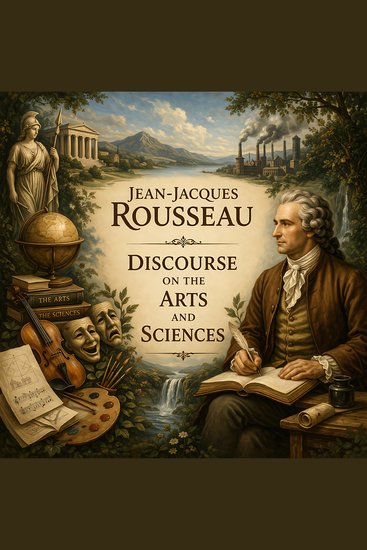
    This audiobook is narrated by an AI Voice. State-of-the-art voice generation technology, combined with careful human editing, has been employed in this production of "Discourse on the Arts and Sciences" by Jean-Jacques Rousseau in order to make this important text more widely accessible to modern audiences. Listeners are invited to explore the audio sample and judge the quality for themselves. 
     
    In "Discourse on the Arts and Sciences", Rousseau presents the provocative argument that the progress of the arts, sciences, and refinement in society has not led to moral improvement, but rather to corruption and decline in virtue. Contrary to the optimism of the Enlightenment, he suggests that as societies become more sophisticated, individuals grow increasingly concerned with appearances, status, and intellectual vanity, losing touch with authenticity, simplicity, and moral integrity. 
     
    This essay marks an early and foundational moment in Rousseau’s body of work, anticipating themes that would later be developed more fully in writings such as "Discourse on Inequality" and "The Social Contract". His critique of civilization and emphasis on natural human goodness would go on to influence political philosophy, education theory, and Romantic thought. 
     
    Today, Rousseau’s reflections remain strikingly relevant. In an age shaped by rapid technological advancement, social media, and the constant pursuit of recognition, his warning about the tension between progress and virtue continues to invite reflection. This work challenges listeners to consider whether modern achievements have truly made us better—and what might be lost in the process.
    Mostra libro
  • Gladys Aylward - The Adventure of a Lifetime - cover

    Gladys Aylward - The Adventure...

    Janet Benge, Geoff Benge

    • 0
    • 0
    • 0
    This is the powerful story of Gladys Aylward. Without formal education or a missionary organization to back her, Gladys raised her own finances for the overland trip that would bring her to the country and people that God had etched so deeply on her heart.... China! What follows is an amazing adventure of faith and determination. Gladys Aylward, a housemaid from England, dared to trust God in the face of dire and seemingly hopeless circumstances. Her amazing adventure of faith and determination is one of the truly great missionary stories of our era (1902-1970).
    Mostra libro
  • How to Do the Right Thing - An Ancient Guide to Treating People Fairly - cover

    How to Do the Right Thing - An...

    Seneca, Robert A. Kaster

    • 0
    • 0
    • 0
    How ancient Stoicism can help teach us to treat others—and ourselves—more fairly and mercifully 


    There are times when we've all felt that we haven't been treated as we deserve—that we've been misjudged, shortchanged, or given a raw deal. And, at one time or another, other people have probably felt that we've treated them just as unfairly. How to Do the Right Thing draws on the principles of ancient Stoicism as articulated by the Roman statesman and philosopher Seneca to help listeners better navigate one of the most important practical questions of daily life—how to do right by others. 


    Starting from the virtue of magnanimity—the opposite of small-mindedness—How to Do the Right Thing draws together lessons from Seneca's writings that stress the importance of calm and clear thinking, of judging oneself fairly before judging others, and of cutting people slack, with a bias toward mercy—all delivered in crisp and lively new translations.
    Mostra libro
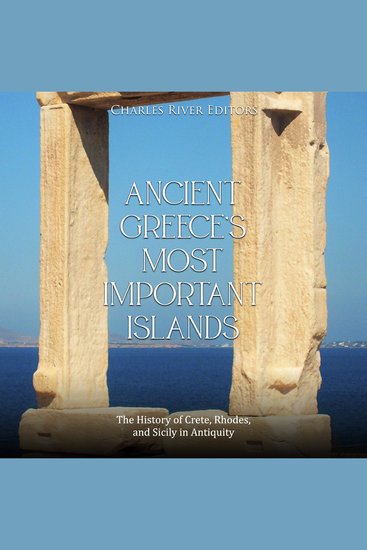
  • Ancient Greece’s Most Important Islands: The History of Crete Rhodes and Sicily in Antiquity - cover

    Ancient Greece’s Most Important...

    Editors Charles River

    • 0
    • 0
    • 0
    Nearly 2,500 years after the Golden Age of Athens, people across the world today continue to be fascinated by the ancient Greeks, but who did the Ancient Greeks look up to? The answer to that question can be found in Homer’s The Odyssey, in which Odysseus makes note of “a great town there, Cnossus, where Minos reigned.” It was perhaps the earliest reference to the Minoan civilization, a mysterious ancient civilization that historians and archaeologists still puzzle over, but a civilization that renowned historian Will Durant described as "the first link in the European chain.” Nearly 2,000 years before Homer wrote his epic poems, the Minoan civilization was centered on the island of Crete, a location that required the Minoans to be a regional sea power. And indeed they were, stretching across the Aegean Sea from about 2700-1500 BCE with trade routes extending all the way to Egypt. 
    In the Archaic and Classical periods, Rhodes often stood as a prime exemplar of the highs and lows of its fellow Greek cities, and as the largest island of the Dodecanese, Rhodes’ history is largely in line with that of the rest of those islands. Rhodes would reach the zenith of its power in the Hellenistic period following the death of Alexander the Great in 323 BCE. Even as the rest of the city-states waned compared to the much larger kingdoms of Alexander’s successors in Egypt and Asia, Rhodes would come to the forefront as a main power in the Greek world, standing toe-to-toe with these Hellenistic kingdoms.  
    It was during the Classical era that, especially under the tyrants (dictators) of the Greek city of Syracuse, Sicily came the closest to being governed as a single, unified, and independent state. In time, it came to challenge the powerful trade empire of Carthage, a former Phoenician colony in North Africa, and it vied with the cities and kingdoms of mainland Greece for primacy in the Greek world.
    Mostra libro
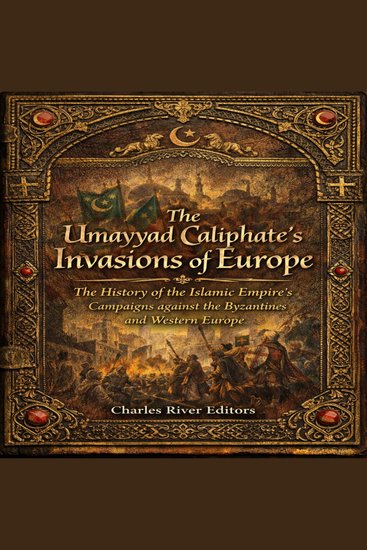
  • Umayyad Caliphate’s Invasions of Europe The: The History of the Islamic Empire’s Campaigns against the Byzantines and Western Europe - cover

    Umayyad Caliphate’s Invasions of...

    Charles River Editors

    • 0
    • 0
    • 0
    Amid the upheaval in the Islamic world following Muhammad’s death, the Umayyad Caliphate lasted for less than a century, but it spent that time becoming one of the most influential of the major caliphates. Its official existence was from 661-750, and the rulers were the male members of the Umayyad dynasty, roughly translated from Arabic as the “Sons of Umayyah.” Its primary base of power was in Syria following the creation of a dynastic, hereditary rule headed by one of Syria’s long-lasting governors, Muawiya ibn Abi Sufyan. 
    	The history of the Iberian Peninsula is closely bound to the Umayyad Caliphate. The term “Spain” was not in wide use until the region was united by the monarchs of Aragon and Castile, and the Arabs called the lands they ruled in the Iberian Peninsula Al-Andalus, traditionally thought to be an Arabic transliteration of Vandal, the Germanic tribe which briefly ruled the region in the early fifth century. The English name Andalusia derives from the Spanish Andalucia, which is still used by Spain to name its southern region. While the Moors have always been associated with Spain due to their lengthy stay on the Iberian Peninsula, the most famous battle they were involved in was actually fought in modern France. While the Franks were consolidating a kingdom there, Muslim forces were pushing out of North Africa and into the Iberian Peninsula in the early 8th century, and by the dawn of the 730s, the Umayyad dynasty had expanded its territory from the Atlantic to the Pyrenees. 
    The Umayyads also constantly fought the Byzantines, and on August 15, 717, their formidable army, under the command of General Maslama ibn 'Abd al-Malik, arrived in Thrace and laid siege to the imposing walls of Constantinople. This event, which lasted a full year until August 15, 718, represented the apex of the Islamic expansionist project aimed at definitively eradicating the Byzantine Empire and subjugating its seemingly impregnable capital.
    Mostra libro