Junte-se a nós em uma viagem ao mundo dos livros!
Adicionar este livro à prateleira
Grey
Deixe um novo comentário Default profile 50px
Grey
Assine para ler o livro completo ou leia as primeiras páginas de graça!
All characters reduced
Inside the Darknet - cover
LER

Inside the Darknet

Ami Wright

Tradutor A AI

Editora: Publifye

  • 0
  • 0
  • 0

Sinopse

"Inside the Darknet" explores the hidden world beyond the surface web, revealing a network built on anonymity and encryption. This realm, accessible through tools like Tor, hosts a range of activities, both illicit and beneficial. Understanding the darknet is increasingly vital, as it represents a complex intersection of technology, social dynamics, and real-world impact.

 
Did you know that the darknet uses layers of encryption and decentralized systems to ensure user anonymity? Or that it serves as a haven for both illegal marketplaces and platforms for political activism? The book examines the darknet's technical infrastructure, including security protocols and routing methods, alongside the social organizations and online communities that thrive within it.

 
Chapters delve into the various activities hosted on the darknet, from illegal marketplaces to forums for extremist ideologies, and havens for privacy-conscious individuals. The book progresses systematically, starting with core concepts, then the architecture, concluding with its implications for law enforcement and cybersecurity.

 
By combining technical analysis with ethical considerations, "Inside the Darknet" offers a balanced perspective on this controversial digital space.
Disponível desde: 27/02/2025.
Comprimento de impressão: 99 páginas.
Outros livros que poderiam interessá-lo

  • Ultimate Rust for Systems Programming - Master Core Programming for Architecting Secure and Reliable Software Systems with Rust and WebAssembly - cover

    Ultimate Rust for Systems...

    Mahmoud Harmouch

    • 0
    • 0
    • 0
    Building Tomorrow's Systems Today the Rust Way
    Key Features
    -  Learn how to use Rust libraries effectively for various applications and projects.
    -  Go from basics to advanced system-building skills for stronger and reliable outcomes.
    -  Secure your Rust applications confidently with expert tips for enhanced protection.
    
    Book Description
    This book is your guide to mastering Rust programming; equipping you with essential skills and insights for efficient system programming. It starts by introducing Rust's significance in the system programming domain and highlighting its advantages over traditional languages like C/C++. You'll then embark on a practical journey; setting up Rust on various platforms and configuring the development environment. From writing your first "Hello; World!" program to harness the power of Rust's package manager; Cargo; the book ensures a smooth initiation into the language.
    Delving deeper; the book covers foundational concepts; including variables; data types; control flow; functions; closures; and crucial memory management aspects like ownership; borrowing; and lifetimes. Special attention is given to Rust's strict memory safety guarantees; guiding you in writing secure code with the assistance of the borrow checker.
    The book extends its reach to Rust collections; error-handling techniques; and the complexities of concurrency management. From threads and synchronization primitives like Mutex and RwLock to asynchronous programming with async/await and the Tokio library; you'll gain a comprehensive understanding of Rust's capabilities. This book covers it all.
    What you will learn
    -  Learn how to set up the Rust environment effortlessly; ensuring a streamlined development process.
    -  Explore advanced concepts in Rust; including traits; generics; and various collection types; expanding your programming expertise.
    -  Master effective error-handling techniques; empowering you to create custom error types for enhanced code robustness.
    -  Tackle the complexities of memory management; and smart pointers; and delve into the complexities of concurrency in Rust.
    -  Gain hands-on experience by building command-line utilities; sharpening your practical skills in real-world scenarios.
    -  Master the use of iterators and closures; ensuring code reliability through comprehensive unit testing practices.
    
    Who is this book for?
    This book is tailored for aspiring programmers; software developers; system engineers; and computer scientists looking to dive into system programming with Rust. It caters to a broad spectrum of individuals and professionals interested in leveraging Rust's power to build robust and efficient applications. While no prior experience with Rust is necessary; a basic understanding of programming concepts and familiarity with at least one programming language would be beneficial.
    
    Table of Contents
    1. Systems Programming with Rust
    2. Basics of Rust
    3. Traits and Generics
    4. Rust Built-In Data Structures
    5. Error Handling and Recovery
    6. Memory Management and Pointers
    7. Managing Concurrency
    8. Command Line Programs
    9. Working with Devices I/O in Rust
    10. Iterators and Closures
    11. Unit Testing in Rust
    12. Network Programming
    13. Unsafe Coding in Rust
    14. Asynchronous Programming
    15. Web Assembly with Rust      
    Index
    Ver livro
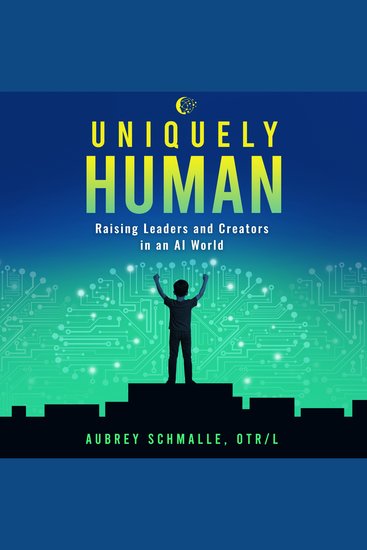
  • Uniquely Human - Raising Leaders and Creators in an AI World - cover

    Uniquely Human - Raising Leaders...

    Aubrey Schmalle

    • 0
    • 0
    • 0
    In Uniquely Human: Raising Leaders and Creators in an AI World, occupational therapist and parenting expert Aubrey Schmalle delivers a transformative roadmap for raising empowered kids in a world increasingly shaped by screens, algorithms, and artificial intelligence. With warmth, clarity, and over 20 years of professional experience, Aubrey blends neuroscience, sensory integration, and real-world family dynamics into a guide that feels like both a deep breath and a call to action. 
    Inside you’ll discover: 
    How technology is impacting your child’s brain and what to do about it 
    The Five Pillars that cultivate emotional intelligence, curiosity, and creativity 
    Strategies for developing your own Family Playbook, tailored to your unique values and goals 
    Simple, science-backed tools to help your kids build real-life confidence, leadership, and adaptability 
    Perfect for parents, educators, therapists, and caregivers, this book will help you raise children who are not only prepared for the future—but bold enough to shape it.
    Ver livro
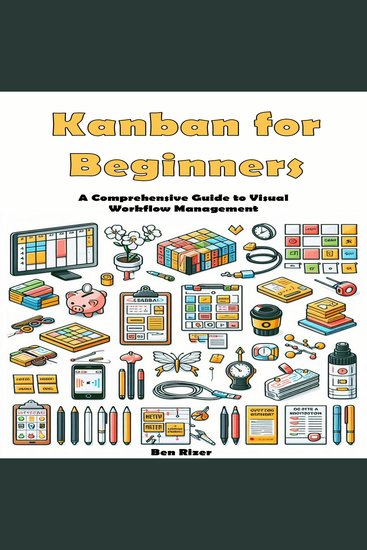
  • Kanban for Beginners - A Comprehensive Guide to Visual Workflow Management - cover

    Kanban for Beginners - A...

    Ben Rizer

    • 0
    • 0
    • 0
    Unlock the power of Kanban with "Kanban for Beginners: A Practical Guide to Visual Workflow Management." This comprehensive and easy-to-understand guide is designed for anyone looking to implement Kanban in their work, whether you’re part of a software development team, managing projects, or simply seeking personal productivity tools. 
    Starting with the fundamentals, the book introduces the key principles of Kanban, from visualizing workflows and limiting work-in-progress to managing flow and fostering continuous improvement. You'll learn how to set up your own Kanban board, both physical and digital, and tailor it to your team's unique needs. Practical tips for overcoming implementation challenges and optimizing performance are provided to ensure a smooth transition into a Kanban-driven approach. 
    Each chapter builds on real-world examples, offering insights into how Kanban can be applied across different industries and contexts, from software development and manufacturing to personal productivity. Discover advanced techniques like scaling Kanban for large teams and integrating it with other Agile frameworks like Scrum. 
    This guide offers step-by-step instructions, tools, and strategies to help you achieve greater efficiency, transparency, and continuous improvement. 
    Transform how you manage work with Kanban—one card at a time. 
     
    Ver livro
  • Voices of Famous Inventors - cover

    Voices of Famous Inventors

    Thomas Eidson, Thomas Watson,...

    • 0
    • 0
    • 0
    Thomas Alva Edison (February 11, 1847 – October 18, 1931) was an American inventor and businessman. He developed many devices that greatly influenced life around the world, including the phonograph, motion picture camera, and a long-lasting, practical electric light bulb. Dubbed "The Wizard of Menlo Park", he was one of the first inventors to apply the principles of mass production and large-scale teamwork to the process of invention, and because of that, he is often credited with the creation of the first industrial research laboratory. The following, from 1908, is a commemoration at the New York Electrical Show of the 50th anniversary of the first Atlantic cable. Thomas Augustus Watson (January 18, 1854 – December 13, 1934) was as a bookkeeper and a carpenter before becoming an assistant to Alexander Graham Bell, aiding in the the invention of the telephone in 1876. He is best known because his name was one of the first words spoken over the telephone. "Mr. Watson, come here, I want to see you," were the first words Bell said using the new invention, according to Bell's laboratory notebook. Guglielmo Marconi (25 April 1874 – 20 July 1937) was an Italian inventor, known for his pioneering work on long distance radio transmission and radio telegraph system. Marconi shared the 1909 Nobel Prize in Physics with Karl Ferdinand Braun "in recognition of their contributions to the development of wireless telegraphy". As an entrepreneur, businessman, and founder of the The Wireless Telegraph & Signal Company in Britain in 1897, Marconi succeeded in making a commercial success of radio by innovating and building on the work of previous experimenters and physicists. The following is from a talk he gave in 1935 about how he received the first transatlantic message by wireless telegraphy.
    Ver livro
  • The Hidden Code Quietly Controlling Your Future - cover

    The Hidden Code Quietly...

    Felix Crane

    • 0
    • 0
    • 0
    This audiobook is narrated by an AI Voice. Expose the software, algorithms, and automated systems making decisions today that will determine your opportunities, options, and life trajectory for years to come. This forward-looking audiobook examines how current data collection and algorithmic classification creates persistent digital profiles that follow you indefinitely, influencing future decisions you cannot predict. Learn how early social media posts, browsing history, purchase patterns, and location data become permanent records used in ways never anticipated when you generated them. The narrator reveals how predictive algorithms project current patterns into future expectations that become self-fulfilling prophecies when institutions rely on these predictions. Discover the feedback loops between algorithmic prediction and opportunity allocation that can lock individuals into trajectories determined by past data regardless of present reality. Understand why data collected for one purpose inevitably finds other uses as systems interconnect and corporations trade information without your knowledge. This audiobook examines the concept of algorithmic fate, where automated systems increasingly determine life outcomes based on computations rather than human judgment or individual agency. Learn what data protection advocates, computer scientists, and civil liberties experts understand about long-term implications of current data practices. Perfect for young people whose digital lives are just beginning and anyone concerned about how present actions create future constraints through hidden technological processes.
    Ver livro
  • Introduction to Bioinformatics - cover

    Introduction to Bioinformatics

    Jim D Johnston

    • 0
    • 0
    • 0
    Explore the intersection of biology, data science, and computing, where modern technology is unlocking new discoveries in genetics and life sciences. 
    Introduction to Bioinformatics is a beginner-friendly guide designed to help students, researchers, and curious learners understand how computational tools are used to analyze biological data. From DNA sequencing to protein structure prediction, bioinformatics plays a vital role in modern medicine, genetics, and biotechnology. 
    This book simplifies complex scientific and computational concepts, making them accessible to readers with little or no prior background in biology or programming.
    Ver livro