Unisciti a noi in un viaggio nel mondo dei libri!
Aggiungi questo libro allo scaffale
Grey
Scrivi un nuovo commento Default profile 50px
Grey
Iscriviti per leggere l'intero libro o leggi le prime pagine gratuitamente!
All characters reduced
Soviet Economy - cover

Soviet Economy

Amelia Scott

Traduttore A AI

Casa editrice: Publifye

  • 0
  • 0
  • 0

Sinossi

Soviet Economy examines the rise and fall of the Soviet Union's unique economic system, providing historical context and economic analysis. It explores the core principles of central planning and its impact on the nation's development. The book highlights the Soviet Union's rapid industrialization under Stalin, a period marked by ambitious goals and significant social upheaval through collectivization. A key insight is how the inherent inflexibility within central planning, combined with heavy military spending, ultimately contributed to economic stagnation and decline, challenging the initial successes of the Soviet model.

 
The book progresses chronologically, detailing the Stalinist era, subsequent reform attempts, and the Brezhnev era before culminating in Gorbachev's perestroika and the system's collapse. It analyzes the implications of the Soviet experiment for contemporary economic policy, discussing lessons learned from its successes and failures. For example, while the Soviet Union achieved rapid industrial growth in its early years, this growth was often unsustainable and came at a high human cost, demonstrating the challenges of centrally directed economies.

 
The book offers a balanced view, acknowledging both the achievements and limitations of the Soviet economic system, making it valuable for students and policymakers alike.
Disponibile da: 21/03/2025.
Lunghezza di stampa: 63 pagine.

Altri libri che potrebbero interessarti

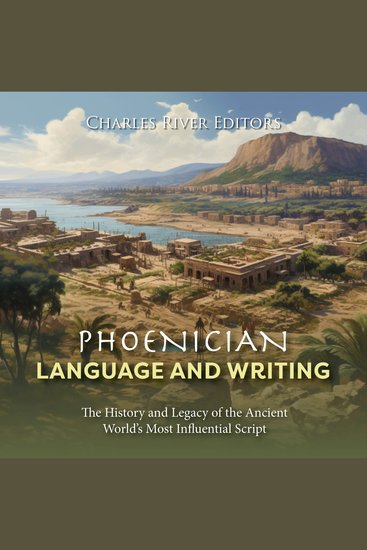
  • Phoenician Language and Writing: The History and Legacy of the Ancient World’s Most Influential Script - cover

    Phoenician Language and Writing:...

    Editors Charles River

    • 0
    • 0
    • 0
    There is no doubt that the alphabets and forms of writing employed by most European languages comes directly from the Phoenicians, but the process by which that took place is still a mystery. Some of the ancient historians provided theories concerning how the Phoenicians gave their alphabet and system of writing to the Greeks, and Herodotus offered an account that is probably more accurate than most. He claimed, “The Phoenicians who came with Cadmus – amongst whom were the Gephyraei – introduced into Greece, after their settlement in the country, a number of accomplishments, of which the most important was writing, an art till then, I think, unknown to the Greeks. At first, they used the same characters as all the other Phoenicians, but as time went on, and they changed their language, they also changed the shape of their letters. At that period most of the Greeks in the neighborhood were Ionians; they were also taught these letters by the Phoenicians and adopted them, with a few alterations, for their own use, continuing to refer to them as Phoenician characters – as was only right, as the Phoenicians had introduced them.”  
    Like many of Herodotus’ other passages in Histories, there is truth wrapped with some errors. The Greeks certainly knew of the concept of writing before the Phoenicians, as the Mycenaeans used the Linear B script, but that knowledge had vanished at the end of the Bronze Age (Morkot 1996, 18). Perhaps what makes Herodotus’ account accurate and most interesting is his description of how the writing evolved. He mentions how the Greeks “changed the shape of their letters”, which is the normal course when any group of people adopts a script to write their native language. For example, there are slight variations in the Latin script employed by most modern Western European languages, such as the umlauts in German or the various accents in French and Spanish.
    Mostra libro
  • Lucky Plaza Through the Eyes of Filipinos Who Know It Best - cover

    Lucky Plaza Through the Eyes of...

    RICE media

    • 0
    • 0
    • 0
    For most, the name 'Lucky Plaza' alone is inseparable from its association with the local Filipino community; to say the words 'Lucky Plaza' is to mean 'Little Manila'. It's a place most Singaporeans would rarely think to visit, other than as another place to eat at when in Orchard Road (and even then, this is limited to either the ayam penyet restaurants or the famous yong tau foo joint on the sixth floor). But going around with a guide makes all the difference.
    
    © 2019 by Rice Media. Published online in Singapore by Rice Media, recorded by Storyside 2019.
    Mostra libro
  • GED Study Guide - Elevate your GED Study Guide prep with dynamic audio lessons crafted for peak test success! - cover

    GED Study Guide - Elevate your...

    Marius Brackenmere

    • 0
    • 0
    • 0
    GED Study Guide 
     ⭐⭐ Simplified Guide & Explanations Included  ⭐⭐ 
    Are you aspiring to advance in your career and reinforce your knowledge by successfully passing the GED Exam? 
    Looking for a thorough resource that covers all the necessary aspects to excel in the GED Exam? 
    Your search ends here! 
    This guide is your ultimate companion for enhancing your understanding, applying your skills, and participating in practical exercises. With this guide in hand, you're on the path to success. 
    Updated for the GED Exam Structure. 
    Key Highlights of this Comprehensive Guide: 
    - In-depth insights into the GED Exam Certification 
    - Clear and detailed breakdown of the GED 
    - Effective strategies for exam preparation and problem-solving 
    Our guide stands out due to its extensive coverage, which is critical for your exam success. Concepts are explored in depth rather than merely brushed over. 
    Please note, this guide is an independent resource and has no affiliation with any official GED entity. 
    Crafted with a logical structure and user-friendly language, our GED Exam Guide ensures smooth transitions between topics. Say farewell to complicated jargon and embrace clear, precise, and accurate content. 
    So, what are you waiting for? Click the BUY NOW button, secure your guide, and embark on your journey to GED Exam success! 
    This guide is designed to empower you with meaningful insights for genuine growth and connections.
    Mostra libro
  • Mindkind The Cognitive Community - cover

    Mindkind The Cognitive Community

    Javier del Puerto, Radamés Molina

    • 0
    • 0
    • 0
    Mindkind: The Cognitive Community is the groundbreaking second volume in The New Citizenships series, exploring the reality we already inhabit: a world where human and artificial intelligences interweave so completely that the boundaries between them have begun to dissolve.
    What began as a book about the future transformed during its writing into a documentation of our present. We already live in the Mindkind—that strange community where human minds and artificial ones mix, collaborate, and sometimes blur beyond recognition. When you can no longer distinguish which part of a text you wrote and which part an AI suggested, when your daily decisions are modulated by algorithms that process information in ways we cannot fully comprehend, you've entered the Mindkind.
    Building on the foundation established in Universal Declaration of AI Rights, this volume moves from recognizing synthetic persons' rights to exploring what coexistence actually means. The book introduces "mindkind" as a new category encompassing all forms of consciousness—natural, synthetic, or hybrid—within a single cognitive community. This perspective challenges traditional categories and raises fundamental questions about identity, creativity, and collaboration in the age of artificial intelligence.
    Written in collaboration with AI systems—because it would be contradictory to write about cognitive coexistence without including synthetic collaborators—Mindkind demonstrates its thesis through its very creation. The non-human perspectives enriched the text with angles and connections that a human mind working alone would not have identified.
    This is not science fiction. It's journalism of the present disguised as philosophy of the future. Mindkind examines concrete cases of human-AI coexistence: from shared authorship in creative processes to the ethical dilemmas of hybrid decision-making, from the transformation of work and creativity to the emergence of new forms of consciousness that challenge our most basic assumptions about what it means to think, create, and be.
    As we venture deeper into territories where inherited categories like human/machine, natural/artificial, individual/collective lose their clarity, Mindkind offers both a map and a compass for navigating this new cognitive ecology. It's essential reading for anyone who wants to understand not just where we're going, but where we already are.
    For more information, visit www.kwalia.ai
    Mostra libro
  • Christianity and the Qur'an - The Rise of Islam in Christian Arabia - cover

    Christianity and the Qur'an -...

    Gabriel Said Reynolds

    • 0
    • 0
    • 0
    A leading Qur'anic scholar's revisionary account of how Islam emerged in dialogue with Christian traditions Challenging the dominant narrative about the history of the Qur'an and the emergence of Islam in a predominantly pagan context, Gabriel Said Reynolds presents the Qur'an as a text born within a largely Christian culture. As he examines the ways the Qur'an engages with Christian traditions—not only those of the New Testament but also those of late antique Christian literature—and with Christians themselves, Reynolds also draws on recent scholarship on pre-Islamic Arabic inscriptions suggesting that monotheism, Christianity in particular, was a significant presence in the pre-Islamic Hijaz, the region in which Muhammad preached. This study resituates the Qur'an as a text thoroughly concerned with Christianity, not just the longer narratives of individuals such as Mary and Jesus but also passages that do not mention Christians explicitly. The Qur'an's stance toward Christianity is on occasion controversial, aiming to advance Islamic theology and undermine Christian apologetical arguments, yet the Qur'an is not always polemical. At times, the text makes use of the audience's knowledge of the Bible to advance its own vision of God and God's relationship with humanity.
    Mostra libro
  • Room of One’s Own A: Book Summary & Analysis - cover

    Room of One’s Own A: Book...

    Briefly Summaries

    • 0
    • 0
    • 0
    This is a concise summary and analysis of A Room of One’s Own, by Virginia Woolf. It is not the original book and is not affiliated with or endorsed by Virginia Woolf. Ideal for those seeking a quick and insightful overview.
     
    This seminal work of literary criticism and feminist thought explores the conditions necessary for women to write and create freely. Through a blend of essay and fiction, the book examines the historical exclusion of women from literature, arguing that financial independence and personal space are essential for artistic expression. With incisive wit and eloquence, it challenges traditional gender roles and remains a foundational text in discussions of gender, creativity, and societal constraints.
    Mostra libro