Join us on a literary world trip!
Add this book to bookshelf
Grey
Write a new comment Default profile 50px
Grey
Subscribe to read the full book or read the first pages for free!
All characters reduced
Rivers of America - cover

Rivers of America

Amelia Khatri

Translator A AI

Publisher: Publifye

  • 0
  • 0
  • 0

Summary

"Rivers of America" explores the profound impact of the nation's waterways on its history, geography, and environmental landscape. It reveals how rivers like the Mississippi, Missouri, Colorado, and Columbia shaped settlement patterns, facilitated trade, and influenced economic development. For example, the Mississippi River served not only as a crucial transportation route for goods and people, but also as a defining factor in the expansion and growth of the United States. The book uniquely connects natural history with human history, illustrating how these river systems molded cultural identities and economic opportunities.

 
The book progresses by first establishing the geological and ecological context of rivers, then examining their historical roles in regional development through case studies. Finally, it addresses contemporary issues in river management and conservation. This approach provides a holistic understanding of the complex relationship between rivers and American society. It underscores the pivotal role of rivers, offering a fresh perspective on America's past and a vital guide for its future by examining environmental history, water management, and the enduring significance of these vital waterways.
Available since: 02/12/2025.
Print length: 64 pages.

Other books that might interest you

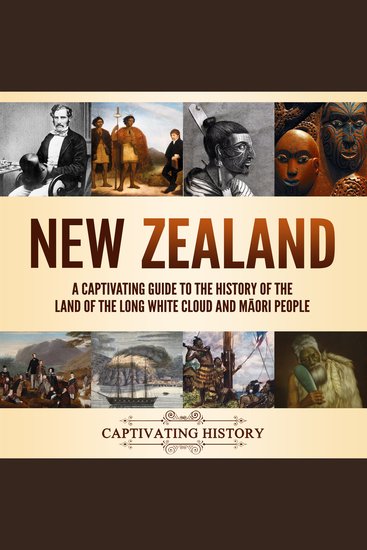
  • New Zealand: A Captivating Guide to the History of the Land of the Long White Cloud and Māori People - cover

    New Zealand: A Captivating Guide...

    Captivating History

    • 0
    • 0
    • 0
    Two manuscripts in one audiobook:History of New Zealand: A Captivating Guide to the History of the Land of the Long White Cloud, from the Polynesians Through the Māori Musket Wars to the PresentMāori History: A Captivating Guide to the History of the Indigenous Polynesian People of New Zealand 
    In the first part of this audiobook, you will learn about:Extinct animals that used to call New Zealand home;The arrival of the Polynesians and what that meant for the region;The early European explorations and who is credited with discovering the island nation;Colonization efforts and their impact on the Māori;How New Zealand was run under European control;The progressive changes that took place; 
    In the second part of this audiobook, you will discover:The origins of the Māori people.How the Māori civilization developed in seclusion from the rest of the world.What Māori life was like before European contact.How and when the Māori isolation period ended.How the European presence changed the Māori civilization.Why the Māori-European relations soured.The Māori heroes in the struggles against the colonial settlers.What happened during the New Zealand Wars.How the Māori survived the European challenges.Who led the Māori into modernity and newfound prosperity. 
    Scroll up and click the “add to cart” button to begin learning about New Zealand and Māori History!
    Show book
  • The Art of Thinking Clearly - cover

    The Art of Thinking Clearly

    Rolf Dobelli

    • 0
    • 0
    • 0
    This work provides a concise synthesis of the key insights and analysis from The Art of Thinking Clearly. It is an independent summary, not the original book, and has no affiliation with or endorsement from the original publication. Created for readers who want a clear, thought-provoking overview, it distills the central themes and ideas while preserving the depth and relevance of the work.
    Show book
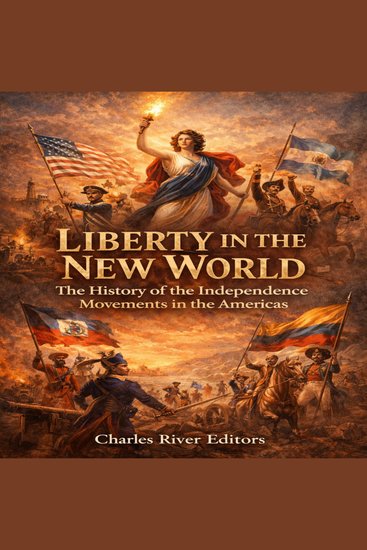
  • Liberty in the New World: The History of the Independence Movements in the Americas - cover

    Liberty in the New World: The...

    Charles River Editors

    • 0
    • 0
    • 0
    Hispaniola entered the European record in 1492 when Christopher Columbus made landfall on its southern shore during his first trans-Atlantic voyage, and he named his discovery in honor of the Spanish Crown that had funded and sponsored the voyage. Leaving the crew of the wrecked Santa Maria on the island, he returned to Europe, leaving his men to establish the foundations of the settlement of La Navidad and the first beachhead of the European seizure of the Caribbean and the New World. Columbus would revisit the island three times, leading a vanguard of pioneer colonists to commence the exploitation of the New World. 
    	Thus, even by the 16th century, slaves were being imported to Hispaniola, and over the next few centuries, the population of African slaves came to represent a sizable majority of the population there. This would set the stage for one of history’s most unique revolutions. 
    	The American Revolution is replete with seminal moments that every American learns in school, from the “shot heard ‘round the world” to the Declaration of Independence, but the events that led up to the fighting at Lexington & Concord were borne out of 10 years of division between the British and their American colonies over everything from colonial representation in governments to taxation, the nature of searches, and the quartering of British regulars in private houses. From 1764-1775, a chain of events that included lightning rods like the Townshend Acts led to bloodshed in the form of the Boston Massacre, while the Boston Tea Party became a symbol of nonviolent protest.  
    	By in the early 19th century, events transpiring back in Europe would make it possible for independence movements to spread across the New World, especially as the Spanish Empire teetered, and those events would make it possible for leaders like Simón Bolívar to become the liberators across the Americas, reshaping the Western hemisphere in ways it still resembles today.
    Show book
  • Every 90 Seconds - Our Common Cause Ending Violence Against Women - cover

    Every 90 Seconds - Our Common...

    Anne P. DePrince

    • 0
    • 0
    • 0
    Every 90 seconds a woman is sexually assaulted. In that same minute and a half, another is a victim of domestic violence at the hands of a current or former intimate partner. Every sixteen hours, one of those intimate partners shoots and kills a woman. Nearly two in ten  
    women are stalked, while one in sixteen is raped during her first sexual experience. Despite these jaw-dropping statistics, collectively we are well practiced at seeing such acts as someone else’s problem. And yet, violence against women is tangled up with the most  
    frequently discussed and debated issues of our time: healthcare and education access, immigration, gun policies, economic security, and criminal justice reform—issues that impact us all, nearly every day. 
     
    In Every 90 Seconds, Anne P. DePrince argues that to end violence against women, we must fundamentally redefine how we engage with it—starting by abandoning the idea that violence is a problem involving only those who abuse or are abused. Instead, DePrince  
    illuminates how violence against women is inextricably linked to other issues that stoke our greatest passions. For instance, each time a woman requires emergency medical attention as a result of violence and abuse, our overburdened healthcare system bears an entirely  
    preventable cost. Meanwhile, the threat of violence is a significant cause of pressure on the US southern border, driving women and their families to seek safety far from home.  
     
    Violence against women also takes a stunning toll on the US economy by contributing to widespread poverty. Drawing on these and other complex examples, DePrince builds the case that this very complexity offers an opportunity for mobilizing ordinary people to work  
    to stop violence against women in a way we never have before. DePrince’s call to action arises out of the reality that when we address violence against women, we can make progress on a range of other significant issues that we care deeply about too.
    Show book
  • Sisters Women of Wisdom: The Icon Black Lives Matter Series - cover

    Sisters Women of Wisdom: The...

    Geoffrey Giuliano

    • 0
    • 0
    • 0
    In this unique inspirational audiobook, we remember we take a deep dive and remember the almost superhuman contributions of black leaders of our greatest black leaders from the 20th century. Each in their own way educating liberating and freeing untold millions of souls from the heartless bondage they were forced to endure at the hands of a cruel largely racist self-interested society. Fighting a Goliath of ignorance with little chance of success each in their own way overcame incredible obstacles to implement the finer attributes of Justice truth and freedom in the troubled world around them 
     
    Painstakingly put together by author Geoffrey Giuliano here is a unique inside look at the lives loves tragedies and triumphs of our most precious black heroes of Justice. 
     
    An absolute must for any educational system those interested in black studies and everyone who counts himself as a lover and defender of freedom everywhere. 
     
    Featuring the histories and inspirational words of Vice President Kamala Harris, Angela Davis, Rosa Parks, Sojourner Truth, First Lady Michelle Obama, transgender activist Francis Thompson, Barbara Jordan, Aretha Franklin, Ella Baker, Dr. Kathleen Cleaver, Fannie Lou Hamer, and the extraordinary Eartha Kitt. 
     
    With a timely moving contribution from Richie Havens and iconic singer Ben E. King.
    Show book
  • Mandate for Mesopotamia and Mandate for Palestine The: The History of the Former Ottoman Territories Administered by the British after World War I - cover

    Mandate for Mesopotamia and...

    Editors Charles River

    • 0
    • 0
    • 0
    The United Nations is one of the most famous bodies in the world, and its predecessor, the League of Nations, might be equally notorious. In fact, President Woodrow Wilson’s pet project was controversial from nearly the minute it was conceived. While it would attempt to resolve some territorial disputes, it simply proved too weak to prevent international aggression, primarily among the Axis Powers in the buildup to World War II. Thus, the League’s greatest legacy ended up being its dismal failure to prevent World War II and ensure that World War I had truly been the “war to end all wars,” as originally intended. 
    Although the League of Nations was short-lived and clearly failed in its primary mission, it did essentially spawn the United Nations at the end of World War II, and many of the UN’s structures and organizations came straight from its predecessor, with the concepts of an International Court and a General Assembly coming straight from the League. More importantly, the failures of the League ensured that the UN was given stronger authority and enforcement mechanisms, most notably through the latter’s Security Council, and while the League dissolved after a generation, the UN has survived for over 70 years. 
    One of the League’s most lasting legacies was the manner in which it handed over administrative control of land in the Middle East to the victorious Allied Powers, namely France and Britain. The Ottoman Empire quickly collapsed after World War I, and its extensive lands were divvied up between the French and British. While the French gained control of the Levant, which would later become modern day nations like Syria and Lebanon, the British were given mandates for Mesopotamia and Palestine. The British Mandate for Palestine gave the British control over the lands that have since become Jordan, Israel, the West Bank, and the Gaza Strip, while Mesopotamia covered modern Iraq.
    Show book