Unisciti a noi in un viaggio nel mondo dei libri!
Aggiungi questo libro allo scaffale
Grey
Scrivi un nuovo commento Default profile 50px
Grey
Iscriviti per leggere l'intero libro o leggi le prime pagine gratuitamente!
All characters reduced
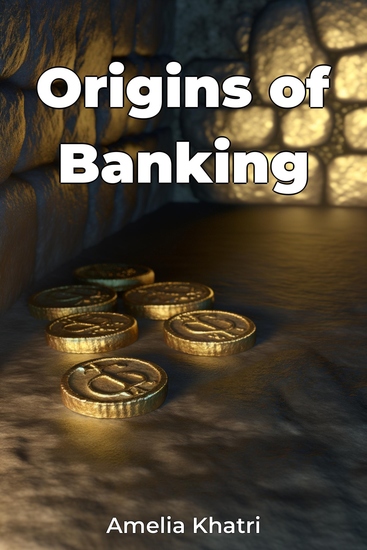
Origins of Banking - cover

Origins of Banking

Amelia Khatri

Traduttore A AI

Casa editrice: Publifye

  • 0
  • 0
  • 0

Sinossi

Origins of Banking explores the evolution of financial institutions, tracing their development from ancient storage systems to today’s complex global networks. It reveals how banking, far from being a series of isolated events, is a continuous response to societal needs for trade, resource management, and economic growth. Intriguingly, early forms of banking involved temples and landowners acting as safe havens for valuables, highlighting the deep historical roots of financial stewardship.

 
The book sheds light on the rise of private banking during the Roman Empire, where services like money lending and currency exchange first emerged. The book progresses chronologically, beginning with Mesopotamia, Egypt, and Greece, moving through the Roman Empire, and then focusing on the medieval period with the rise of influential banking families like the Medici. It then concludes with the evolution of modern banking practices like the creation of central banks.

 
By examining archaeological findings, ancient legal codes, and archival records, Origins of Banking provides a fact-based analysis of banking practices and their profound impact on economic history. This comprehensive overview is valuable for students of finance, history, and economics, offering a deeper understanding of the forces shaping our modern financial world.
Disponibile da: 12/02/2025.
Lunghezza di stampa: 62 pagine.


Altri libri che potrebbero interessarti

  • The Spanish Flu - Virus origin symptoms outbreak spread and contagion: the true story of the 1918-1920 Great Influenza the deadliest pandemic in history - cover

    The Spanish Flu - Virus origin...

    John T. Camble

    • 0
    • 0
    • 0
    History of and Lessons from the Spanish Flu to Make the Best of the Current New Pandemic Virus Crisis 
    Are you curious to learn of the Spanish Flu which occurred over 100 years ago? 
    Would be interested to get a better idea on what you can do to prepare during a pandemic? 
    Would you like to get a guide that would teach you to be safe during the current new pandemic virus situation and make the best of it? 
    If you answered “yes” to any of these questions, keep reading.  
    “Spanish Flu” - A book that chronicles the pandemic of the same name which erupted in 1918, how it came about, will give you a better perspective on the present situation so you can deal with it effectively. 
    If we are open to learning from history, we can avoid repeating it. The current pandemic is the deadliest that we have faced in modern times. Entire countries are experiencing lockdown to avoid more people being infected.  
    Here is a short synopsis of what you will find, herein:A history of the Spanish FluThe "malediction" of the year 20 over the centuriesHow the pandemic spread around the worldHow a concerted response helped to bring it under controlHow can the lessons be learned to deal with the situationHow can we be better prepared to deal with a future pandemic 
    This is an extremely relevant book, especially because people are currently unable to leave their home and there is widespread anxiety. Governments globally are doing all they can but we need to be prepared for any eventuality and offer assistance. 
    Reading and understanding this book will be extremely helpful as we combat the fatal virus together.  
    Now it’s your turn to take action. Scroll up to click the Buy Now button and let’s begin!
    Mostra libro
  • Otto von Bismarck: A short biography - 5 Minutes: Short on time – long on info! - cover

    Otto von Bismarck: A short...

    5 Minutes, 5 Minute Biographies,...

    • 0
    • 0
    • 0
    Otto von Bismarck, Prussian chancellor and famous leader of the German Empire: Life and work in a short biography! Everything you need to know, brief and concise. Infotainment, education and entertainment at its best!
    Mostra libro
  • Relationship Anxiety - How to Overcome Jealousy Insecurity and Fear of Abandonment to Feel Secure in Life and Love - cover

    Relationship Anxiety - How to...

    Aria Miller

    • 0
    • 0
    • 0
    Are you constantly questioning your relationship? 
    Do you feel jealous, insecure, or worried that your partner will leave? 
    Are you tired of overanalyzing every text, every conversation, wondering if you’re enough? 
    Does your fear of abandonment leave you feeling unworthy or unlovable? 
    Do you struggle with trust issues, even when there’s no reason to doubt? 
    I understand the deep, gnawing anxiety that can take over your love life. The constant insecurity, the nagging doubts—it’s exhausting. But I want you to know that you’re not alone, and you don’t have to live like this anymore. 
    Does any of this sound familiar? 
    •	You worry constantly about your partner leaving or losing interest. 
    •	Jealousy creeps in, making you feel out of control and guilty. 
    •	You find it hard to trust your partner, even when there’s no real reason not to. 
    •	Every disagreement feels like it could break your relationship. 
    •	You compare yourself to others, feeling like you’ll never be good enough. 
    •	Fear of abandonment makes you clingy, or the opposite—pushing your partner away. 
    •	You overthink every word, every action, wondering what it means for your relationship. 
    •	Insecurity eats away at your confidence, both in yourself and in your relationship. 
    Imagine for a second... 
    •	Finally feeling secure in your relationship, free from constant doubts and fears. 
    •	Letting go of jealousy and feeling truly happy when your partner succeeds. 
    •	Trusting your partner fully, knowing your bond is built on respect and love. 
    •	Having the tools to manage conflict calmly, without feeling like every fight is the end. 
    •	Finding peace in yourself—no longer needing external validation to feel worthy. 
    •	Building a love that’s both passionate and stable, one that makes you feel safe.
    Mostra libro
  • Is Fear Real? - How to deal with fear? - cover

    Is Fear Real? - How to deal with...

    Parshwika Bhandari

    • 0
    • 0
    • 0
    Is fear even real? We all have fears,how to deal with them and come out of it like flying colors,cause other side of fear is the freedom,some new perspective to deal with fear in this book
    Mostra libro
  • Tainos and Caribs The: The History of the Indigenous Natives Who Encountered Christopher Columbus in 1492 - cover

    Tainos and Caribs The: The...

    Editors Charles River

    • 0
    • 0
    • 0
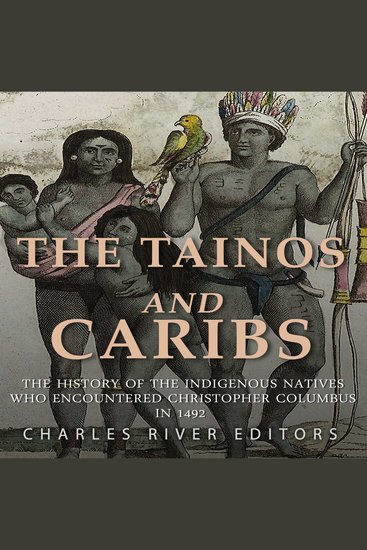
    On October 12, 1492, one of the most important “first contacts” of the modern era was made when three ships of Spanish origin approached the island archipelago now known as the Bahamas, cautiously dropping anchor as the captain of the fleet gazed across to what he assumed was the coast of India. According to the popular version of the story, amazed at the sight of ships and men of such unfamiliar appearance, the native people of the island plunged into the clear waters of the western Atlantic, expertly swimming or aboard dugout canoes, and came out to greet the strangers. 
    	In all probability, the meeting was much more cautious and incremental, but the idea that these innocent people, raised in a tropical Eden, might embrace with such open enthusiasm their own destruction is picturesque, and no doubt appeals to contemporary perceptions. By whatever means one might choose to view it, this meeting of cultures certainly did mark the beginning of a bold new chapter in the history of Europe, and the beginning of the end of an ancient race of native people occupying a vast new continent.  
    	The entries into Christopher Columbus’ log as he recorded his first encounters with the indigenous people of the “Indies” are very telling. The island people arrived alongside his ships, offering humble gifts that Columbus described as “parrots and balls of cotton and spears and many other things, which they exchanged for the glass beads and hawks' bells.” These were the Taínos people, or the “Arawaks” as they would come to be known, and Columbus described them as “well built…with good bodies and handsome features.”  
    	This description, while deceptively simple, had a chilling implication, because Columbus was not taking note of these facts out of idle interest but in terms of how best to exploit them. As the natives offered up gifts aand by implication the freedom of their islands, Columbus remarked simply on their primitive appearance.
    Mostra libro
  • More Stories from Langley - Another Glimpse inside the CIA - cover

    More Stories from Langley -...

    Edward Mickolus

    • 0
    • 0
    • 0
    Who knew the CIA needed librarians? More Stories from Langley reveals the lesser-known operations of one of the most mysterious government agencies in the United States. 


    Edward Mickolus is back with more stories to answer the question, "What does a career in the CIA look like?" Advice and anecdotes from both current and former CIA officers provide a look at the side of intelligence operations that is often left out of the movies. What was it like working for the CIA during 9/11? Do only spies get to travel? More Stories from Langley has physicists getting recruited to "the agency" during the Cold War, foreign-language majors getting lucky chances, and quests to "learn by living" turning into sweaty-palmed calls to the U.S. embassy after being detained by Russian intelligence officers. 


    The world only needs so many suave super spies. More Stories from Langley shows how important academics, retired soldiers, and bilingual nannies can be in preserving the security of our nation.
    Mostra libro