Unisciti a noi in un viaggio nel mondo dei libri!
Aggiungi questo libro allo scaffale
Grey
Scrivi un nuovo commento Default profile 50px
Grey
Iscriviti per leggere l'intero libro o leggi le prime pagine gratuitamente!
All characters reduced
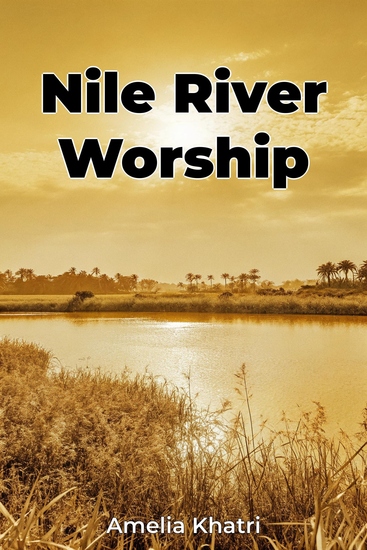
Nile River Worship - cover

Nile River Worship

Amelia Khatri

Traduttore A AI

Casa editrice: Publifye

  • 0
  • 0
  • 0

Sinossi

Nile River Worship explores the deep religious significance of the Nile in ancient Egypt, demonstrating how the river was not just a resource but a divine entity. This book examines the deification of the Nile and its central role in shaping Egyptian civilization, arguing that environmental factors profoundly influenced their religious beliefs and societal structures.

 
One intriguing aspect is how the predictable flooding of the Nile dictated the agricultural calendar, impacting the social structure and economy. The book illustrates how the river's symbolism permeated Egyptian art, architecture, and even funerary practices, connecting life and afterlife in their cultural understanding.

 
The book progresses across three sections, beginning with the Nile as a deity, then exploring its life-sustaining role, and finally analyzing its lasting cultural impact. Ancient texts, archaeological findings, and artistic representations are examined to provide a holistic view of Nile worship.

 
The book uniquely combines religious aspects with influences on every facet of ancient Egyptian society, highlighting the interplay between practical needs and spiritual beliefs. By examining deities like Hapi and the rituals honoring the river, the book enriches our understanding of ancient Egyptian religion and history.
Disponibile da: 14/02/2025.
Lunghezza di stampa: 54 pagine.
Altri libri che potrebbero interessarti

  • Autumn Time Festivals in Finland Estonia Latvia and Lithuania - cover

    Autumn Time Festivals in Finland...

    Niina Niskanen

    • 0
    • 0
    • 0
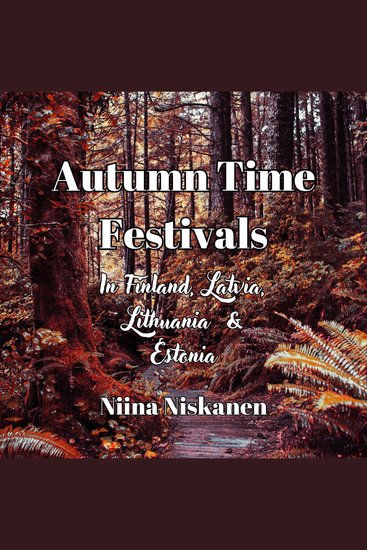
    Autumn was a magical time in Finland, Latvia, Lithuania and Estonia. Estonia and Finland belong to the same language family (Finno-Ugric languages) but the similarities of these old autumn time festivals in these four countries are strikingly similar. 
    In this course, we will touch on some of the important Finnish and Baltic gods and deities that were connected to harvest and fertility. What happened during All Hallow´s Eve, and how in all these cultures, there was a special time period that was completely dedicated to honouring the ancestors and remember those who had passed away. 
    Several of these old festivals are no longer celebrated, but some of them like Finnish Kekri and Mardipäev in Estonia, still hold certain traditions that have lived on ´till today. 
    This course can help you to build a deeper understanding of the world view of ancient Baltic and Finno-Ugric tribes and the society that was based on agriculture. 
    - You will learn about the importance of family and honouring the ancestors. 
    -Names of these festivals, and when they were celebrated. 
    -Different magical rituals and spells were performed during these holidays. 
    - You will learn why the forest was such an important place in the past and home to many myths 
    -How the spirits were invited to be part of these festivities. 
    By the end of this course, you have a better understanding of folklore and the connections that these cultures had with one another. 
    Mostra libro
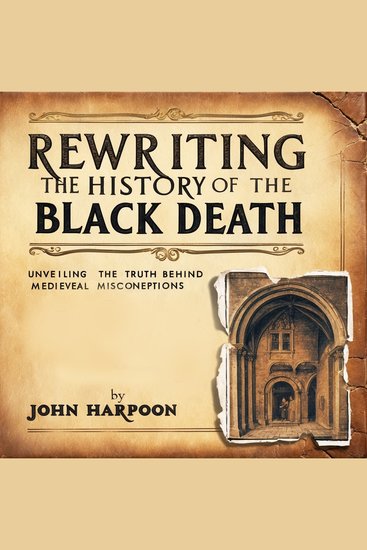
  • Rewriting the History of the Black Death - Unveiling the Truth Behind Medieval Misconceptions - cover

    Rewriting the History of the...

    John Harpoon

    • 0
    • 0
    • 0
    The Black Death, one of the most devastating pandemics in human history, left an indelible mark on the medieval world. From the mid-14th century, this catastrophic event wiped out an estimated one-third of Europe's population, with ramifications extending far beyond the immediate loss of life. Its legacy endures, not only in historical accounts but also in the cultural, social, and economic transformations it triggered. 
      
    The pandemic’s unparalleled scale of mortality created a sense of collective trauma that shaped the mindset of medieval society. Fear, uncertainty, and grief were pervasive, leading to widespread shifts in religious devotion and philosophical thought. For some, the plague strengthened their faith, prompting public acts of penance and increased church attendance. For others, it inspired skepticism about religious authority, paving the way for future reforms and dissent. This dual response reflects the Black Death's role as both a destroyer of tradition and a catalyst for change. 
      
    Economically, the pandemic dramatically altered the medieval labor market. The decimation of the population led to acute labor shortages, forcing landowners to offer better wages and conditions to retain workers. This shift empowered peasants and contributed to the gradual erosion of the feudal system, giving rise to a nascent middle class. The newfound leverage of laborers sowed the seeds of social mobility, challenging the rigid hierarchies that had long defined medieval life.
    Mostra libro
  • Oyo Empire - The Yoruba Powerhouse of West Africa - cover

    Oyo Empire - The Yoruba...

    Rolf Hedger

    • 0
    • 0
    • 0
    The Oyo Empire, one of the most powerful and influential states in West Africa, has a rich and complex history that spans centuries. Located in what is today southwestern Nigeria, the empire was a major force in the region, known for its military prowess, sophisticated political system, and extensive trade networks. The history of the Oyo Empire dates back to the 14th century, when it emerged as one of the leading Yoruba kingdoms in the area. Over time, Oyo became a dominant power in West Africa, shaping the political, economic, and cultural landscape of the region. 
    At its height, the Oyo Empire controlled a vast territory stretching across modern-day Nigeria and parts of Benin and Togo. The empire was strategically positioned along important trade routes, allowing it to thrive economically and maintain strong ties with neighboring kingdoms. Its economy was based primarily on agriculture, with crops such as yams, millet, and sorghum being grown in abundance. Additionally, the Oyo people were involved in long-distance trade, exchanging goods like kola nuts, textiles, and metalwork with other African states and even European traders. 
    Politically, the Oyo Empire was an advanced and well-organized state. The Alafin, the emperor of Oyo, was the supreme ruler and held significant authority over the empire. However, the Alafin did not rule alone. The Oyo Mesi, a council of chiefs, played a critical role in governance, advising the Alafin and ensuring the balance of power. This system of governance allowed the empire to remain stable for centuries, even as it faced external threats and internal challenges. The military was also a key component of the empire’s strength, with the Oyo army being one of the most formidable in West Africa. The empire’s military success was due in part to its highly disciplined forces, as well as the use of cavalry, which gave it a tactical advantage over its enemies.
    Mostra libro
  • The Miracle of Our Universe - A New View of Consciousness God Science and Reality - cover

    The Miracle of Our Universe - A...

    Marsha Sims, Bernard Haisch

    • 0
    • 0
    • 0
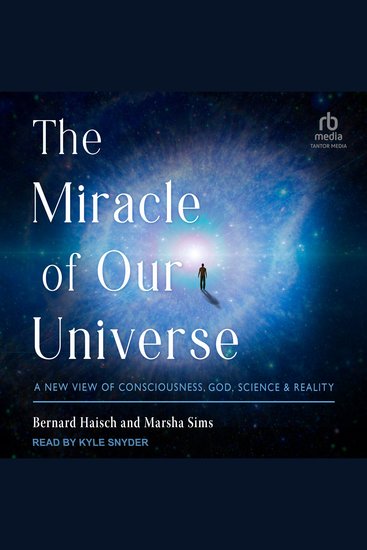
    Without consciousness there is nothing. Have you ever wondered why and how the world around you came to exist, and whether there might be an afterlife experience awaiting you after our physical bodies die? Might there actually be a God and a heaven of some sort? The hypothesis presented in this book is that our seemingly physical universe of matter and energy is a virtual simulation which is thought into existence by a universal consciousness which we call God. 


    A reason for a universal consciousness to do such a thing could be to experience and evolve itself through the free will actions of its offspring. This would entail thinking into existence a virtual universe so as to interact with such a universe and each other. Literally everything is consciousness in action, resulting in a gigantic cosmic simulation. We and other creatures are offspring of this God consciousness. 


    The Miracle of Our Universe explores the forefront of science and spirituality research, including: Are near-death experiences real? What is the Zero-Point Field? What kind of being could God be? Is there some place that God could have come from? How does the Big Bang figure into this? Is there an afterlife and what could it be like? What is the purpose of life? Is consciousness all there is? Is the Universe a virtual reality? Why is Hell impossible?
    Mostra libro
  • 1984 : Sikh Katl-e-aam da Sach - Dange nahi Katleaam - cover

    1984 : Sikh Katl-e-aam da Sach -...

    Jarnail Singh

    • 0
    • 0
    • 0
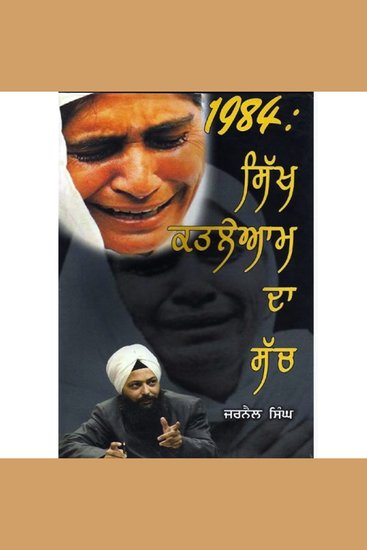
    1984 : Sikh Katl-e-aam da Sach 
    Author: Jarnail Singh 
    This book tells the story of the tragic 1984 anti-Sikh riots that happened after Prime Minister Indira Gandhi was assassinated. Journalist Jarnail Singh explains how thousands of Sikhs were killed, focusing on the failure of the government and the role of political leaders. Using survivor stories and records, the book reveals the truth about the violence and highlights the need for justice for the victims. 
    You can order it from Sikh Siyasat and get it delivered anywhere in the world.
    Mostra libro
  • Chasing the Impossible - A Model for Inclusive and Innovative Care - cover

    Chasing the Impossible - A Model...

    Rachelle Rutherford

    • 0
    • 1
    • 0
    Defying limitations, one family at a time.In the vast landscape of American childhood, one staggering statistic looms large: one in six children grapples with a developmental disability. Prepare to be moved, challenged, and inspired. Chasing The Impossible isn't just a book—it's a clarion call to action.
    Mostra libro