Unisciti a noi in un viaggio nel mondo dei libri!
Aggiungi questo libro allo scaffale
Grey
Scrivi un nuovo commento Default profile 50px
Grey
Iscriviti per leggere l'intero libro o leggi le prime pagine gratuitamente!
All characters reduced
New Zealand Wars - cover

New Zealand Wars

Amelia Khatri

Traduttore A AI

Casa editrice: Publifye

  • 0
  • 0
  • 0

Sinossi

New Zealand Wars explores the tumultuous 19th-century conflicts between Maori and British settlers, revealing how these clashes fundamentally reshaped New Zealand. Going beyond mere skirmishes, the book highlights the struggle for land sovereignty and cultural survival amidst irreconcilable worldviews. The book emphasizes that land confiscation, or raupatu, was a key tool of colonial power, devastating Maori communities and exemplifies one of the historical injustices that continue to reverberate today. Beginning with an examination of Maori society and early European interactions, including the Treaty of Waitangi, the book progresses through major conflicts such as the Waikato and Taranaki Wars. By prioritizing Maori voices and drawing from diverse sources like official documents and oral histories, New Zealand Wars challenges traditional narratives. This approach offers a nuanced understanding of the enduring legacies of colonialism and the ongoing quest for indigenous rights, making it a valuable resource for anyone interested in World History and the broader implications of conflict resolution.
Disponibile da: 20/03/2025.
Lunghezza di stampa: 55 pagine.


Altri libri che potrebbero interessarti

  • Jack Buck That's a Winner - cover

    Jack Buck That's a Winner

    Jack Buck, Rob Rains, Bob Broeg

    • 0
    • 0
    • 0
    In his forthright and honest autobiography, St. Louis Cardinal, World Series, and Super Bowl broadcaster Jack Buck entertains all of his fans once more in a different setting. Jack Buck: "That's a Winner!" does more than entertain, however. It provides readers with an inside look at a man they have listened to so often, they consider him part of the family.
    Mostra libro
  • The FBI War on Tupac Shakur - The State Repression of Black Leaders from the Civil Rights Era to the 1990s - cover

    The FBI War on Tupac Shakur -...

    John Potash

    • 0
    • 0
    • 0
    Since the first day after the tragedy was announced, controversy has surrounded the death of rap and cultural icon Tupac Shakur. In this work, preeminent researcher on the topic, John Potash, puts forward his own theories of the events leading up to and following the murder in this meticulously researched and exhaustive account of the story. Never before has there been such a detailed and shocking analysis of the untimely death of one of the greatest musicians of the modern era. The FBI War on Tupac Shakur contains a wealth of names, dates, and events detailing the use of unscrupulous tactics by the Federal Bureau of Investigation against a generation of leftist political leaders and musicians. Based on twelve years of research and including extensive footnotes, sources include over 100 interviews, FOIA-released CIA and FBI documents, court transcripts, and mainstream media outlets. Beginning with the birth of the Civil Rights Movement in America, Potash illustrates the ways in which the FBI and the United States government conspired to take down and dismantle the various burgeoning activist and revolutionary groups forming at the time. From Martin Luther King Jr. to Malcolm X to Fred Hampton, the methods used to thwart their progress can be seen repeated again and again in the 80s and 90s against later revolutionary groups, musicians, and, most notably, Tupac Shakur. Buckle up for this winding, shocking, and unbelievable tale as John Potash reveals the dark underbelly of our government and their treatment of some of our most beloved Black icons.
    Mostra libro
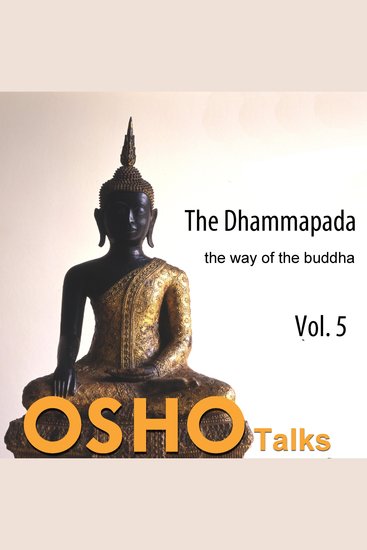
  • The Dhammapada Vol 5 - The Way of the Buddha - cover

    The Dhammapada Vol 5 - The Way...

    Osho

    • 0
    • 0
    • 0
    "The World Is on Fire" is the title of the first chapter in this fifth volume of The Dhammapada, Osho's contemporary presentation of the sayings of Buddha. What does Buddha mean by fire? He means anguish, anxiety, despair, misery; that's what Buddha means by fire. It is a symbol. Everybody is on fire because everybody is divided, split, schizophrenic. Everybody is on fire because there is great anxiety in the world, the anxiety of: "Am I going to make it this time or not?" Does this sound familiar to you?
    This series is not an interpretation of Buddhism, it is not intended to turn you into a Buddhist. Osho does not promote any following or old scriptures—at all.
    This series is all about raising of our consciousness, about real wisdom—and it is not coming from some ancient religious figure—it comes from you, it is inside of you. Buddha experienced it, Osho shared the experience and you can too. It is not coming from someone—it is discovered within ourselves. Buddha speaks in the language of his day; Osho speaks our language—he takes the role of a spiritual translator of a message which is timeless.
    In these crazy times—find a nice space, start listening to this series of talks and Osho takes you into a world of wonders—within yourself.
    Chapters:
    
    - The World Is on Fire
    - The Heart Has No Questions
    - Now My Mind is Free
    - Transforming Unconsciousness into Consciousness
    - Love Yourself and Watch
    - Wonder and Awe
    - You Are the Source
    - A Little Taste of Buddhahood
    - See the World as It Is
    - The Open Secret
    © & ℗ 1979 OSHO International Foundation
    Mostra libro
  • How to Lose Yourself - An Ancient Guide to Letting Go - cover

    How to Lose Yourself - An...

    The Buddha and His Followers

    • 0
    • 0
    • 0
    Inviting new translations of classical Buddhist texts about why the self is an illusion—and why giving it up can free us from suffering 


    From self-realization and self-promotion to self-help and the selfie, the modern world encourages us to be self-obsessed. We are even told that finding ourselves is the key to happiness. Better to lose yourself! More than 2,500 years ago, the Buddha argued that the self is an illusion—and that our belief in it is the cause of most, if not all, of our suffering. How to Lose Yourself presents lively, accessible, and expert new translations of ancient Buddhist writings about the central, unique, and powerful Buddhist teaching of "no-self." 


    Drawn from three important Buddhist traditions, these essential Indian, Tibetan, and Chinese writings provide a rich sampling of the ways Buddhist philosophers have understood the idea that we are selfless persons—and why this insight is so therapeutic. When we let go of the self, we are awakened to the presence of all things as they truly are, and we let go of the anxiety, fear, greed, and hatred that are the source of all suffering.
    Mostra libro
  • Hanging Out - The Radical Power of Killing Time - cover

    Hanging Out - The Radical Power...

    Sheila Liming

    • 0
    • 0
    • 0
    A smart and empowering book about the simple art of hanging out . . . and of taking back our social lives from the deadening whirl of contemporary life. 


    Almost every day it seems that our world becomes more fractured, more digital, and more chaotic. Sheila Liming has the answer: we need to hang out more. 


    Starting with the assumption that play is to children as hanging out is to adults, Liming makes a brilliant case for the necessity of unstructured social time as a key element of our cultural vitality. The book asks questions like what is hanging out? why is it important? why do we do it? how do we do it? and examines the various ways we hang out—in groups, online, at parties, at work. 


    Hanging Out: The Radical Power of Killing Time makes an intelligent case for the importance of this most casual of social structures and shows us how just getting together can be a potent act of resistance all on its own.
    Mostra libro
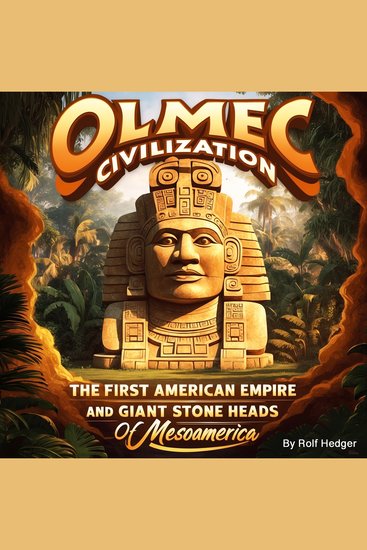
  • Olmec Civilization - The First American Empire and Giant Stone Heads of Mesoamerica - cover

    Olmec Civilization - The First...

    Rolf Hedger

    • 0
    • 0
    • 0
    The Olmec civilization, often regarded as the "Mother Culture" of Mesoamerica, emerged around 1200 BCE in the tropical lowlands of present-day southern Mexico, specifically in the Gulf Coast region. This area, rich in natural resources, served as the cradle for one of the earliest and most influential cultures in the Americas. The Olmec are best known for their monumental stone heads, intricate artwork, and the development of many foundational aspects of Mesoamerican civilization. 
    The origins of the Olmec civilization can be traced back to a combination of environmental factors, agricultural innovations, and the development of social structures. The region’s fertile lands provided an abundant supply of food, particularly maize, which became the cornerstone of Olmec agriculture. The availability of other crops, such as beans, squash, and cassava, further supported the growth of a settled society. The Olmec were skilled farmers, and their ability to adapt to the challenging conditions of the tropical lowlands allowed them to create surplus food, leading to population growth and the emergence of more complex social and political systems. 
    One of the defining features of the Olmec civilization was the rise of their urban centers, most notably San Lorenzo, La Venta, and Tres Zapotes. These cities became hubs of political and religious activity, with powerful rulers who controlled vast territories. The creation of these urban centers marked a shift from small, scattered villages to larger, more centralized societies. The Olmec rulers established authority through both political power and religious influence, often associating themselves with divine figures and acting as intermediaries between the gods and the people. This centralization of power allowed for the coordination of large-scale construction projects, such as the creation of the colossal stone heads and other monumental sculptures.
    Mostra libro