Unisciti a noi in un viaggio nel mondo dei libri!
Aggiungi questo libro allo scaffale
Grey
Scrivi un nuovo commento Default profile 50px
Grey
Iscriviti per leggere l'intero libro o leggi le prime pagine gratuitamente!
All characters reduced
Mughal Empire Decline - cover

Mughal Empire Decline

Amelia Khatri

Traduttore A AI

Casa editrice: Publifye

  • 0
  • 0
  • 0

Sinossi

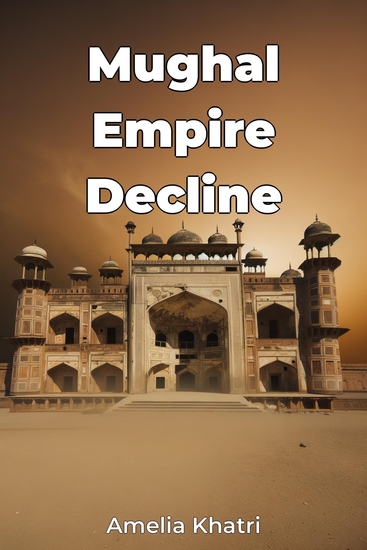
"Mughal Empire Decline" offers a compelling exploration of how one of history's most powerful empires transformed from a dominant force to a fragmented state in less than a century. This comprehensive analysis examines three critical factors that led to the empire's downfall: succession conflicts following Aurangzeb's death in 1707, the deterioration of administrative and economic systems, and mounting external pressures from various powers including the Marathas, Sikhs, and European trading companies.

 
Through meticulous examination of historical records, including previously untranslated Persian and Arabic documents, the book reveals how violent power struggles among royal princes depleted the imperial treasury and weakened central authority. The economic analysis uncovers how constant warfare and excessive taxation eroded the empire's once-efficient revenue system, while regional governors gradually transformed into semi-autonomous rulers, effectively undermining imperial cohesion.

 
The narrative progresses chronologically from 1707 to 1857, weaving together multiple historical perspectives to present a nuanced view of imperial decline. Rather than offering simplified explanations, the book demonstrates how institutional weaknesses, leadership failures, and external pressures created a perfect storm that ultimately led to the empire's dissolution. This scholarly yet accessible work provides valuable insights into the nature of imperial decline while remaining relevant to contemporary discussions about global power shifts and institutional resilience.
Disponibile da: 30/01/2025.
Lunghezza di stampa: 109 pagine.


Altri libri che potrebbero interessarti

  • Slavery Gone For Good - Modern Abolitionism - cover

    Slavery Gone For Good - Modern...

    Cory Edmund Endrulat

    • 0
    • 0
    • 0
    What Is Slavery? Do YOU Know How To Define Slavery? 
    Does Slavery Still Exist? 
    Is Slavery Natural? 
    You may have been taught about Slavery in school, but there's more to what you must know! In this easy-to-read light-weight book, you will learn everything you need to know about Slavery. 
    What you will learn in "Slavery Gone For Good": 
    - Simple and clear definitions about Slavery, freedom, rights and more! 
    - A brief history of Slavery 
    - How slavery manifests 
    - The different forms of Slavery 
    - A unique perspective based solely on common sense (reason), equality and justice, not any ideology 
    - Over 50 quotes from former slaves, abolitionists, philosophers and more! 
    - The mentalities involved with Slavery 
    - What you can teach others and your children, and for generations to come! 
    - Unifying and timeless principles that can be learned and utilized worldwide! 
    - A more inquisitive view of Slavery with a unique question and answer format 
    - Practical action-steps, both individual and collective, for freedom! 
    - Requirements for the abolition of Slavery 
    - How YOU are contributing to Slavery 
    - Common views of definitions versus more clarified and descriptive definitions 
    - Resources to expand upon the topics presented, for this knowledge that few peoples are presently aware about! 
    “Once you learn to read, you will be forever free” - Frederick Douglass, Former Slave, Abolitionist
    Mostra libro
  • Stress and Anxiety - Understanding Triggers and Mastering Stress Relief Techniques - cover

    Stress and Anxiety -...

    Coral Nunez

    • 0
    • 0
    • 0
    Stress is an inevitable part of life, and everyone experiences it in different ways. It can be triggered by external factors, such as work pressures, relationship challenges, or financial difficulties, or it can stem from internal thoughts and perceptions. Understanding stress and its triggers is the first step toward managing it effectively. In this chapter, we will explore what stress is, how it impacts our well-being, and how we can recognize and understand the triggers that lead to stress. 
    At its core, stress is the body’s natural response to perceived threats or demands. When faced with a stressful situation, the body activates the "fight or flight" response, releasing hormones like adrenaline and cortisol that prepare us to take action. While this response is helpful in short bursts, prolonged stress can have serious consequences on both the mind and body. Chronic stress can lead to health problems such as anxiety, depression, digestive issues, and even heart disease. Recognizing when stress is becoming overwhelming is crucial for maintaining our health. 
    Triggers are the specific events, situations, or thoughts that set off the stress response. Triggers can vary from person to person, depending on their past experiences, personality, and current life circumstances. For one person, an argument with a loved one may be a significant trigger, while for someone else, the pressure of a looming deadline at work may be more stressful. By identifying and understanding our triggers, we can begin to take steps to manage them and prevent unnecessary stress.
    Mostra libro
  • A Lot of People Are Saying - The New Conspiracism and the Assault on Democracy - cover

    A Lot of People Are Saying - The...

    Anonimo

    • 0
    • 0
    • 0
    This audiobook narrated by Katherine Fenton reveals how the new conspiracists are undermining democracy—and explains what can be done about it
    
    Conspiracy theories are as old as politics. But conspiracists today have introduced something new—conspiracy without theory. And the new conspiracism has moved from the fringes to the heart of government with the election of Donald Trump. In A Lot of People Are Saying, Russell Muirhead and Nancy Rosenblum show how the new conspiracism differs from classic conspiracy theory, why so few officials speak truth to conspiracy, and what needs to be done to resist it.
    
    Classic conspiracy theory insists that things are not what they seem and gathers evidence—especially facts ominously withheld by official sources—to tease out secret machinations. The new conspiracism is different. There is no demand for evidence, no dots revealed to form a pattern, no close examination of shadowy plotters. Dispensing with the burden of explanation, the new conspiracism imposes its own reality through repetition (exemplified by the Trump catchphrase "a lot of people are saying") and bare assertion ("rigged!").
    
    The new conspiracism targets democratic foundations—political parties and knowledge-producing institutions. It makes it more difficult to argue, persuade, negotiate, compromise, and even to disagree. Ultimately, it delegitimates democracy.
    
    Filled with vivid examples, A Lot of People Are Saying diagnoses a defining and disorienting feature of today's politics and offers a guide to responding to the threat.
    Mostra libro
  • Group psychology and the analysis of the Ego - cover

    Group psychology and the...

    Sigmund Freud

    • 0
    • 0
    • 0
    "Group Psychology and the Analysis of the Ego" is a seminal work by Sigmund Freud, first published in 1921. In this book, Freud explores the dynamics of groups and their influence on individual behavior, as well as the interplay between the individual psyche and group dynamics. He delves into topics such as the formation of groups, the role of leaders, the psychology of crowds, and the mechanisms of group identification and conformity. Freud also examines how the ego functions within the context of group dynamics, shedding light on how individuals navigate their identity and desires within social collectives.
    Mostra libro
  • Spanish Empire in the Americas The: The History of Spain’s Colonization across Central America and South America - cover

    Spanish Empire in the Americas...

    Editors Charles River

    • 0
    • 0
    • 0
    By the time Christopher Columbus started setting east from the New World, he had explored San Salvador in the Bahamas (which he thought was Japan), Cuba (which he thought was China), and Hispaniola, the source of gold. As the common story goes, Columbus, en route back to Spain from his first journey, called in at Lisbon as a courtesy to brief the Portuguese King John II of his discovery of the New World. King John subsequently protested that according to the 1479 Treaty of Alcáçovas, which divided the Atlantic Ocean between Spanish and Portuguese spheres of influence, the newly discovered lands rightly belonged to Portugal. To make clear the point, a Portuguese fleet was authorized and dispatched west from the Tagus to lay claim to the “Indies,” which prompted a flurry of diplomatic activity in the court of Ferdinand and Isabella. At the time, Spain lacked the naval power to prevent Portugal from acting on this threat, and the result was the hugely influential 1494 Treaty of Tordesillas. 
    The Treaty of Tordesillas was one of the most important documents of its kind of the age, for it established the essential parameters of the two competing empires, the first of the major European imperial entities. The Treaty of Tordesillas drew an imaginary line from pole to pole, running 100 leagues west of the westernmost islands of the Azores. According to the terms of a supporting papal bull, all the lands to the west of that belonged to Spain, and all of those to the east belonged to Portugal. What this meant in practical terms was that Portugal was given Africa and the Indian Ocean while Spain was granted all the lands to the west, including the Americas and the Caribbean, all collectively known as the “Indies,” or the New World. 
    Perhaps inevitably, a regional rivalry had developed as the Portuguese began to establish a colony in Brazil and push its boundaries southwards. 
    Mostra libro
  • Utah War The: The History of the Federal Government’s Controversial Conflict with Brigham Young and the Latter-Day Saints - cover

    Utah War The: The History of the...

    Editors Charles River

    • 0
    • 0
    • 0
    Joseph Smith’s death was one of the catalysts for the Mormons’ great migration to Utah, and today that state and the Mormons are virtually synonymous. To this day, Mormons still form a majority of the population, and members of the Church have prominent political and economic roles. Both of Utah’s U.S. Senators, Mike Lee and Mitt Romney, are Mormons, as is Governor Gary Herbert. The story of the Mormon pioneers and the trail they trod is one of the great stories of the westward expansion of the United States. Frenchman Hyppolite Taine wrote of the migration in romantic terms in the 1860s: “Since the exodus of the Israelites there is no example of so great a religious emigration executed across such great spaces in spite of such obstacles, by so great a number of men, with so much order, obedience, courage, patience, and devotion…But the mainsprings of this great will was faith. Without it men would not have done such things. These exiles thought that they were founding the city of God, the metropolis of mankind. They considered themselves the renovators of the world. Let us remember our youth, and with what force an idea...merely by the fact that it seems good and true to us hurls us forward despite natural egotism, daily weakness, habits that we have contracted, surrounding prejudices, and accumulated obstacles! We don’t know of what we are capable.” 
    The Mormon response to the federal government and the Buchanan administration in 1857 and 1858 was shaped by the faith’s experience of previous conflicts, which had included an extermination order proclaimed by the governor of Missouri against Mormons, the murder of Smith, and a massacre of Mormon men and boys. As a result, when things came to a head in Utah, the Mormons were more willing to fight.       
      
     
    Mostra libro