Unisciti a noi in un viaggio nel mondo dei libri!
Aggiungi questo libro allo scaffale
Grey
Scrivi un nuovo commento Default profile 50px
Grey
Iscriviti per leggere l'intero libro o leggi le prime pagine gratuitamente!
All characters reduced
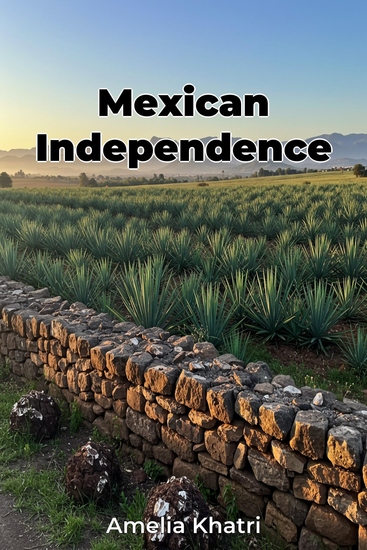
Mexican Independence - cover

Mexican Independence

Amelia Khatri

Traduttore A AI

Casa editrice: Publifye

  • 0
  • 0
  • 0

Sinossi

Mexican Independence explores the multifaceted struggle that led to Mexico's separation from Spain, moving beyond a simple recounting of events to examine the complex interplay of socio-political conditions, diverse ideologies, and key figures. The book highlights how the rigid social hierarchy of New Spain, particularly the discontent of the Criollo class excluded from high office, combined with Enlightenment ideals to fuel the independence movement. It delves into the roles of influential leaders like Miguel Hidalgo, José María Morelos, and Agustín de Iturbide, illustrating how their shifting alliances and ideological disagreements shaped the nascent nation. 

 
The book is structured to first explore New Spain's pre-1810 conditions, then analyze the independence movement's major battles and regional variations, and finally examine the turbulent aftermath, including the establishment of the First Mexican Empire. By drawing on primary sources and secondary scholarship, it provides a balanced treatment of the subject, revealing that Mexican nation-building was not a unified movement but a complex struggle with profound implications. Understanding Mexico's path to self-determination offers valuable insights into decolonization processes and the challenges faced by newly independent nations.
Disponibile da: 19/03/2025.
Lunghezza di stampa: 53 pagine.
Altri libri che potrebbero interessarti

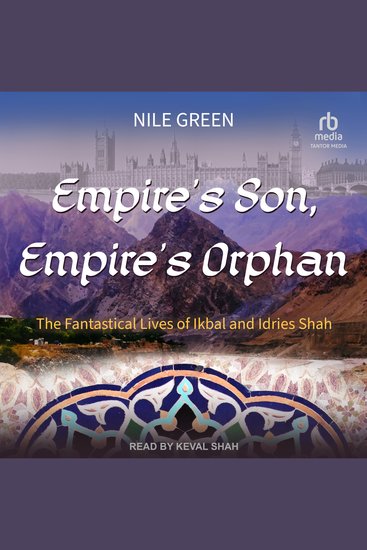
  • Empire's Son Empire's Orphan - The Fantastical Lives of Ikbal and Idries Shah - cover

    Empire's Son Empire's Orphan -...

    Nile Green

    • 0
    • 0
    • 0
    In literary circles of the mid-twentieth century, father and son, Ikbal and Idries Shah, spread seductive accounts of a mystical Middle East. Pitching themselves as the authentic voice of the Muslim world, they penned travelogues and exotic potboilers alongside weighty tomes on Islam and politics. Above all, father and son told Western readers what they wanted to hear: audacious yarns of eastern adventure and harmless Sufi mystics—myths that, as the century wore on and the Taliban seized power, became increasingly detached from reality. 


    This book follows the Shahs from their origins in colonial India to literary London, wartime Oxford, and counterculture California via the Levant, the League of Nations, and Latin America. Nile Green unravels the conspiracies and pseudonyms, fantastical pasts and self-aggrandizing anecdotes, high stakes and bold schemes that for nearly a century painted the defining portrait of Afghanistan. Ikbal and Idries convinced poets, spies, orientalists, diplomats, occultists, hippies, and even a prime minister that they held the key to understanding the Islamic world. From George Orwell directing Muslim propaganda to Robert Graves translating a fake manuscript of Omar Khayyam and Doris Lessing supporting jihad, Green tells the fascinating tale of how the book world was beguiled by the dream of an Afghan Shangri-La that never existed.
    Mostra libro
  • Dictionary of the Undoing - cover

    Dictionary of the Undoing

    John Freeman

    • 0
    • 0
    • 0
    This program is read by the author.For John Freeman—literary critic, essayist, editor, poet, “one of the preeminent book people of our time” (Dave Eggers)—it is the rare moment when words are not enough. But in the wake of the election of 2016, words felt useless, even indulgent. Action was the only reasonable response. He took to the streets in protest, and the sense of community and collective conviction felt right. But the assaults continued—on citizens’ rights and long-held compacts, on the core principles of our culture and civilization, and on our language itself. Words seemed to be losing the meanings they once had and Freeman was compelled to return to their defense. The result is his Dictionary of the Undoing.From A to Z, “Agitate” to “Zygote,” Freeman assembled the words that felt most essential, most potent, and began to build a case for their renewed power and authority, each word building on the last. The message that emerged was not to retreat behind books, but to emphatically engage in the public sphere, to redefine what it means to be a literary citizen.With an afterword by Valeria Luiselli, Dictionary of the Undoing is a necessary, resounding cri de coeur in defense of language, meaning, and our ability to imagine, describe, and build a better world.
    Mostra libro
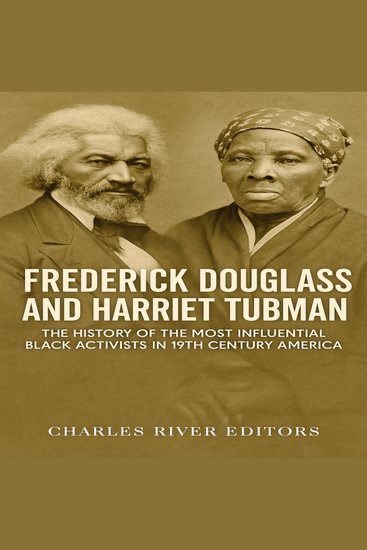
  • Frederick Douglass and Harriet Tubman: The History of the Most Influential Black Activists in 19th Century America - cover

    Frederick Douglass and Harriet...

    Charles River Editors

    • 0
    • 0
    • 0
    With the possible exception of Dr. Martin Luther King, Jr., no African American has been more instrumental in the fight for minorities’ civil rights in the United States than Frederick Douglass, an American social reformer, orator, writer and statesman. His list of accomplishments would be impressive enough even without taking into account the fact that he was born into slavery.  
    	Douglass was born into slavery, and it’s believed his father was a white man, even perhaps his master Aaron Anthony. When Douglass was about 12, his slaveowner’s wife, Sophia Auld, began teaching him the alphabet in defiance of the South’s laws against teaching slaves how to read. When her husband Hugh found out, he was furious, reminding her that if the slave learned to read, he would become dissatisfied with his condition and desire freedom. Those words would prove prophetic. 
    	Douglass is noted as saying that "knowledge is the pathway from slavery to freedom,” and he took that advice to heart, teaching himself how to read and write with his knowledge of the alphabet. On September 3, 1838, Douglass successfully escaped slavery, traveling by boat to Delaware, Philadelphia, and finally New York, all in the span of a day. Douglass found a “new world had opened upon me.” 
    	Harriet Tubman is one of the most famous women in American history, and from an early age every American learns of her contributions to abolition and the Underground Railroad. The woman who became known as the Moses of her people personally led more than 13 expeditions to free slaves in the South, and she was so integral in helping escaped slaves achieve freedom that her name is practically synonymous with the Underground Railroad today.  
    	If anything, the central role she played in the Underground Railroad has become so ingrained among subsequent generations that Tubman’s life has been shrouded in legend, and other important aspects have been overlooked.
    Mostra libro
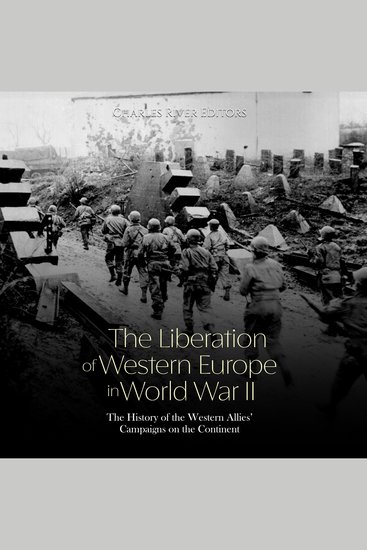
  • Liberation of Western Europe in World War II The: The History of the Western Allies’ Campaigns on the Continent - cover

    Liberation of Western Europe in...

    Editors Charles River

    • 0
    • 0
    • 0
    During World War II, the free world literally hung in the balance, with the Axis and Allies engaging in warfare on an unprecedented scale. Although Hitler’s Nazi Germany had overrun much of the European continent by 1940, the Allies began to reverse the momentum in 1942. By the end of 1943, with Allied forces firmly established in Italy and the Soviets on the verge of turning the tide in Russia, the British and Americans began to plot the invasion that would liberate Europe from the Nazis.  
    	During the first half of 1944, the Americans and British commenced a massive buildup of men and resources in the United Kingdom, while Allied Supreme Commander Dwight D. Eisenhower and military brass planned the details of an enormous and complex amphibious invasion of Europe. Though the Allies used misinformation to try deceiving the Germans, the most obvious place for an invasion was just across the narrow English Channel, and the Germans had built coastal fortifications throughout France to protect against just such an invasion. 
    The invasion across the Channel came in the early morning hours of June 6, 1944. That day, forever known as D-Day, the Allies commenced Operation Overlord by staging the largest and most complex amphibious invasion in human history. After the successful amphibious invasion on D-Day in June 1944, the Allies began racing east toward Germany and liberating France along the way. The Allies had landed along a 50 mile stretch of French coast, and despite suffering 8,000 casualties on D-Day, over 100,000 still began the march across the western portion of the continent.  
    After resisting the German attack, the Allied armies began advancing, and with that, the race to Berlin was truly on. While much has been written of the Battle of the Bulge, Okinawa, Midway, Stalingrad, and many other conflicts of the Second World War, the Battle for Berlin has remained in the shadows for many historians. 
    Mostra libro
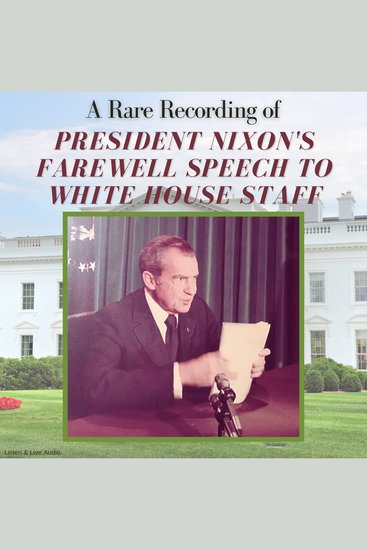
  • A Rare Recording of President Nixon's Farewell Speech to White House Staff - cover

    A Rare Recording of President...

    President Richard Nixon

    • 0
    • 0
    • 0
    Richard Milhous Nixon (January 9, 1913 - April 22, 1994) was the 37th president of the United States, serving from 1969 to 1974. A member of the Republican Party, he previously served as a representative and senator from California and was the 36th vice president from 1953 to 1961 under President Dwight D. Eisenhower. His five years in the White House saw reduction of U.S. involvement in the Vietnam War, détente with the Soviet Union and China, the first crewed Moon landings, and the establishment of the Environmental Protection Agency and Occupational Safety and Health Administration. Nixon's second term ended early, when he became the only US president to resign from office, as a result of the Watergate scandal.
    Mostra libro
  • Romantic Things - A Tree A Rock A Cloud - cover

    Romantic Things - A Tree A Rock...

    Mary Jacobus

    • 1
    • 1
    • 0
    Our thoughts are shaped as much by what things make of us as by what we make of them. Lyric poetry is especially concerned with things and their relationship to thought, sense, and understanding. In Romantic Things, Mary Jacobus explores the world of objects and phenomena in nature as expressed in Romantic poetry alongside the theme of sentience and sensory deprivation in literature and art. Jacobus discusses objects and attributes that test our perceptions and preoccupy both Romantic poetry and modern philosophy. John Clare, John Constable, Rainer Maria Rilke, W. G. Sebald, and Gerhard Richter make appearances around the central figure of William Wordsworth as Jacobus explores trees, rocks, clouds, breath, sleep, deafness, and blindness in their work. While she thinks through these things, she is assisted by the writings of Maurice Merleau-Ponty, Jacques Derrida, and Jean-Luc Nancy. Helping us think more deeply about things that are at once visible and invisible, seen and unseen, felt and unfeeling, Romantic Things opens our eyes to what has been previously overlooked in lyric and Romantic poetry.
    Mostra libro