Unisciti a noi in un viaggio nel mondo dei libri!
Aggiungi questo libro allo scaffale
Grey
Scrivi un nuovo commento Default profile 50px
Grey
Iscriviti per leggere l'intero libro o leggi le prime pagine gratuitamente!
All characters reduced
Lab Error Wins - cover

Lab Error Wins

Amelia Khatri

Traduttore A AI

Casa editrice: Publifye

  • 0
  • 0
  • 0

Sinossi

Lab Error Wins explores the surprising role of mistakes and accidents in major scientific breakthroughs. Challenging the traditional view of the scientific method, the book highlights how serendipity in science and the re-evaluation of errors have led to unforeseen discoveries. Scientific progress isn't always a linear path; sometimes, the most significant advancements arise from unexpected outcomes. For instance, the discovery of penicillin, a classic example, emerged from an accidental contamination in a lab, demonstrating how keen observation can transform a mistake into a revolution.

 
The book examines historical periods from alchemy to pharmaceutical research, using case studies to illustrate how perceptions of error have evolved. Each chapter dives into specific instances - like the invention of Teflon or vulcanized rubber - detailing the initial research goals, the nature of the error, and the ultimate breakthrough.

 
By analyzing original research journals and lab notebooks, Lab Error Wins reframes errors as potential sources of innovation, offering practical strategies for researchers to capitalize on accidental discoveries and encouraging a more resilient approach to scientific exploration.
Disponibile da: 16/02/2025.
Lunghezza di stampa: 55 pagine.


Altri libri che potrebbero interessarti

  • Holding a Mirror Up to Nature - cover

    Holding a Mirror Up to Nature

    James Gilligan, David A.J. Richards

    • 0
    • 0
    • 0
    At a time when violence in America and Europe dominates the daily news, a groundbreaking new book co-authored by James Gilligan, an eminent psychiatrist who has worked with criminals, and David A.J. Richards, a legal scholar of toxic patriarchy, illuminates the ways in which Shakespeare offers unique insights into the causes of violence as well as its prevention.Now a riveting new audio production, Holding a Mirror Up to Nature: Shame, Guilt, and Violence in Shakespeare takes advantage of scenes performed by acclaimed actors to dramatize how much Shakespeare’s tragic heroes exhibit the psychology of those who commit violence in the contemporary world.The voice of British-American actor John Douglas Thompson called “perhaps the greatest Shakespeare interpreter in contemporary theater,” together with women’s parts spoken by Shakespeare & Company’s distinguished Tod Randolph, and narration by award-winning theater star Nigel Gore, orchestrate this tour de force audiobook that belongs in the listening library of everyone who loves Shakespeare and is curious about what causes and what prevents violence.
    Mostra libro
  • Forgiving Humanity - How the Most Innovative Species Became the Most Dangerous - The Curse of Exponential Change - cover

    Forgiving Humanity - How the...

    Peter Russell

    • 0
    • 0
    • 0
    Why has the most innovative of species become so dangerous? The answer, suggests Peter Russell, lies in humanity’s accelerating pace of development. He shows how innovation breeds further innovation—a positive feedback loop leading to exponential rates of change. But our minds cannot grasp the full implications of exponential growth. We think more in terms of linear change, leading to a blind spot on the future.  
    However fast the pace of change may be today, it will be even faster in the years to come, bringing ever more rapid scientific and technological advances. But ever-accelerating change also creates stress on the systems involved. The faster the change, the greater the stress, and the more likely systemic breakdown. We are heading into a future with technology beyond our dreams, but in a world that is breaking at the seams. 
    Russell argues there is no blame for this. Spiraling rates of development, with all their consequences, positive and negative, are the inevitable fate of any intelligent, technologically-empowered species.  
    How do we live with such unsettling conclusions? How can we prepare for a world that is becoming increasingly unpredictable? What does it mean for the future of humanity? 
    Peter Russell, the widely acclaimed author of The Global Brain and other pioneering works, earned an honors degree in theoretical physics and psychology —as well as a masters degree in computer science —at the University of Cambridge. He subsequently went to India where he explored meditation and Eastern philosophy, and was one of the first people to introduce personal development programs to corporations in the 1970s. His other books include The TM Technique, The Upanishads, Waking Up in Time, From Science to God, and Letting Go of Nothing.
    Mostra libro
  • Lead Learn Grow - Steps to Becoming a Stronger Guide - cover

    Lead Learn Grow - Steps to...

    Caleb David

    • 0
    • 0
    • 0
    Effective leadership is a journey of continuous learning and personal growth. In Lead, Learn, Grow, readers will discover how to evolve as leaders while empowering others to reach their potential. This book explores the interconnectedness of leadership, mentorship, and growth, offering strategies for developing skills, fostering collaboration, and overcoming obstacles. Packed with practical tips and thought-provoking exercises, this book is an invaluable resource for leaders seeking to refine their abilities, build strong teams, and inspire success.
    Mostra libro
  • The Art of Forgiveness - cover

    The Art of Forgiveness

    Rachael Coopes

    • 0
    • 0
    • 0
    A how-to on letting go, and finding peace.  
     
    Are you suffering from anger, bitterness or regret? Or are you simply yearning to live a calmer and more connected life? 
     
    By exploring a range of winning philosophies – from the Stoics to Zen Buddhism – author Rachael Coopes shares how to properly let go and find peace. 
     
    Combining personal stories and advice mixed with solid, expert-based research, anecdotal evidence and case studies, The Art of Forgiveness is a compassionate guide underpinned by sensible philosophies to help you live a calmer, happier life.
    Mostra libro
  • Challenger and Columbia: The History of the Space Shuttles that Suffered Deadly Disasters - cover

    Challenger and Columbia: The...

    Editors Charles River

    • 0
    • 0
    • 0
    In the decades after the Apollo program, American space shuttles flew over 130 missions and successfully completed over 98% of them, but unfortunately, the two most famous missions were the ones that ended tragically aboard the Challenger and Columbia.  
    The Space Shuttle Challenger was the most heavily used space shuttle in the three years it was operational, carrying the first minority astronaut and woman astronaut into space. Challenger was also the first space shuttle to complete a landing at night. 
    On the morning of January 28, 1986, the Space Shuttle Challenger launched for the 10th time, beginning mission STS-51-L. Space shuttles had already successfully completed 24 missions, and no American spacecraft had ever failed to reach orbit during an official mission. On this mission, the Challenger was carrying a satellite for the Tracking and Data Relay Satellites system, which was to be deployed in orbit. Ascent seemed to be going normally during the first minute, but about 75 seconds into the ascent, a plastic O-ring used to seal a joint in one of the solid rocket boosters failed, causing a breach of hot gas. That gas spread to the other rocket booster and the external fuel tank, causing an explosion. When the spectators saw the explosion, many of them started cheering, unaware of what was really happening.  
    The notorious date of the Challenger disaster was commemorated by the crew of the Columbia while they were in space in 2003, and a few days later, on February 1, the Columbia was due to land at the Kennedy Space Center in Florida at 09:16. Only a few members of the press were present to watch the landing - this was, after all, supposed to be a routine return from a routine mission, the 113th for the shuttle program and the 28th for Columbia, one of the oldest Space Shuttles.
    Mostra libro
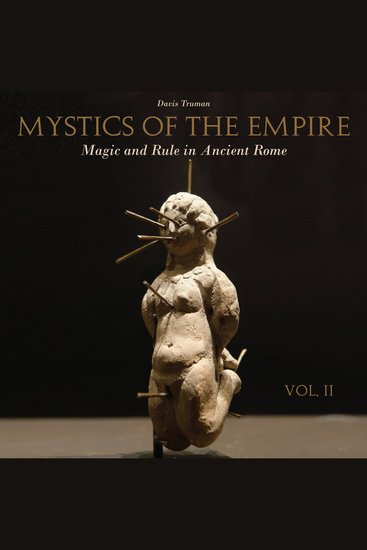
  • Mystics of the Empire - Magic and Rule in Ancient Rome - Volume 2 - cover

    Mystics of the Empire - Magic...

    Davis Truman

    • 0
    • 0
    • 0
    In Mystics of the Empire, this groundbreaking study delves into the often-overlooked relationship between Roman emperors and magic, offering a fresh perspective on how sorcery and power intersected in the ancient world. While the lives and reigns of emperors have long captivated scholars, the fascinating role of magic in their rule remains a largely unexplored area of historical inquiry. This book examines how emperors were depicted as patrons of magical practices and as victims and persecutors of sorcery, revealing the complex political, social, and religious ramifications of magic in the Roman Empire. 
    From the mystical associations of the early emperors to the later, more controversial reigns of figures like Elagabalus, Mystics of the Empire analyzes the twofold nature of magic’s role — whether it was used as a tool for imperial authority or as a threat to Roman stability. The book explores how emperors employed magicians for their purposes and how their engagement with magic could be a source of political intrigue and downfall. Drawing on ancient sources and case studies, the narrative illuminates how these magical associations shaped the representation of emperors while also addressing the motivations behind these portrayals. 
    By offering a detailed examination of the magical context from the establishment of the Principate to the end of the Severan dynasty, Mystics of the Empire reveals the intricate interplay between the mystical and the political in ancient Rome. This work challenges traditional understandings of Roman governance, providing readers with a deeper appreciation of how magic was used as a tool of power, control, and subversion in one of history’s most enduring empires.
    Mostra libro