Unisciti a noi in un viaggio nel mondo dei libri!
Aggiungi questo libro allo scaffale
Grey
Scrivi un nuovo commento Default profile 50px
Grey
Iscriviti per leggere l'intero libro o leggi le prime pagine gratuitamente!
All characters reduced
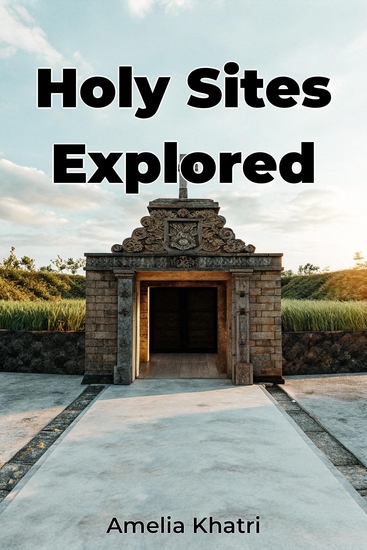
Holy Sites Explored - cover

Holy Sites Explored

Amelia Khatri

Traduttore A AI

Casa editrice: Publifye

  • 0
  • 0
  • 0

Sinossi

Holy Sites Explored examines the profound significance of locations revered across diverse faiths and cultures, arguing that these sites are living embodiments of faith, history, and collective memory. The book explores how these places shape belief systems and influence world history. It delves into the historical background, religious significance, architectural features, and associated rituals of sites like Mecca, the spiritual center of Islam, and Jerusalem, sacred to Judaism, Christianity, and Islam. The book also considers how religious sites are impacted by conflict, pilgrimage, and modernization.

 
Beginning with a definition of "sacred space," the book progresses through in-depth explorations of specific holy sites, drawing from archaeological findings, historical texts, and ethnographic studies. Understanding the cultural interpretations of these sites offers insight into the complex interplay between religion, culture, and human identity. It provides a fact-based and respectful exploration of sacred spaces, avoiding sensationalism and offering an accessible account suitable for a broad audience interested in religious history and culture.
Disponibile da: 14/02/2025.
Lunghezza di stampa: 61 pagine.
Altri libri che potrebbero interessarti

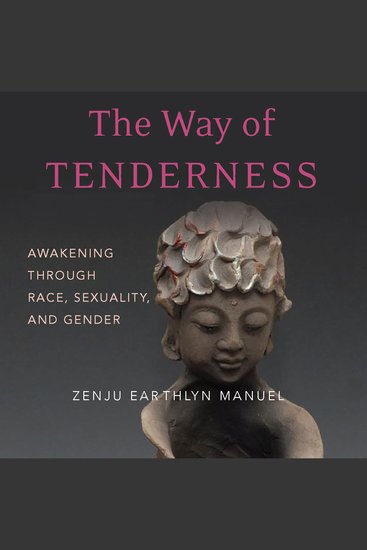
  • The Way of Tenderness - Awakening through Race Sexuality and Gender - cover

    The Way of Tenderness -...

    Zenju Earthlyn Manuel

    • 0
    • 0
    • 0
    In The Way of Tenderness, Zen priest Zenju Earthlyn Manuel brings Buddhist philosophies of emptiness and appearance to bear on race, sexuality, and gender, using wisdom forged through personal experience and practice to rethink problems of identity and privilege.  
    Manuel brings her own experiences as a lesbian black woman into conversation with Buddhism to square our ultimately empty nature with superficial perspectives of everyday life. Her hard-won insights reveal that dry wisdom alone is not sufficient to heal the wounds of the marginalized; an effective practice must embrace the tenderness found where conventional reality and emptiness intersect. Only warmth and compassion can cure hatred and heal the damage it wreaks within us.  
    This is a book that will teach us all.
    Mostra libro
  • Ordinary Men Turning Into Monsters - The Dark Descent of The Everyday Man - cover

    Ordinary Men Turning Into...

    Davis Truman

    • 0
    • 0
    • 0
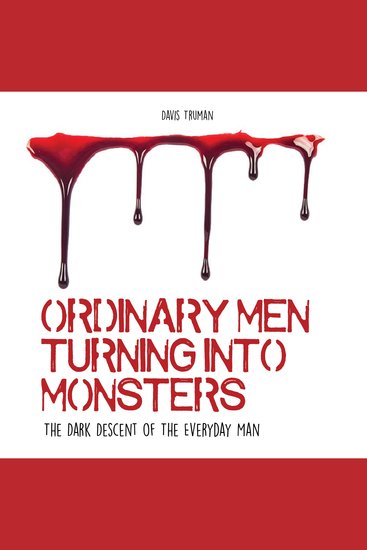
    How can ordinary people, whom we consider "normal," unexpectedly commit repulsive and criminal actions that we would never have thought them capable of? The concept of evil is one of the great themes in history, philosophy, sociology, and psychology. We have always tended to categorize the perpetrators of evil as "the others," "them," bad people, monsters, and true villains who commit atrocities that "we" could never carry out. The German philosopher Hannah Arendt challenged this clear distinction between inherently good people and inherently bad people and introduced a new, original paradigm known as the "banality of evil." 
    Arendt's concept suggests that the vast majority of German soldiers who followed Hitler's orders and committed horrific crimes were not sadistic monsters but ordinary men, not much different from us. These normal men, placed within a context of hierarchy, modern bureaucracy, and obedience to authority, were capable of killings, abuse, torture, and inhumane treatment of victims. In essence, there were monsters, yes, but they were few, far fewer than commonly believed. Starting from here, we aim to answer how ordinary people can transform into real monsters. We will trace a path that leads up to the present day.
    Mostra libro
  • United Kingdom House of Commons Speeches Collection volume 1 - cover

    United Kingdom House of Commons...

    Various Various

    • 0
    • 0
    • 0
    This collection comprises recordings of 17 historic speeches given to the UK House of Commons between 1628 and 1956. Readings are of speeches origninally given by parliamentarians including Oliver Cromwell, Edmund Burke, William Wilberforce, William Gladstone, Keir Hardie, Winston Churchill and Aneurin Bevan. (Summary by Carl Manchester)
    Mostra libro
  • World War ‘D’ The Intersection of Cyber and Biological Pandemics - cover

    World War ‘D’ The Intersection...

    Christopher Rence

    • 0
    • 0
    • 0
    Life has never been easier thanks to the advancement of technology. However, with all new technological advancements also come new risks. The most drastically increasing issue in the world today is not biological warfare but cyber warfare. Data has become the single most valuable commodity in today’s world, and of course, there are always people lurking around the corner, trying to get their hands on it.As the world is evolving, so is everything in it. Although the digital world may not be safe, no one can run away from it. Therefore, it is better to accept the inevitable while taking the necessary precautions to avoid becoming the next victim of a cybercrime
    Mostra libro
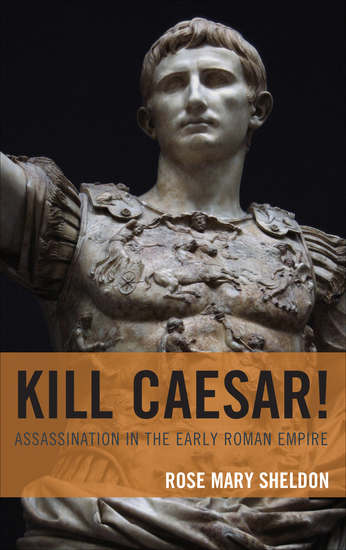
  • Kill Caesar! - Assassination in the Early Roman Empire - cover

    Kill Caesar! - Assassination in...

    Rose Mary Sheldon

    • 0
    • 0
    • 0
    “Why were Rome’s first emperors—the good, the bad, and the ugly—so vulnerable to conspiracies and assassination? . . . an expert analysis . . . compelling.” —Adrienne Mayor, author of The Poison King: The Life and Legend of Mithradates and Rome’s Deadliest Enemy Exploring the history of internal security under the first Roman dynasty, this groundbreaking book answers the enduring question: If there were 9,000 men guarding the emperor, how were three-quarters of Rome’s leaders assassinated? Rose Mary Sheldon traces the evolution of internal security mechanisms under the Julio-Claudians, evaluating the system that Augustus first developed to protect the imperial family and the stability of his dynasty. Yet in spite of the intensive precautions taken, there were multiple attempts on his life.    Like all emperors, Augustus had a number of competing constituencies—the senate, the army, his extended family, the provincials, and the populace of Rome—but were they all equally threatening? Indeed, the biggest threat would come from those closest to the emperor—his family and the aristocracy. Even Roman imperial women were deeply involved in instigating regime change. By the fourth emperor, Caligula, the Praetorian Guards were already participating in assassinations, and the army too was becoming more politicized.    Sheldon weighs the accuracy of ancient sources: Does the image of the emperor presented to us represent reality or what the people who killed him wanted us to think? Were Caligula and Nero really crazy, or did senatorial historians portray them that way to justify their murder? Was Claudius really the fool found drooling behind a curtain and made emperor, or was he in on the plot from the beginning? These and other fascinating questions are answered as Sheldon concludes that the repeated problem of “killing Caesar” reflected the empire’s larger dynamics and turmoil.
    Mostra libro
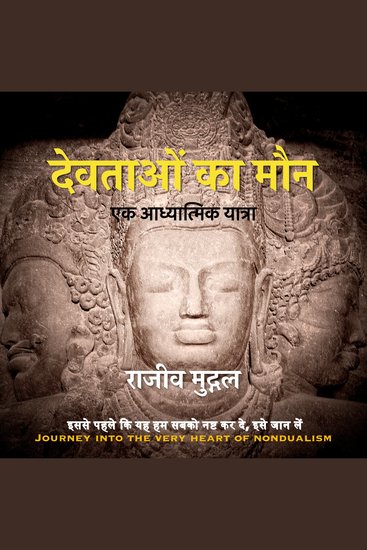
  • Devtaon Ka Maun - Journey Into The Very Heart of Nondualism - cover

    Devtaon Ka Maun - Journey Into...

    Rajiv Mudgal

    • 0
    • 0
    • 0
    This book “देवताओं का मौन (The Gods have gone silent)” is a philosophical journey into the very living heart of non-dual Vedanta. 
    Today our modern existence rests on the loss and disappearance of the fact-value distinction that embody science and technological development at the expense of what it means to be a living being. It traces the essence of Vedanta through the streets and crossings of modern India and engages with extraordinary living masters in trying to answer some of our most pressing spiritual questions such as:What is this dwelling and who is this dweller.How is the dweller to chalk his way to his being?Who are the modern Rishis and how are we to become one?If Truth cannot be acquired or learnt, then how can it be transmitted. 
    How do we know it, If it is the indescribable, undefinable, unutterable, unspeakable, incommunicable, ineffable; beyond words, beyond description, then by what and in what are we to seek its body.
    Mostra libro