Unisciti a noi in un viaggio nel mondo dei libri!
Aggiungi questo libro allo scaffale
Grey
Scrivi un nuovo commento Default profile 50px
Grey
Iscriviti per leggere l'intero libro o leggi le prime pagine gratuitamente!
All characters reduced
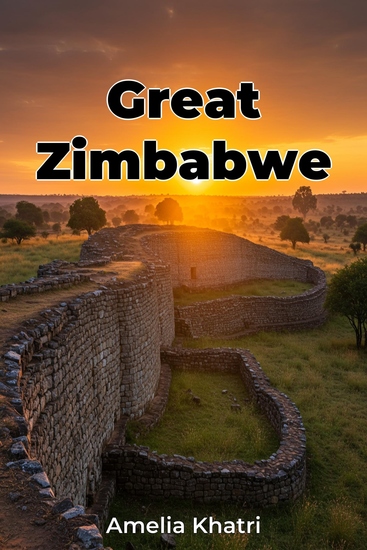
Great Zimbabwe - cover

Great Zimbabwe

Amelia Khatri

Traduttore A AI

Casa editrice: Publifye

  • 0
  • 0
  • 0

Sinossi

"Great Zimbabwe" explores the fascinating history of a powerful medieval city in Southern Africa, revealing its sophisticated stone architecture, extensive trade networks, and complex social structures. This civilization thrived centuries before European contact, leaving behind monumental ruins that continue to inspire awe and spark debate among historians and archaeologists. The book delves into the intricate details of the city's construction, highlighting how skilled labor and innovative techniques allowed the creation of iconic stone enclosures. Archaeological evidence suggests the city's leaders controlled regional trade routes, accumulating wealth and influencing surrounding communities, demonstrating a sophisticated understanding of economic systems and political structures. The book examines Great Zimbabwe's political ideology, economic engine, and cultural expressions, providing a multifaceted understanding of this civilization. It draws upon archaeological excavations, oral histories, and historical documents to offer a nuanced perspective. The narrative progresses from introducing the geographical setting and history of research to exploring specific aspects of the city's life, such as its economy, political system, and artistic traditions. By emphasizing indigenous African agency and challenging Eurocentric narratives, "Great Zimbabwe" provides a valuable resource for anyone interested in African history and the achievements of its civilizations.
Disponibile da: 19/03/2025.
Lunghezza di stampa: 58 pagine.
Altri libri che potrebbero interessarti

  • Fear and Trembling - cover

    Fear and Trembling

    Søren Kierkegaard

    • 0
    • 0
    • 0
    Soren Kierkegaard was a Danish philosopher, theologian, and religious author interested in human psychology. He is regarded as a leading pioneer of existentialism and one of the greatest philosophers of the 19th Century.
    
    In Fear and Trembling, Kierkegaard aimed to understand the anxiety that must have been present in Abraham when God commanded him to offer his son as a human sacrifice. Abraham had a choice to complete the task or to forget it. He resigned himself to the loss of his son, acting according to his faith. In other words, one must be willing to give up all his or her earthly possessions in infinite resignation and must also be willing to give up whatever it is that he or she loves more than God. Abraham had passed the test -- his love for God proved greater than anything else in him. And because a good and just Creator would not want a father to kill his son, God intervened at the last moment to prevent the sacrifice.
    Mostra libro
  • Renaissance The: An Enthralling Guide to a Period of Rebirth in Arts Science and Culture - cover

    Renaissance The: An Enthralling...

    Billy Wellman

    • 0
    • 0
    • 0
    Do the names Michelangelo, Leonardo da Vinci, and Raphael ring a bell? 
    If so, you are already somewhat familiar with the Renaissance, which saw a rebirth in the arts and science. Great strides were made in several fields, and many men made a name for themselves by creating masterpieces or developing new theories, even if some people found them controversial. 
    This comprehensive guide digs into some of the most famous figures of the period and includes some who might not be as well known. This exciting ride through history gives you an introductory look at one of the most fascinating periods in history, injecting new life into a topic that has been written about countless times before.  
    Avoid the stuffy academic audiobooks on the Renaissance and instead explore a captivating look at a period that brought renewed interest to the arts, science, and culture in general. 
    In this audiobook, you will learn about the following:How the Middle Ages segued into the RenaissanceSome of the well-known concepts that emerged during the period, such as humanismWhy some families became patrons of the artsHow religion impacted the RenaissanceFamous artists, thinkers, and scientists who breathed new life into European societyExamples of Renaissance paintings and architecture How the printing press led to the spread of ideasAnd so much more! 
    Scroll up and click the “add to cart” button to begin learning about the Renaissance today!
    Mostra libro
  • Results - Getting Beyond Politics to Get Important Work Done - cover

    Results - Getting Beyond...

    Charlie Baker, Steve Kadish

    • 0
    • 0
    • 0
    Governor Charlie Baker, one of the most popular governors in the United States, with a reputation for getting things done, wants to put the service back into public service: "Wedge issues may be great for making headlines," he writes, "but they do not move us forward. Success is measured by what we accomplish together. Our obligation to the people we serve is too important to place politics and partisanship before progress and results." 


    For the Governor and his longtime associate Steve Kadish, these words are much more than political platitudes. They are at the heart of a method for delivering results—and getting past politics—the two developed while working together in top leadership positions in the public and private sectors. 


    Distilled into a four-step framework, Results is the much-needed implementation guide for anyone in public service, as well as for leaders and managers in large organizations hamstrung by bureaucracy and politics. With a broad range of examples, Baker, a Republican, and Kadish, a Democrat, show how to move from identifying problems to achieving results in a way that bridges divides instead of exacerbating them. They show how government can be an engine of positive change and an example of effective operation, not just a hopeless bureaucracy.
    Mostra libro
  • Clean Your Debts - cover

    Clean Your Debts

    Earl Dickerson

    • 0
    • 0
    • 0
    Clean Your Debts: The Comprehensive Guide on the Effective Ways and Methods of Eliminating Out your Debts, Learn All Types of Credits and Debts and How to Get Rid of ThemDebt is not inherently a bad thing. Credit and debt allow people and organizations to do things that they would otherwise not be able, or allowed, to do. Commonly, people in industrialized nations use it to purchase houses, cars, and many other things too expensive to buy with cash on hand. Companies also use debt in many ways to leverage the investment made in their assets, "leveraging" the return on their equity.Credit card debt is extremely stressful and it can take over your life but it’s not insurmountable. Before you get consumed by the seemingly endless torrent of bill collector calls and fruitless interest payments, consider some of the many options that you have to take care of credit card debt. Statistics show that 80% of Americans have debts to their name. Debts have different effects on everyone. While it may seem like just a mild inconvenience to some, it could be ruining the lives and taking control of the lives of some people.This comprehensive guide about debts will give you essential information and proven tips on how you can rid yourself of credit card debt, student loans, and mortgage debt. Learn useful strategies and knowledge on how to improve your credit score.Here are some of the topics that will be discussed in this guide: What is Credit Debt? Credit Card Debt, Student Loans, Mortgages, Bankruptcy Facts, Credit Score Facts, and a lot more.There really is no fast and easy way to clear yourself of debt, you have to understand that it’s a slow and steady process. To learn more, download Clean Your Debt Today!
    Mostra libro
  • Lost Fatherland - Europeans between Empire and Nation-States 1867-1939 - cover

    Lost Fatherland - Europeans...

    Iryna Vushko

    • 0
    • 0
    • 0
    How the demise of the Habsburg Empire, postwar sovereignty, and new diplomatic frontiers shaped the nature of citizenship, identity, and belonging across Europe 


    This book is a collective portrait of twenty-one key statesmen who came of age during the Habsburg Empire. They include the cofounder of Austro-Marxism and the Austrian republic's first foreign minister, the cofounder of the European Union after the Second World War, the founder of the Communist Party of Czechoslovakia, and Mussolini's ambassador to Vienna. Some survived the First World War and the resulting geographical divisions in their homelands, and some went on to serve in politics and governments throughout Europe. 


    Taken together, the stories of these men offer listeners a window on broad issues of European history in the late nineteenth and early twentieth centuries—chiefly, how an imperial heritage, a shared vision of statehood and nationalism, and a commitment to peaceful conflict resolution helped establish enduring loyalty and unity despite the geographical fault lines resulting from the war. As Iryna Vushko explains, their stories also offer an increasingly nuanced understanding of the achievements and failures of the Habsburg Empire.
    Mostra libro
  • The Invention of Scarcity - Malthus and the Margins of History - cover

    The Invention of Scarcity -...

    Deborah Valenze

    • 0
    • 0
    • 0
    With the publication of Essay on the Principle of Population and its projection of food shortages in the face of ballooning populations, British theorist Thomas Robert Malthus secured a leading role in modern political and economic thought. In this startling new interpretation, Deborah Valenze reveals how canonical readings of Malthus fail to acknowledge his narrow understanding of what constitutes food production. 


    Valenze returns to the eighteenth-century contexts that generated his arguments, showing how Malthus mobilized a redemptive narrative of British historical development and dismissed the ways that people adapted to the challenges of subsistence needs. She uses history, anthropology, and food studies to redirect our attention to the margins of Malthus's essay, where activities such as hunting and gathering were rendered extraneous. She demonstrates how Malthus's omissions and his subsequent canonization provided a rationale for colonial imposition of British agricultural models, regardless of environmental diversity. 


    By broadening our conception of human livelihoods, Valenze suggests pathways to resistance against the hegemony of Malthusian political economy. She invites us to imagine a world where monoculture is in retreat and the margins are recentered as spaces of experimentation, nimbleness, and human flourishing.
    Mostra libro