Unisciti a noi in un viaggio nel mondo dei libri!
Aggiungi questo libro allo scaffale
Grey
Scrivi un nuovo commento Default profile 50px
Grey
Iscriviti per leggere l'intero libro o leggi le prime pagine gratuitamente!
All characters reduced
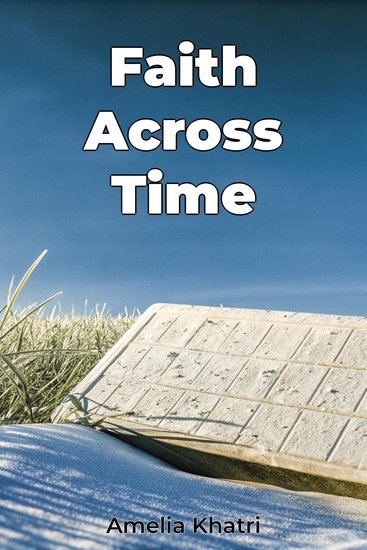
Faith Across Time - cover

Faith Across Time

Amelia Khatri

Traduttore A AI

Casa editrice: Publifye

  • 0
  • 0
  • 0

Sinossi

"Faith Across Time" explores the captivating journey of religious belief, charting the shift from ancient polytheism to modern monotheism. It examines how early societies used mythology to explain their world, and how philosophical thought later challenged and reshaped these traditional beliefs. The study emphasizes that the transition wasn't just about reducing the number of gods; it was a profound change in humanity's understanding of its place in the cosmos.

 
The book journeys chronologically, beginning with the diverse pantheons of ancient religions and their associated rituals. It then transitions to the rise of philosophical critiques, setting the stage for the emergence of Judaism, Christianity, and Islam. Examining the theological innovations and cultural impact of these monotheistic faiths, the book concludes by considering the ongoing evolution of religious traditions in the face of secularism and interfaith dialogue.

 
The book offers a unique perspective by emphasizing the interplay between philosophical ideas and historical circumstances in shaping religious change.
Disponibile da: 14/02/2025.
Lunghezza di stampa: 70 pagine.

Altri libri che potrebbero interessarti

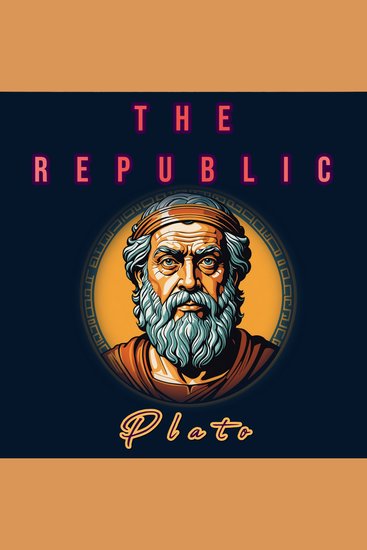
  • The Republic - cover

    The Republic

    Plato

    • 0
    • 0
    • 0
    The Republic (Greek: Politeia) is a Socratic dialogue, written by Plato around 380 BC, concerning the definition of (justice), the order and character of the just city-state and the just man, reason by which ancient readers used the name On Justice as an alternative title (not to be confused with the spurious dialogue also titled On Justice). The dramatic date of the dialogue has been much debated and though it must take place some time during the Peloponnesian War, "there would be jarring anachronisms if any of the candidate specific dates between 432 and 404 were assigned".    It is Plato's best-known work and has proven to be one of the most intellectually and historically influential works of philosophy and political theory. In it, Socrates along with various Athenians and foreigners discuss the meaning of justice and examine whether or not the just man is happier than the unjust man by considering a series of different cities coming into existence "in speech", culminating in a city (Kallipolis) ruled by philosopher-kings; and by examining the nature of existing regimes.    The participants also discuss the theory of forms, the immortality of the soul, and the roles of the philosopher and of poetry in society. Short Summary (Epilogue): X.1—X.8. 595a—608b. Rejection of Mimetic Art X.9—X.11. 608c—612a. Immortality of the Soul X.12. 612a—613e. Rewards of Justice in Life X.13—X.16. 613e—621d. Judgment of the Dead The paradigm of the city — the idea of the Good, the Agathon — has manifold historical embodiments, undertaken by those who have seen the Agathon, and are ordered via the vision. The centre piece of the Republic, Part II, nos. 2–3, discusses the rule of the philosopher, and the vision of the Agathon with the allegory of the cave, which is clarified in the theory of forms.    The centre piece is preceded and followed by the discussion of the means that will secure a well-ordered polis (City). Part II, no. 1, concerns marriage, the community of people and goods for the Guardians, and the restraints on warfare among the Hellenes. It describes a partially communistic polis. Part II, no. 4, deals with the philosophical education of the rulers who will preserve the order and character of the city-state. In Part II, the Embodiment of the Idea, is preceded by the establishment of the economic and social orders of a polis (Part I), followed by an analysis (Part III) of the decline the order must traverse. The three parts compose the main body of the dialogues, with their discussions of the "paradigm", its embodiment, its genesis, and its decline. The Introduction and the Conclusion are the frame for the body of the Republic.    The discussion of right order is occasioned by the questions: "Is Justice better than Injustice?" and "Will an Unjust man fare better than a Just man?" The introductory question is balanced by the concluding answer: "Justice is preferable to Injustice". In turn, the foregoing are framed with the Prologue (Book I) and the Epilogue (Book X). The prologue is a short dialogue about the common public doxai (opinions) about "Justice". Based upon faith, and not reason, the Epilogue describes the new arts and the immortality of the soul.
    Mostra libro

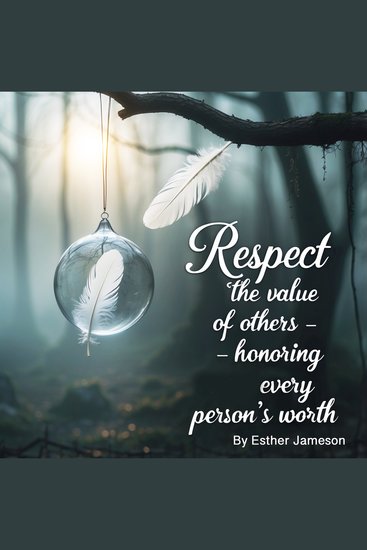
  • Respect - The Value of Others - Honoring Every Person's Worth - cover

    Respect - The Value of Others -...

    Esther Jameson

    • 0
    • 0
    • 0
    Respect is a foundational human value that extends beyond simple manners or etiquette. It embodies an acknowledgment of each person’s inherent dignity and worth, regardless of differences in background, beliefs, or experiences. Understanding respect involves recognizing the importance of empathy, fairness, and the willingness to honor the rights and contributions of others. It is a dynamic concept that evolves as societies grow more aware of the diversity and complexity of the human condition. 
    Historically, respect has been central to various cultural, philosophical, and religious traditions. In many ancient civilizations, respect was closely tied to honor and social hierarchy, where individuals were expected to show deference to elders, leaders, and those who possessed wisdom. Over time, however, the meaning of respect has broadened significantly. Modern interpretations emphasize equality, mutual recognition, and the importance of each individual’s unique journey. This evolution reflects a collective shift towards a more inclusive perspective, where every person is seen as deserving of respect simply by virtue of being human. 
    Empathy plays a crucial role in cultivating respect. By seeking to understand the experiences, struggles, and aspirations of others, individuals can overcome prejudices and foster an environment of understanding. This empathetic approach enables people to view interactions from perspectives other than their own, leading to more meaningful and supportive relationships. As empathy deepens, respect becomes a natural outcome of genuine human connection, transcending superficial differences and encouraging compassion in everyday interactions.
    Mostra libro
  • Transgender Rights vs Women’s Rights - From Conflicts to Co-Existence - cover

    Transgender Rights vs Women’s...

    Robert Wintemute

    • 0
    • 0
    • 0
    “Trans rights are human rights!” “Women’s rights are human rights!” Yes, but the human rights of two groups often conflict. The only way to resolve these conflicts is through calm, rational, public debate. Freedom of expression protects the right of women to question certain demands by trans rights activists, even if this might offend. Raising conflicts between transgender rights and women’s rights is not “transphobic”, because disagreement is not hatred. The concept of “transphobia” should be defined narrowly as statements or acts indicating hostility or prejudice towards transgender persons. If the right to speak about conflicts is protected, and we start by acknowledging the broad areas of agreement about the human rights of transgender people, we can turn to the substance of these conflicts. 
      
    Should it be possible for an individual to change their legal sex? If so, how easy should it be? Should it be changeable only after a diagnosis of gender dysphoria and a waiting period? Or should it be sufficient to “self-identify” as a person of the opposite sex? Or should sex be removed from birth certificates, so that there is nothing to change?  
      
    Robert Wintemute carefully examines these conflicts, considers the differences between transgender rights and lesbian, gay and bisexual (LGB) rights, and proposes ways to achieve co-existence between transgender rights and women’s and children’s rights. 
      
    "Wintemute expertly illuminates the transgender debate. His journey through time and evolving views is clear and insightful, and he examines legal, policy, and ethical challenges with depth. In an increasingly polarised environment, his respect for all rights is very refreshing."—Debbie Hayton, author of Transsexual Apostate
    Mostra libro
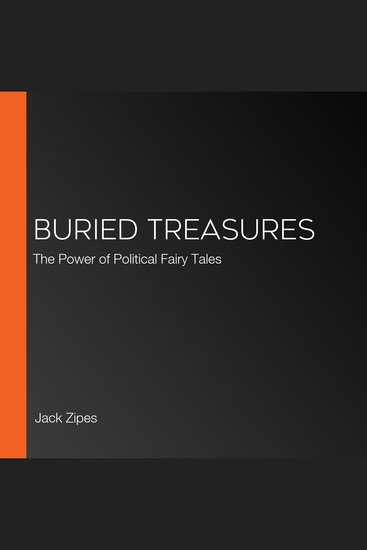
  • Buried Treasures - The Power of Political Fairy Tales - cover

    Buried Treasures - The Power of...

    Jack Zipes

    • 0
    • 0
    • 0
    Jack Zipes has spent decades as a "scholarly scavenger," discovering forgotten fairy tales in libraries, flea markets, used bookstores, and internet searches, and he has introduced countless readers to these remarkable works and their authors. In Buried Treasures, Zipes describes his special passion for uncovering political fairy tales of the nineteenth and twentieth centuries, offers fascinating profiles of more than a dozen of their writers and illustrators, and shows why they deserve greater attention and appreciation. 


    These writers and artists used their remarkable talents to confront political oppression and economic exploitation by creating alternative, imaginative worlds that test the ethics and morals of the real world and expose hidden truths. Among the figures we meet here are Édouard Laboulaye, a jurist who wrote acute fairy tales about justice; Charles Godfrey Leland, a folklorist who found other worlds in tales of Native Americans, witches, and Roma; Kurt Schwitters, an artist who wrote satirical, antiauthoritarian stories; Mariette Lydis, a painter who depicted lost-and-found souls; Lisa Tetzner, who dramatized exploitation by elites; Felix Salten, who unveiled the real meaning of Bambi's dangerous life in the forest; and Gianni Rodari, whose work showed just how political and insightful fantasy stories can be.
    Mostra libro
  • Memory Improvement - cover

    Memory Improvement

    Miguel Vaquero

    • 0
    • 1
    • 0
    The ability for the brain to encode, store, and recall information is known as memory. Experience serves as a roadmap for future action.Memory includes both consciously recalled facts and experienced details as well as deeply embedded knowledge that pops up without thought or even awareness. It serves as both a temporary information storage space and a more lasting record of what has been learned. Scientists have identified several different types of memory, including episodic, semantic, procedural, working, sensory, and prospective memory.From the vivid memories of episodic memory to the practical knowledge of procedural memory, each type of memory has a specific purpose. However, there are similarities in the way memory functions generally, and certain parts of the brain, like the hippocampus, are crucial for different types of memory.
    Mostra libro
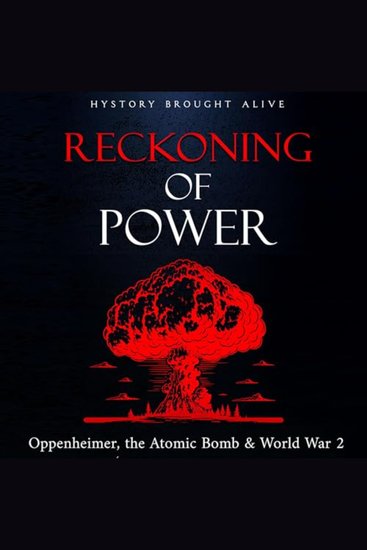
  • Reckoning of Power - Oppenheimer the Atomic Bomb & World War 2 - cover

    Reckoning of Power - Oppenheimer...

    History Brought Alive

    • 0
    • 0
    • 0
    Discover the untold story of the most terrifying invention in human historyThis audiobook explores the history of the Atomic Bomb in World War II, and uncovers Robert Oppenheimer's mysterious role as its visionary leader.As the world plunged into war, Oppenheimer found himself at the centre of a moral and scientific dilemma. Could science save humanity, or would it be its downfall?With gripping narratives and meticulous research, this book takes you on a riveting journey from the Manhattan Project to the Atomic Bombings at Hiroshima and Nagasaka, traversing the landscapes of WWII, and the nuclear age aftermath.Here are some of the highlights:J. Robert Oppenheimer, the brilliant, but troubled physicist who played a key role in the development of the Atomic BombExplore the turbulent backdrop of World War II, where global conflict ignited scientific innovationStep into the shoes of some of the greatest scientific minds in history—Albert Einstein, Edward Teller, Leslie Groves, Niels Bohr, and Leo SzilárdWitness the crucial moments and decisions that led to the dropping of the "Little Boy" and "Fat Man" Atomic Bombs on Hiroshima and NagasakiDiscover the Manhattan Project, a top secret mission that assembled the world's brightest minds in a race against the sinister, Nazi Atomic ProjectE = mc²: Unravel the mysteries of Einstein's groundbreaking equation that laid the foundation for atomic scienceExplore the Cold War and the arms race, followed by a glimpse into the future of nuclear energy 
    All of this and much, much more….Whether you're a history enthusiast or new to the subject, this book tells all about Oppenheimer, the Atomic Bomb, World War II, and the Nuclear Age Aftermath.Grab your copy of this book today!
    Mostra libro