Unisciti a noi in un viaggio nel mondo dei libri!
Aggiungi questo libro allo scaffale
Grey
Scrivi un nuovo commento Default profile 50px
Grey
Iscriviti per leggere l'intero libro o leggi le prime pagine gratuitamente!
All characters reduced
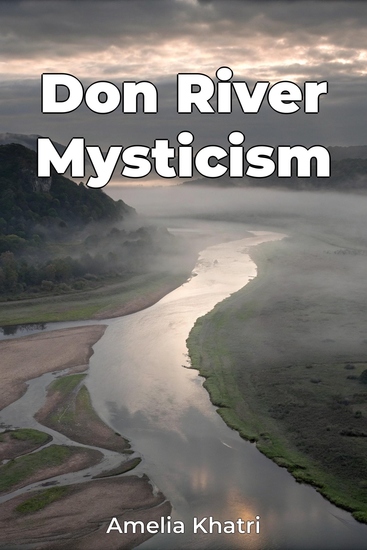
Don River Mysticism - cover

Don River Mysticism

Amelia Khatri

Traduttore A AI

Casa editrice: Publifye

  • 0
  • 0
  • 0

Sinossi

Don River Mysticism explores the spiritual relationship between the ancient Slavs and the Don River, arguing that the river was not just a geographical feature but a powerful spiritual force. The book delves into Slavic paganism, revealing how the Don was deified and perceived as a deity connected to fertility and the passage of time. It investigates the river's role as a liminal space, a boundary between the living and the spiritual realms, and its importance in ancestral veneration. The book uncovers rituals and ceremonies associated with the Don, including offerings and purification rites designed to honor the river spirit. Through archaeological findings, folklore, and comparative mythology, the author reconstructs the ancient Slavic understanding of the Don River. 

 
The study begins by introducing the historical and cultural context, then examines the evidence for the river's deification before exploring its role as a liminal space and its association with ancestor worship. The book concludes with an analysis of rituals, highlighting the river's significant role in ancient Slavic religious life. This approach provides a nuanced understanding of how nature shaped religious practices in the region.
Disponibile da: 14/02/2025.
Lunghezza di stampa: 64 pagine.


Altri libri che potrebbero interessarti

  • Four Dissertations - A Natural History of Religion Of the Passions Of Tragedy Of the Standard of Taste - cover

    Four Dissertations - A Natural...

    David Hume

    • 0
    • 0
    • 0
    David Hume (1711-1776) remains one of the most stimulating and entertaining writers in the English essay tradition. Though primarily known for long-form writings, he was adept at taking one subject and looking at it in a more concise but accessible manner. 
    Hume devoted his life to study – across a wide range of his personal interests, reflecting his background in philosophy, history, economics, and many other subjects. This can be clearly seen in Four Dissertations (1757) and the topics he chose to consider. 
     
    Of these, The Natural History of Religion is the most well-known and widely quoted. Hume’s views, shaped by empiricism and scepticism, enables him to offer a perspective unusual for his age, though naturally it is embedded in the prevailing view ‘The whole frame of nature bespeaks an intelligent author’. Nevertheless, this does not restrict his thinking as he examines the psychological and sociological factors that shape religious sentiment. 
     
    The other three Dissertations are no less fascinating. Fittingly, in Of The Passions, Hume delves into the complex realm of human emotions. Investigating the nature of desire, love, fear, and more, he presents a wide-ranging study of how passions influence our actions and shape our experiences. 
     
    Of Tragedy, explores the aesthetics of dramatic art. Hume looks into the power of tragedy to elicit a passionate response and provoke contemplation. He examines the mechanisms by which tragedies captivate audiences and evoke a range of sentiments, shedding light on the profound impact of art on human consciousness. 
     
    In Of the Standard of Taste, Hume takes the viewpoint of the beholder, rather than the object. Declaring ‘We are apt to call barbarous whatever departs widely from our own taste and apprehension,’ he proposes that two elements, sentiment and critical faculty form a major part in decisions on taste. For “Beauty is no quality in things themselves: It exists merely in the mind which contemplates them; and each mind perceives a different beauty.” But such a subjective view cannot deny a certain consensus on beauty, which leads Hume to examine the matter of aesthetics in the light of judgements of established critics. 
     
    This recording concludes with Hume’s two short autobiographies, written at different times in his life and with differing characteristics. The first, A Kind of Life (1734) is a letter written to a doctor and the second, My Own Life (1776) was written shortly before his death.
    Mostra libro
  • Great Schism and the Western Schism The: The History and Legacy of the Most Important Splits in the Catholic Church - cover

    Great Schism and the Western...

    Editors Charles River

    • 0
    • 0
    • 0
    For nearly a thousand years following its foundation, there was only one Christian Church. Centered in the city of Rome, the Church expanded and grew until it became the dominant religion in Europe and beyond. The early growth of the Church had been suppressed by the Romans until the Emperor Constantine became the first to convert the empire to Christianity, and from that point forward, the growth of the Church was inextricably linked with the Roman Empire, the most powerful military, economic, and political force in the ancient world. 
    However, once the Western Roman Empire collapsed, Rome’s preeminence was not a situation that was welcomed in Constantinople, now the center of the Byzantine Empire and a thriving and wealthy metropolis. After being sacked by outsiders, Rome had become a virtual ghost town, partially ruined and inhabited by a small number of hardy survivors, yet in the center of the crumbling city was the Vatican Borgo, the Palace of the Supreme Pontiff and the heart of the Church. In retrospect, it is easy to see that this was a situation that was bound to lead to conflict and disagreement, with the Greek-speaking Eastern Orthodox Church centered in Constantinople and being governed by Latin-speaking popes in a faraway city. 
    To many, the pope is the embodiment of godly love in its purest form. No matter the weather or the inconvenience, millions upon millions of fervid devotees brave the congested streets of their cities, all for the once-in-a-lifetime opportunity to welcome the beloved Vicar of Christ. However, the modern perception of the pope is a far cry from how things were just a couple of centuries ago. There was a time when the holiest men of the world were constantly at each other's throats, willing to go to any lengths to secure the coveted papal title. By the late 14th century, tensions within the Church reached its breaking point, resulting in the Western Schism, an infamous split of the Catholic Church.
    Mostra libro
  • Summary of Leonard Mlodinow's Subliminal - cover

    Summary of Leonard Mlodinow's...

    Falcon Press

    • 0
    • 0
    • 0
    Buy now to get the main key ideas from Leonard Mlodinow's Subliminal 
      
    The unconscious controls nearly all of our behavioral patterns, daily decisions, and life-changing choices, yet we are almost unaware of its existence and functions. In Subliminal (2012), scientist Leonard Mlodinow aims to explain how the unconscious mind actually functions and guides us in our daily life. Mlodinow firmly believes that you must grasp the influence of the subliminal world concealed within each of us if you truly want to understand the social world, yourself, and others. If you want to overcome the hurdles that stand between you and your highest goals, you must understand the functions of your unconscious.
    Mostra libro
  • Everyday Spanish for Beginners - 400 Actions & Activities - cover

    Everyday Spanish for Beginners -...

    Innovative Language Learning, ...

    • 0
    • 0
    • 0
    Welcome to Everyday Spanish for Beginners - 400 Actions & Activities by Innovative Language. 
     
    This audiobook is a new way to learn and speak Spanish fast. 
    Start speaking in minutes with powerful learning methods that you'll learn inside. 
     
    Using this audiobook is simple. 
    You'll learn practical phrases for over 400 daily activities through 10 easy chapters. 
     
    The phrases were chosen by a panel of professional language teachers and are some of the most frequently used phrases in daily conversation. 
     
    Each chapter covers a daily scene such as morning activities, going to work, hanging out with friends, and much more. You'll be able talk about your day easily as you learn practical phrases in every chapter. With each phrase you'll get the audio pronunciation, bonus vocabulary, and more. 
     
    Simply listen and repeat out loud. 
     
    Download the PDF and read along: 
    https://bit.ly/3ztYKjc
    Mostra libro
  • Cicero's Brutus - cover

    Cicero's Brutus

    Cicero

    • 0
    • 0
    • 0
    "Cicero's Brutus" is a captivating historical dialogue penned by the renowned Roman philosopher and statesman, Marcus Tullius Cicero. Set during the twilight years of the Roman Republic, the narrative revolves around a profound conversation between Cicero and his intellectual companions, Brutus and Atticus, as they reflect upon the illustrious lives and achievements of Rome's most eminent orators. Through a series of stimulating discussions, Cicero embarks on a compelling exploration of rhetoric, eloquence, and the art of public speaking. With the intent to pay homage to the great orators of the past, Cicero delves into the lives and oratorical prowess of renowned figures such as Crassus, Sulpicius, and Antonius, meticulously dissecting their rhetorical styles, memorable speeches, and the impact they had on Roman society. Read in English, unabridged.
    Mostra libro
  • Reality and the Arts - cover

    Reality and the Arts

    Albert A. Anderson

    • 0
    • 0
    • 0
    Art is the creative manifestation of essences. In order to understand the relation between art and reality, we need a philosophical guide. The best way to comprehend how the creative act of imagining enables the mind to seek reality is to employ the kind of dialectical thinking that Plato used in his dialogues. Beginning with the shadows on the wall of the cave in which each person dwells, that process gradually enables us to grasp the essences that are manifested in individual works of art.
     
    Without a philosophical guide, we are likely to encounter only a blur of images in the visual arts, a cacophony of sounds in music, a whirl of activity in the theater, and chaos in the building of cities. It is too much to expect a set of final answers to any serious question about what is true, good, or beautiful. If we abandon the quest for reality we settle for too little. Plato’s dialectical approach offers a path between Scylla and Charybdis.
    Mostra libro