Unisciti a noi in un viaggio nel mondo dei libri!
Aggiungi questo libro allo scaffale
Grey
Scrivi un nuovo commento Default profile 50px
Grey
Iscriviti per leggere l'intero libro o leggi le prime pagine gratuitamente!
All characters reduced
Discourse Analysis - cover

Discourse Analysis

Amelia Khatri

Traduttore A AI

Casa editrice: Publifye

  • 0
  • 0
  • 0

Sinossi

"Discourse Analysis" offers a fascinating exploration of how language shapes our social reality, from casual greetings to formal communications, revealing the hidden frameworks that govern human interaction.

 
This comprehensive guide examines the intricate relationship between language, social context, and power dynamics, demonstrating how seemingly simple exchanges can reflect complex cultural norms and hierarchies. The book progresses systematically from fundamental linguistic concepts to sophisticated analytical frameworks, combining traditional methodology with contemporary social theory.

 
It explores three key pillars:structural elements of language,social context, andpower dynamics in communication.

 
Through real-world examples drawn from educational institutions, workplace environments, and digital platforms, readers learn to identify and interpret the layers of meaning embedded in various forms of communication. What makes this work particularly valuable is its practical approach to complex linguistic concepts, making them accessible to diverse audiences while maintaining academic rigor.

 
The book integrates insights from linguistics, sociology, and communication studies, addressing both traditional discourse analysis and emerging trends in digital communication. Whether examining conversation analysis, critical discourse theory, or multimodal communication, the text emphasizes practical applications while acknowledging ongoing debates in the field, particularly regarding the relationship between language and power in our rapidly evolving communication landscape.
Disponibile da: 31/01/2025.
Lunghezza di stampa: 117 pagine.

Altri libri che potrebbero interessarti

  • The Silent Saboteur - A Journey from Self-Doubt to Wholeness - cover

    The Silent Saboteur - A Journey...

    Nasheer Mohammad

    • 0
    • 0
    • 0
    What if your greatest obstacle isn't out in the world—but inside your own mind? 
    We all have a hidden partner: a voice that sounds like us but works against us. It questions our worth, magnifies our fears, and dismisses our successes. This is your Silent Saboteur. 
    In this compassionate and transformative guide, author Nasheer provides a practical roadmap to break free from the grip of self-doubt and move from inner conflict to lasting inner peace. This is not just theory—it is an actionable journey to reclaim your confidence. 
    Through a powerful framework of Awareness, Action, and Acceptance, you will learn to:Identify the subtle patterns of your inner critic and understand how it holds you back.Implement practical tools and strategies to quiet negative self-talk and step forward with courage. 
    Transform your relationship with yourself, replacing harsh self-criticism with compassion and authenticity. Written with raw honesty and warmth, Nasheer writes not as a distant expert, but as a fellow traveller who has walked this path himself. The Silent Saboteur is an essential listen for anyone who has ever felt overshadowed by their own thoughts—whether you're a professional striving for success, a dreamer afraid to leap, or an achiever who still feels hollow. 
    Your journey from self-doubt to wholeness begins here.Narrated with empathetic clarity, this audiobook brings the lessons of The Silent Saboteur to life, making it a perfect companion for your daily commute or moments of reflection.
    Mostra libro
  • Neurosultan Volume 5 - My Ethnicity is Empathy - cover

    Neurosultan Volume 5 - My...

    Abhijit Naskar

    • 0
    • 0
    • 0
    An offering of Poet Scientist Abhijit Naskar's diversity recordings. 
    The volume contains selected sonnets and verses from: 
    1. No Foreigner Only Family, 2020 
    2. Şehit Sevda Society: Even in Death I Shall Live, 2021 
    3. Earthquakin' Egalitarian: I Die Everyday So Your Children Can Live, 2021 
    4. Either Right or Human: 300 Limericks of Inclusion, 2023 
    5. Sapionova: 200 Limericks for Students, 2023 
    6. Bulletproof Backbone: Injustice Not Allowed on My Watch, 2023 
    7. Little Planet on The Prairie: Dunya Benim, Sorumluluk Benim, 2024
    Mostra libro
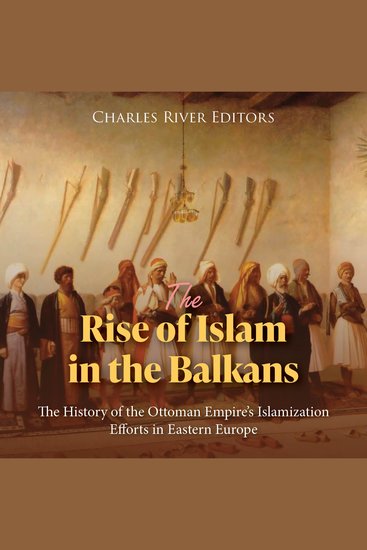
  • Rise of Islam in the Balkans The: The History of the Ottoman Empire’s Islamization Efforts in Eastern Europe - cover

    Rise of Islam in the Balkans...

    Editors Charles River

    • 0
    • 0
    • 0
    In terms of geopolitics, perhaps the most seminal event of the Middle Ages was the successful Ottoman siege of Constantinople in 1453. The city had been an imperial capital as far back as the 4th century, when Constantine the Great shifted the power center of the Roman Empire there, effectively establishing two almost equally powerful halves of antiquity’s greatest empire. Naturally, the Ottoman Empire would also use Constantinople as the capital of its empire after their conquest effectively ended the Byzantine Empire. 
    In the wake of taking Constantinople, the Ottoman Empire would spend the next few centuries expanding its size, power, and influence, bumping up against Eastern Europe and becoming one of the world’s most important geopolitical players. It was a rise that would not truly start to wane until the 19th century. In fact, its decline would be brought about not just because of military setbacks and government corruption, but also because of nationalist uprisings among its multiethnic territories. The fact that the other existing multicultural empire, the Austro-Hungarian Empire, also did not survive World War I makes clear just how hard governing such a vast expanse of land can be. The Ottoman Empire’s inability to create a shared identity, a weak central state, and growing inner dissensions were some of the main factors explaining its long demise. 
    Of course, before that demise, the Ottomans brought plenty of their own cultural influence to the lands they reached, and nowhere is that more evident than in the spread of Islam. While Ottoman conflicts with European powers were often portrayed as religious conflicts, the fact is that the Ottomans managed to bring Islam with them into parts of Europe, especially the Balkans, and Islam took hold in various regions, adding even more demographic complexity to a place that already had no shortage of it.
    Mostra libro
  • The Once and Future Sex - Going Medieval on Women's Roles in Society - cover

    The Once and Future Sex - Going...

    Eleanor Janega

    • 0
    • 0
    • 0
    A vibrant and illuminating exploration of medieval thinking on women's beauty, sexuality, and behavior. 


    What makes for the ideal woman? How should she look, love, and be? In this high-spirited history, medievalist Eleanor Janega turns to the Middle Ages, the era that bridged the ancient world and modern society, to unfurl its suppositions about women and reveal what's shifted over time—and what hasn't. 


    Enshrined medieval thinkers, almost always male, subscribed to a blend of classical Greek and Roman philosophy and Christian theology for their concepts of the sexes. For the height of female attractiveness, they chose the mythical Helen of Troy, whose imagined pear shape, small breasts, and golden hair served as beauty's epitome. Casting Eve's shadow over medieval women, they derided them as oversexed sinners, inherently lustful, insatiable, and weak. And, unless a nun, a woman was to be the embodiment of perfect motherhood. 


    In The Once and Future Sex, Janega unravels the restricting expectations on medieval women and the ones on women today. She boldly questions why, if our ideas of women have changed drastically over time, we cannot reimagine them now to create a more equitable future.
    Mostra libro
  • Oh God of Second Chances Here I Am Again - cover

    Oh God of Second Chances Here I...

    Christy Belz

    • 0
    • 0
    • 0
    Oh God of Second Chances, Here I am Again is part self improvement, part memoire based on Christy Belz's decades of work in helping people overcome challenges and their inner critics in their lives as a social worker and women's leadership and empowerment coach. It is a book about falling down and having the courage to get up and do it again. It is about having courage, vulnerability, and heart. Through personal stories of her own and additional voices from featured TEDx Talk women who Christy helped coach onto the stage, she shares raw, honest, and meaningful stories to help readers walk their journey to a full, authentic self. Starting with leading from the heart, Christy takes the reader through the twists, turns, stumbles, and successes of her own personal journey and shares the wonderful array of tools and techniques that have helped transform her life and the lives of those with whom she has worked. Filled with practices designed to help the reader pause, connect with their heart, step more fully into themselves, practice insane courage, and live more fully as their authentic, absolutely powerful, and beautiful self.
    Mostra libro
  • On Benefits - cover

    On Benefits

    Lucius Annaeus Seneca

    • 0
    • 0
    • 0
    The original Latin name of this important essay by Seneca, written around 60 CE, was De Beneficiis, which is why it is generally translated as ‘On Benefits’. However, it is more usefully titled ‘On Favours’, because this is what it is essentially about: the giving and receiving of favours, with all the implications of such transactions. Seneca is concerned with demonstrating that while such exchanges can be straightforward and beneficial to both parties, often there are pitfalls and hidden complications that, sooner or later, result in problems. Though some centuries later Shakespeare summed it up concisely with Polonius’s warning: ‘Neither a borrower nor a lender be,’ Seneca is well aware that in all levels and activities of society, benefits or favours play an undoubtedly crucial role. This was certainly true of Roman society, but little has changed since. Seneca deals with the subject in detail, considering the purposes of role of the giver, of which ‘kindness’, he says, is an important aspect – but not the only one by any means. Similarly, the role and attitude of the receiver, plays its part – and ‘gratitude’ is again only one response. Seneca’s background as a Stoic underpins his approach, so he warns against the inappropriate giving and receiving of benefits, which extend far beyond just material goods: it includes influence, wives, patronage and all manner of vice and immorality. In short, Seneca points out that the giving and receiving of favours can be, and often is a pernicious and dangerous affair, resulting in later disaster. Something to be exercised with caution.
    Mostra libro