Join us on a literary world trip!
Add this book to bookshelf
Grey
Write a new comment Default profile 50px
Grey
Subscribe to read the full book or read the first pages for free!
All characters reduced
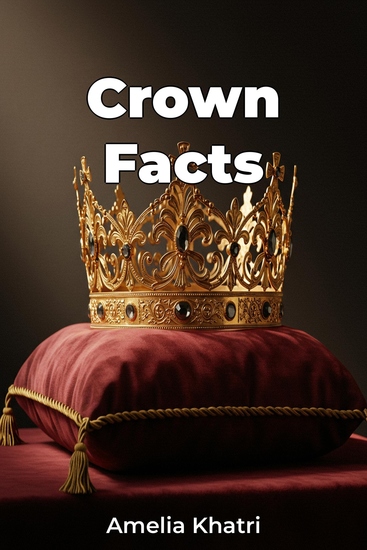
Crown Facts - cover

Crown Facts

Amelia Khatri

Translator A AI

Publisher: Publifye

  • 0
  • 0
  • 0

Summary

Crown Facts explores the rich history and symbolism embedded within royal headpieces, revealing how these objects represent national identity, cultural heritage, and the evolution of monarchy. More than mere symbols of wealth, crowns reflect intricate narratives shaped by social, political, and religious forces. For instance, the specific gemstones, metals, and shapes chosen for a crown were carefully selected to communicate authority, legitimacy, and even divine right, differing significantly across cultures.

 
The book traces the origins of crowns from ancient civilizations to modern monarchies, examining their design and function through a structured approach. Beginning with an introduction to royal regalia, it progresses to a detailed analysis of crowns from Europe, Asia, and Africa, highlighting unique cultural influences. Crown Facts further investigates the modern role of crowns in contemporary society and popular culture, using historical documents, art historical analyses, and anthropological studies to reveal how these symbols have evolved over time.

 
By connecting interdisciplinary fields like political science, art history, and anthropology, the book presents crowns as dynamic symbols reflecting changing political landscapes and cultural values. This thematic examination of crowns, rather than a biographical study of monarchs, offers readers interested in world history a unique lens to understand broader historical trends and the symbolism inherent in material culture.
Available since: 02/18/2025.
Print length: 62 pages.

Other books that might interest you

  • To Her Credit - Historic Achievements—and the Women Who Actually Made Them Happen - cover

    To Her Credit - Historic...

    Kaitlin Culmo, Emily McDermott

    • 0
    • 0
    • 0
    You may think you know the stories behind the world's most well-known, groundbreaking achievements, but To Her Credit is here to make you reevaluate our collective story. This book celebrates the stories of women, from ancient times until the 1990s, whose contributions have been overwritten and accredited to men. 


    The pattern of female achievements being stolen, overwritten, or straight-up ignored is as old as time. Authors Kaitlin Culmo and Emily McDermott reclaim the work of these heroines and offer reminders of what we lose when we don't question history as it has been written. 


    ● We're often told that Cervantes "invented fiction" with the novel Don Quixote in seventeenth-century Europe, but what about Lady Murasaki's The Tale of Genji in eleventh-century Japan? 


    ● Elvis Presley is considered "The King" and the inventor of rock and roll music. But what about Sister Rosetta Tharpe, who was the first to engineer the rock and roll sound, or Big Mama Thornton, for whom the song "Hound Dog" was explicitly written? 


    It's time to talk about the thousands of years' worth of art, inventions, innovations, and world-changing achievements made by women that have been ascribed to men.
    Show book
  • Trauma Tresses and Truth - Untangling Our Hair Through Personal Narratives - cover

    Trauma Tresses and Truth -...

    Lyzette Wanzer

    • 0
    • 0
    • 0
    Black women continue to have a complex and convoluted relationship with their hair. 


    From grammar and high schools to corporate boardrooms and military squadrons, Black and Afro Latina natural hair continues to confound, transfix, and enrage members of White American society. Why, in 2022, is this still the case? Why have we not moved beyond that perennial racist emblem? And why are women so disproportionately affected? 


    Why does our hair become most palatable when it capitulates, and has been subjugated, to resemble Caucasian features as closely as possible? Who or what is responsible for the web of supervision and surveillance of our hair? Who in our society gets to author the prevailing constitution of professional appearance? 


    Particularly relevant during this time of emboldened White supremacy, racism, and provocative othering, this work explores how writing about one of the still-remaining systemic biases in schools, academia, and corporate America might lead to greater understanding and respect.
    Show book
  • The Drive for Dollars - How Fiscal Politics Shaped Urban Freeways and Transformed American Cities - cover

    The Drive for Dollars - How...

    Brian D. Taylor, Eric A. Morris,...

    • 0
    • 0
    • 0
    The story of the interplay between finance, freeways, and urban form in the twentieth century and their enduring impact on American cities and neighborhoods in the twenty-first. 


    American cities are distinct from almost all others in the degree to which freeways and freeway travel dominate urban landscapes. In The Drive for Dollars, Brian D. Taylor, Eric A. Morris, and Jeffrey R. Brown tell the largely misunderstood story of how freeways became the centerpiece of US urban transportation systems, and the crucial, though usually overlooked, role of fiscal politics in bringing freeways about. The authors chronicle how the ways that we both raise and spend transportation revenue have shaped our transportation system and the lives of those who use it, from the era before the automobile to the present day. They focus on how the development of one revolutionary type of road—the freeway—was inextricably intertwined with money. With the nation's transportation finance system at a crossroads today, this book sheds light on how we can best fund and plan transportation in the future. The authors draw on these lessons to offer ways forward to pay for transportation more equitably, provide travelers with better mobility, and increase environmental sustainability and urban livability.
    Show book
  • Confederacy on the Brink The: The History and Legacy of the Battles that Saved the Confederate Cause in 1862 - cover

    Confederacy on the Brink The:...

    Editors Charles River

    • 0
    • 0
    • 0
    As Union commander George McClellan moved the Army of the Potomac up the Peninsula in early 1862, the Union army had a nearly 2-1 advantage in manpower, so Army of Northern Virginia commander Joseph E. Johnston continued to gradually pull his troops back to a line of defense nearer Richmond as McClellan advanced. In conjunction, the Union Navy began moving its operations further up the James River, until it could get within 7 miles of the Confederate capital before being opposed by a Southern fort.  
    It was at this point that Johnston got uncharacteristically aggressive at the end of May, perhaps because he had run out of breathing space for his army. By the time the Battle of Seven Pines was over, nearly 40,000 had been engaged on both sides, making it the biggest battle in the Eastern theater to date, and Johnston was injured, bringing Robert E. Lee to command. 
    Despite not losing, the fighting rattled McClellan, but even after Lee pushed McClellan’s Army of the Potomac away from Richmond and back up the Peninsula in late June, he then had to swing his army north to face a second Union army: John Pope’s Army of Virginia. Correctly assuming that he needed to strike out before the Army of the Potomac successfully sailed back to Washington and linked up with Pope’s army, Lee daringly split his army to threaten Pope’s supply lines, forcing Pope to fall back to Manassas to protect his flank and maintain his lines of communication. At the same time, it left half of Lee’s army (under Stonewall Jackson) potentially exposed against the larger Union army until the other wing (under James Longstreet) linked back up. Thus, in late August 1862, the Army of Northern Virginia and the Army of Virginia found themselves fighting over nearly the exact same land the North and South fought over in the First Battle of Bull Run 13 months earlier. 
    Show book
  • Cicada [Audiobook] - cover

    Cicada [Audiobook]

    Hosho McCreesh, Sean Lynch

    • 0
    • 0
    • 0
    The audiobook of the story of the little poem that could and just continues to! From original idea to letterpress broadside to social media favorite inspiring more connection than any of his other work, Hosho McCreesh and Sean Lynch tell the moving true story behind McCreesh's most beloved and widely-read poem, Cicada - originally published as a letterpresses broadside and spread all over the English-reading world by the operatives and patrons of Guerrilla Poetics Project. It's the how and the when and the why of its writing, and stories of just how far this little poem has traveled. DrunkSkull Books is proud to present this niche non-fiction audiobook by Sean Lynch and Hosho McCreesh.
    Show book
  • Empath: A Gift and a Curse - cover

    Empath: A Gift and a Curse

    Margaret Mann

    • 0
    • 0
    • 0
    Do you feel like you can perfectly understand other people's feelings? Do you often hear people saying that you are way too sensible and that you should start being stronger in certain situations? Do you ever feel overwhelmed and lost in the complex and negative world we're living in nowadays? Then you need to keep reading...Here's a preview of what you will discover:- How to become a happy and healthy empath (even if you deeply feel that all the negativity of the world holds you back from joyfulness).- The five mistakes every empath makes that only create self-sabotage and blockages.- The scientific research that demonstrates that empaths are real people with incredible feelings and not mystical creatures invented by the media.- The most essential methods to protect yourself and your energies as an empath (hint: it's very important to avoid certain people for your own well-being).- How to realize IN AN INSTANT that you've received the gift of empathy and how to use it in the best and little-known way.- The reason why if you're an empath it is like to have superpowers (and how to use those to manifest the life of your dreams).And much, much more...Even if you feel like you are extremely sensitive and emotionally unstable, with this book, you can learn how to develop self-help and management skills, improve your mental health, and reach all your personal and professional goals.Experts will make you realize deeper and deeper that as an empath you have in your daily-life unique strengths and challenges that other people cannot understand. With the help of different methods and techniques, you will be able to react in your routine in the most positive and life-enriching attitude.If you want to unlock access to this potent information about the empath psyche and reach your full potential, then you should start this book today!
    Show book