Unisciti a noi in un viaggio nel mondo dei libri!
Aggiungi questo libro allo scaffale
Grey
Scrivi un nuovo commento Default profile 50px
Grey
Iscriviti per leggere l'intero libro o leggi le prime pagine gratuitamente!
All characters reduced
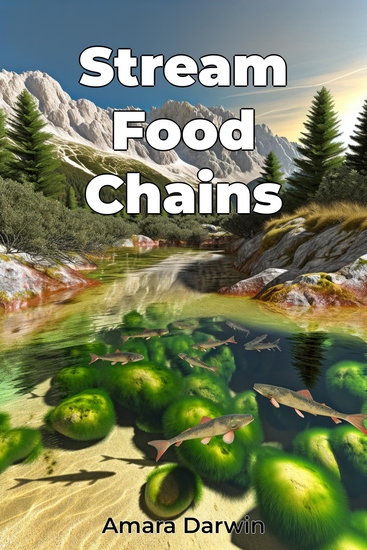
Stream Food Chains - cover

Stream Food Chains

Amara Darwin

Traduttore A AI

Casa editrice: Publifye

  • 0
  • 0
  • 0

Sinossi

Stream Food Chains: Energy Dynamics in Mountain Ecosystems uncovers the hidden relationships that sustain life in fast-flowing freshwater habitats, where energy flows from algae and microbes to predators like fish and ospreys. The book’s central theme—how mountain streams balance resilience and fragility—reveals why these ecosystems are vital yet vulnerable to climate change, pollution, and habitat fragmentation. By blending aquatic ecology with conservation urgency, it demonstrates how disruptions to energy dynamics ripple across trophic levels, threatening entire food webs.

 
The book begins with foundational concepts, like the River Continuum Concept, then dives into the unique challenges of mountain streams: steep gradients, snowmelt-driven flows, and species adapted to nutrient-poor environments. Readers discover intriguing insights, such as why abundant algae doesn’t always sustain trout populations (energy loss at each trophic level acts like a “leaky pipe”) and how macroinvertebrates like mayflies serve as keystone energy brokers. Case studies from the Rockies to the Himalayas illustrate human impacts—dams fracture habitats, while warming temperatures erase cold-water refuges. The authors use stable isotope analyses and drone mapping to trace carbon pathways and quantify threats, grounding theory in decades of field research.

 
What sets this work apart is its interdisciplinary lens, merging hydrology, climate science, and policy. It argues for “process-based conservation” that protects energy flow itself, not just species. Accessible explanations, like linking salmon declines to bear behavior and forest health, make complex ideas tangible. Structured across 12 chapters, the book progresses from ecological principles to solutions—rewilding buffer zones, redesigning infrastructure—offering a roadmap for safeguarding these critical ecosystems. For biologists, conservationists, and mountain enthusiasts alike, it’s a compelling call to protect streams where energy circulation is as essential as water.
Disponibile da: 25/01/2025.
Lunghezza di stampa: 61 pagine.

Altri libri che potrebbero interessarti

  • Peace on Earth Good-Will to Dogs (version 2) - cover

    Peace on Earth Good-Will to Dogs...

    Eleanor Hallowell Abbott

    • 0
    • 0
    • 0
    If you don't like Christmas stories, don't read this one!And if you don't like dogs I don't know just what to advise you to do!For I warn you perfectly frankly that I am distinctly pro-dog and distinctly pro-Christmas, and would like to bring to this little story whatever whiff of fir-balsam I can cajole from the make-believe forest in my typewriter, and every glitter of tinsel, smudge of toy candle, crackle of wrapping paper, that my particular brand of brain and ink can conjure up on a single keyboard! And very large-sized dogs shall romp through every page! And the mercury shiver perpetually in the vicinity of zero! And every foot of earth be crusty-brown and bare with no white snow at all till the very last moment when you'd just about given up hope! And all the heart of the story is very,—oh very young!For purposes of propriety and general historical authenticity there are of course parents in the story. And one or two other oldish persons. But they all go away just as early in the narrative as I can manage it.—Are obliged to go away!Yet lest you find in this general combination of circumstances some sinister threat of audacity, let me conventionalize the story at once by opening it at that most conventional of all conventional Christmas-story hours,—the Twilight of Christmas Eve." - Summary by from the book
    Mostra libro
  • Feature Engineering for Beginners - Feature Engineering for Beginners - cover

    Feature Engineering for...

    Chuck Sherman

    • 0
    • 0
    • 0
    Unravel the art and science behind effective data analysis with this comprehensive guide to feature engineering. Crafted for beginners, this book is your gateway to understanding the pivotal role of features in extracting meaningful insights from data. 
    From the basics of feature engineering to hands-on techniques, this guide navigates through the intricate landscape of transforming raw data into powerful features. You'll explore the fundamental principles that underpin feature engineering and gain practical skills through real-world examples and case studies. 
    Whether you're a student taking your first steps into the realm of data science or a professional seeking to enhance your analytical toolkit, this guide provides a structured and accessible approach to feature engineering. Learn how to identify, create, and optimize features that unlock the true potential of your data. 
    Key Features: 
    ·        Comprehensive introduction to feature engineering concepts and techniques. 
    ·        Practical examples and case studies for hands-on learning. 
    ·        Step-by-step guidance for crafting effective data features. 
    ·        Insights into the impact of feature engineering on model performance. 
    ·        Tips and best practices for feature selection and optimization. 
    Equip yourself with the essential skills to transform raw data into actionable insights. 'Feature Engineering for Beginners' is your companion in the journey towards mastering the craft of feature engineering and unleashing the true potential of your data analysis endeavors. 
     
    Mostra libro
  • 42 AI Lead Generation Tools and How to Use Them - 42 AI Lead Generation Tools and How to Use Them - cover

    42 AI Lead Generation Tools and...

    Tom Anderson

    • 0
    • 0
    • 0
    This audiobook is narrated by an AI Voice.   
    There is a specific exhaustion that comes from spending 3 hours building a prospect list, sending 50 personalized emails, and receiving 2 replies that never convert. It is not the exhaustion of hard work. It is the exhaustion of inefficiency. 
    Manual prospecting is dead. The most successful B2B sales teams in 2026 are not working harder. They are building AI-powered lead generation systems that find, research, qualify, and engage prospects 24/7. 
    42 AI Lead Generation Tools and How to Use Them is your complete blueprint for building that system. Written by Tom Anderson, former Director of Engineering who left the corporate grind to build sustainable tech businesses, this book reveals the exact tools and workflows used by top-performing sales teams. 
    Inside, you will discover: 
    • The Complete 6-Stage AI Pipeline: From prospect identification through automated appointment setting, learn how Apollo.io, Clay, and Instantly work together as a system 
    • Intent Signal Monitoring: Use 6sense, Bombora, and G2 Buyer Intent to contact prospects exactly when they are ready to buy, not months later 
    • LinkedIn Automation That Works: Safe strategies with Expandi and Waalaxy that generate 5-15% reply rates without account restrictions 
    • AI-Powered Personalization at Scale: Use ChatGPT, Claude, and Perplexity to research hundreds of prospects and generate custom outreach copy automatically 
    • Web Scraping for Hidden Prospects: Find high-value leads on Google Maps, Reddit, and industry directories that traditional databases miss 
    • Email Deliverability Mastery: Protect your sending reputation with Smartlead and Lemlist while scaling cold email campaigns 
    • Complete Automation Workflows: Connect everything with Zapier, Make, and n8n to build an AI SDR that runs on autopilot
    Mostra libro
  • Helping the Suicidal Person - Tips and Techniques for Professionals - cover

    Helping the Suicidal Person -...

    PhD Stacey Freedenthal

    • 0
    • 0
    • 0
    Helping the Suicidal Person provides a highly practical toolbox for mental health professionals. The book first covers the need for professionals to examine their own personal experiences and fears around suicide, moves into essential areas of risk assessment, safety planning, and treatment planning, and then provides a rich assortment of tips for reducing the person's suicidal danger and rebuilding the wish to live. The techniques described in the book can be interspersed into any type of therapy, no matter what the professional's theoretical orientation is and no matter whether it's the client's first, tenth, or one-hundredth session.
    Mostra libro
  • The Romance of Modern Chemistry - cover

    The Romance of Modern Chemistry

    James C. Philip

    • 0
    • 0
    • 0
    ""The Romance of Modern Chemistry" is a fascinating glimpse into the state of chemistry a century ago. Written by James C. Philip, PhD, an assistant professor of chemistry at The Imperial College of Science and Technology, Kensington, this book provides a non-technical description of the diverse and wonderful ways in which chemical forces were at work and their manifold applications in modern life back in 191012.    Imagine the scientific discoveries, the alchemical transformations, and the intricate dance of atoms and molecules as they shaped the world around us. Philip's prose invites readers to explore the hidden magic within everyday substances—their reactions, properties, and practical uses.    From the bubbling test tubes in laboratories to the industrial processes that fueled progress, The Romance of Modern Chemistry captures the essence of an era when science was both mysterious and awe-inspiring. It's a journey through the alchemy of knowledge, where elements danced, compounds whispered secrets, and the periodic table unfolded its enigmatic patterns.    So let us step into the past, don our metaphorical lab coats, and embark on a literary experiment—an adventure where curiosity meets discovery, and the molecules of imagination collide with the atoms of wonder. "Support us at https://manifoldmedia.net/donate
    Mostra libro
  • Darwin and Theory of Evolution - cover

    Darwin and Theory of Evolution

    Introbooks Team

    • 0
    • 0
    • 0
    In a recent study in 2015 the scientists found remains of biotic life in a few historic rocks, Western Australia, which dated back to 4.1 billion years ago and on July, 2016 the scientists confirmed about 355 genes which were from LUCA of all the living organisms on Earth. 
    Formation, change and loss of species through the evolutionary antiquity of life on Earth are validated by common sets of biochemical and morphological traits, plus shared DNA sequences. These common individualities are like species which share a recent common ancestor and can be used to rebuild a biological tree of life centered on radical connection with the help of fossils and species which still exist. The records from fossils comprise of progress from a biogenic graphite to microbial mat fossils to multicellular organisms. The prevailing arrays of biodiversity have been designed by extinction and speciation. Almost 99% of species which have roamed planet Earth are expected to be extinct. There have been about 10 to 14 million variety of species on Earth and 1.2 million only have been documented. 
    Charles Darwin in the middle of the 19th century had verbalized a scientific theory of evolution by natural selection; his work became famous through this published book ‘On the Origin of Species’(1859). When more offspring are produced which can actually survive is termed as evolution by natural selection; there are three main facts about populacesBehaviors differ among personages with respect to physiology, morphology and behavior.Various behaviors convene diverse rates of endurance and reproduction.Behaviors and traits can be passed down to generations. 
    Therefore in sequential generations members of a certain populace are substituted by offspring of parents better adjusted to endure and breed in the biophysical atmosphere in which natural selection happens. The quality where the procedure of natural selection builds and conserves qualities which are fit for the practical parts they perform is teleonomy. Sexual and natural selection are the only identified source of adaptation but are not the only reason of evolution. Mutation, gene migration and genetic drift are other non-adaptive procedures of evolution. 
    The significance of natural selection as a reason of evolution has been recognized into other disciplines of biology. Earlier detained thoughts of evolution like evolutionism, asorthogenesis and other principles on intrinsic progress contained by the largest-scale drifts in evolution became outdated scientific philosophies. By founding and analyzing postulates, creating mathematical models of theoretical biology and biological philosophies, using observational data and executing experiments in laboratory and field the scientists continue to study various traits of evolutionary biology. 
    Mostra libro