Unisciti a noi in un viaggio nel mondo dei libri!
Aggiungi questo libro allo scaffale
Grey
Scrivi un nuovo commento Default profile 50px
Grey
Iscriviti per leggere l'intero libro o leggi le prime pagine gratuitamente!
All characters reduced
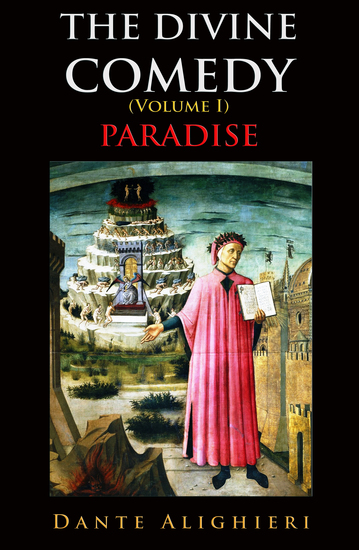
The Divine Comedy (Volume I) - Paradise - cover

The Divine Comedy (Volume I) - Paradise

Alighieri Dante

Traduttore H. F. Cary

Casa editrice: E-Kitap Projesi & Cheapest Books

  • 0
  • 0
  • 0

Sinossi

The Divine Comedy describes Dante's journey through Hell (Inferno), Purgatory (Purgatorio), and Paradise (Paradiso), guided first by the Roman poet Virgil and then by Beatrice, the subject of his love and of another of his works, La Vita Nuova. While the vision of Hell, the Inferno, is vivid for modern readers, the theological niceties presented in the other books require a certain amount of patience and knowledge to appreciate. Purgatorio, the most lyrical and human of the three, also has the most poets in it; Paradiso, the most heavily theological, has the most beautiful and ecstatic mystic passages in which Dante tries to describe what he confesses he is unable to convey (e.g., when Dante looks into the face of God: "all'alta fantasia qui mancò possa" — "at this high moment, ability failed my capacity to describe," Paradiso, XXXIII, 142).

His glory, by whose might all things are mov'd,
Pierces the universe, and in one part
Sheds more resplendence, elsewhere less. In heav'n,
That largeliest of his light partakes, was I,
Witness of things, which to relate again
Surpasseth power of him who comes from thence;
For that, so near approaching its desire
Our intellect is to such depth absorb'd,
That memory cannot follow. Nathless all,
That in my thoughts I of that sacred realm
Could store, shall now be matter of my song.

Benign Apollo! this last labour aid,
And make me such a vessel of thy worth,
As thy own laurel claims of me belov'd.
Thus far hath one of steep Parnassus' brows
Suffic'd me; henceforth there is need of both
For my remaining enterprise Do thou
Enter into my bosom, and there breathe
So, as when Marsyas by thy hand was dragg'd
Forth from his limbs unsheath'd. O power divine!
If thou to me of shine impart so much,
That of that happy realm the shadow'd form
Trac'd in my thoughts I may set forth to view,
Thou shalt behold me of thy favour'd tree
Come to the foot, and crown myself with leaves;
For to that honour thou, and my high theme
Will fit me. If but seldom, mighty Sire!

To grace his triumph gathers thence a wreath
Caesar or bard (more shame for human wills
Deprav'd) joy to the Delphic god must spring
From the Pierian foliage, when one breast
Is with such thirst inspir'd. From a small spark
Great flame hath risen: after me perchance
Others with better voice may pray, and gain
From the Cirrhaean city answer kind.
Disponibile da: 25/01/2024.
Lunghezza di stampa: 200 pagine.
Altri libri che potrebbero interessarti

  • A Bigfoot Bestiary and Other Wonders - cover

    A Bigfoot Bestiary and Other...

    Martin Achatz

    • 0
    • 0
    • 0
    A Bigfoot Bestiary and Other Wonders is a compendium of natural and unnatural astonishment, anatomizing all those big, hairy monsters that haunt the human condition. Follow their footprints through these pages, and Martin Achatz may just make you a believer in the greatest mystery of all: Love with a capital "L". 
    "Martin Achatz knows what it is to be big and hairy and to express the animal inside us. To paraphrase the Zen koan, live as if you were already Bigfoot. If Iowa Poet Laureate Marvin Bell has his Dead Man poems, Michigan's Achatz has rendered poetical the great ape of the Northwoods, and he eloquently and determinedly immerses us in the dream, meanwhile paying homage to Robert Frost, Pablo Neruda, Wallace Stevens, Flannery O'Connor, and all the other wonderful monsters." --Bonnie Jo Campbell, author of The Waters and American Salvage 
    "Martin Achatz reimagines the legendary Bigfoot in his newest book, a funny and moving collection of poems that is playfully serious. Achatz melds cryptozoologic wonder with the heartrending stuff of the everyday world ... a fierce Sasquatch howl that illuminates and reveals the fragile state of our collective humanity." --W. Todd Kaneko, author of This Is How the Bone Sings 
    "I believe Martin Achatz intended these pages to impart joy (and other wonders) to those who read with an open paintbox at the ready, its colors so pure they demand that monster landscapes be captured and dimensioned within the nether worlds of dreams and the genius of second readings. A 5-star book without doubt." -- Sue Harrison, international bestselling author of The Midwife's Touch 
    Author of The Mysteries of the Rosary and a former U.P. Poet Laureate, Martin Achatz lives in Ishpeming, Michigan with his family. In his spare time, he chases comets and Bigfoot.
    Mostra libro
  • More Songs the Radio Won’t Play - Poems - cover

    More Songs the Radio Won’t Play...

    Stan Rogal

    • 0
    • 0
    • 0
    Lyrical poetry inspired by popular songs, Rogal sweeps the reader through the journey of creation.
    		 
    In More Songs the Radio Won’t Play, Stan Rogal takes formerly “popular” tunes (from various genres) and transforms them. Self-referentiality; mashups of the erudite and profane; allusions to other arts and sciences; the insertion and bending of biographical and historical facts; problematic snippets of philosophy and literary theory, quotes, and bastardizations; deploying non- or a-political language to challenge notions of how a poem should work; sampling; and off-kilter humour work together to update Rogal’s playlist for a present-day audience.
    		 
    While his poems unavoidably serve to comment on the world today, Rogal resists a central message. The true emphasis of this collection is on the process of creation. It’s not the destination but the journey that is of significance. Not mere cover versions, not exactly parodies (though parodic), these poems are redactions, mutations, Frankenstein’s monsters … they resemble the original — somewhat — yet are also grossly different.
    Mostra libro
  • Top 10 Poets The - Nature - Five poems each from some of the best nature poets ever - cover

    Top 10 Poets The - Nature - Five...

    William Wordsworth

    • 0
    • 0
    • 0
    The language of Poetry is an art that most of us attempt at some point in our lives.  Although its commonplace exposure has been somewhat marginalised in today’s often fast-paced lives we all recognise good verse that can empathise with our thoughts or open us up to experience new things in new ways, to better understand and to enjoy the many strands of our lives. 
     
    But finding a starting point can be overwhelming, even off-putting, so in this series we offer up our Top 10 classic poets, who brim with talent and verse, on a range of subjects and themes that we can all enjoy. 
     
    The world of nature is often the first resource a poet has for muse and inspiration.  Nature has infinite ways of both revealing herself and putting together landscapes of majesty and wonder in everything from a flower to the universe. 
     
    1 - The Top 10 Poets - Nature - An Introduction 
    2 - To the Daisy by William Wordsworth 
    3 - Daffodils by William Wordsworth 
    4 - The Kitten and the Falling Leaves by William Wordsworth 
    5 - It Was an April Morning Fresh and Clear by William Wordsworth 
    6 - My Hearts Leaps Up by William Wordsworth 
    7 - from Song of Myself by Walt Whitman 
    8 - Roots and Leaves Themselves Alone by Walt Whitman 
    9 - Warble Of Lilac Time By Walt Whitman 
    10 - A July Afternoon By The Pond by Walt Whitman 
    11 - A Carol of Harvest for 1867 by Walt Whitman 
    12 - In Drear Nighted December by John Keats 
    13 - Ode To A Nightingale by John Keats 
    14 - Ode to Autumn by John Keats 
    15 - On the Sea by Keats 
    16 - Lines Written in the Highlands After a Visit to Burn's Country by John Keats 
    17 - How the Old Mountains Drip with Sunset by Emily Dickinson 
    18 - Nature, The Gentlest Mother by Emily Dickinson 
    19 - Angels, in the Early Morning by Emily Dickinson 
    20 - I Have a Bird in Spring by Emily Dickinson 
    21 - Two Butterflies Went Out at Noon by Emily Dickinson 
    22 - Nature's Hymn to the Deity by John Clare 
    23 - All Nature Has a Feeling by  John Clare 
    24 - The Lament of Swordy Well by John Clare 
    25 - On a Lane in Spring by John Clare 
    26 - Little Trotty Wagtail by John Clare 
    27 - Snow Flakes by Henry Wadsworth Longfellow 
    28 - An April Day by Henry Wadsworth Longfellow 
    29 - Woods In Winter by Henry Wadsworth Longfellow 
    30 - By the Seaside - The Fire of Driftwood by Henry Wadsworth Longfellow 
    31 - The Sound of The Sea by Henry Wadsworth Longfellow 
    32 - In Vision I Roamed by Thomas Hardy 
    33 - The Calf by Thomas Hardy 
    34 - The Darkling Thrush by Thomas Hardy 
    35 - Last Week in October by Thomas Hardy 
    36 - To Flowers from Italy by Thomas Hardy 
    37 - Where Go the Boats by Robert Louis Stevenson 
    38 - The Canoe Speaks by Robert Louis Stevenson 
    39 - Autumn Fires by Robert Louis Stevenson 
    40 - The Cow by Robert Louis Stevenson 
    41 - The Gardener by Robert Louis Stevenson  
    42 - Berrying by Ralph Waldo Emerson 
    43 - May-Day by Ralph Waldo Emerson 
    44 - The Snow Storm by Ralph Waldo Emerson 
    45 - Water by Ralph Waldo Emerson 
    46 - Threnody by Ralph Waldo Emerson 
    47 - All Things Will Die by Alfred Lord Tennyson 
    48 - The Eagle by Alfred Lord Tennyson 
    49 - The Owl by Alfred Lord Tennyson 
    50 - Spring by Alfred Lord Tennyson 
    51 - Locksley Hall by Alfred Lord Tennyson
    Mostra libro
  • Continuity - cover

    Continuity

    Bess Wohl

    • 0
    • 0
    • 0
    A sheet of ice sits in the desert of New Mexico. A mad eco-terrorist plants a bomb in order to save humankind. A beleaguered film crew tries to get in one last shot before losing the light. Storytelling and science collide with hilarious and devastating consequences. 
     
    “Continuity” is part of L.A. Theatre Works’ Relativity Series of science-themed plays. Lead funding for the Relativity Series is provided by the Alfred P. Sloan Foundation, bridging science and the arts in the modern world. 
     
    Recorded at The Invisible Studios, West Hollywood in December 2022. 
     
    Directed by Anna Lyse Erikson 
    Producing Director: Susan Albert Loewenberg 
     
    An L.A. Theatre Works full-cast production starring: 
     
    Johnny Berchtold as Jake and George	 
    Seamus Dever as David Caxton	 
    Sarah Drew as Eve and Nicole 
    Mark Holden as Sound Guy 
    Desireé Mee Jung as First AD 
    Kurt Kanazawa as The PA 
    Stacey Martinez as Second PA 
    Bukola Ogunmola as Dr. Anna Gerber and Lily 
    Devon Sorvari as Second AD and Camera Op Stephen Tobolowsky as Larry 
    Liza Weil as Maria 
     
    Senior Producer: Anna Lyse Erikson 
    Audio Concept Design by Mark Holden  
    Recording Engineer and Editor: Neil Wogenson  
    Sound Design: Mark Holden, David Wilson and Charles Carroll 
    Mixing Engineer: Charles Carroll 
    Prepared for Audio by Mark Holden for The Invisible Studios, West Hollywood 
    Senior Radio Producer: Ronn Lipkin 
    Foley Artist: Jeff Gardner
    Mostra libro
  • The Raven - cover

    The Raven

    Edgar Allan Poe

    • 0
    • 0
    • 0
    "Quoth the Raven, 'Nevermore.'"
    
    On a "bleak December" midnight, a weary student seeks refuge from his sorrow in ancient books, only to be interrupted by a mysterious tapping at his chamber door. What follows is a dark, psychological tug-of-war between a man paralyzed by the loss of his beloved Lenore and a "stately Raven" that perches atop a bust of Pallas. Through hypnotic rhythm and internal rhyme, Poe captures the precise moment when melancholy turns into incurable despair. The bird's singular, repetitive refrain becomes a mirror for the narrator's own self-torture, transforming a simple midnight visit into a timeless symbol of the human struggle with the finality of death.
    
    Poe famously wrote an essay, "The Philosophy of Composition," detailing how he meticulously crafted this poem to achieve a "unity of effect." Every element, from the choice of the raven as a "bird of ill omen" to the trochaic octameter of the verses, was designed to build a crescendo of dread.
    
    The Raven perches upon the bust of Pallas Athena (the goddess of wisdom), symbolizing the triumph of irrational grief over reason. By the poem's end, the narrator's soul is trapped within the shadow of the bird, signifying that for some types of grief, there is no escape and no "balm in Gilead."
    
    The Raven made Poe a household name almost overnight. Its musicality makes it one of the most effective pieces for oral recitation, while its psychological depth continues to fascinate scholars and horror fans alike. It is the definitive expression of the "Dark Romantic" movement—a beautiful, terrifying look at a heart that refuses to heal.
    
    Open the door to the shadows. Purchase "The Raven" today.
    Mostra libro
  • Igloo Dwellers Were My Church - cover

    Igloo Dwellers Were My Church

    John R Sperry

    • 0
    • 0
    • 0
    Anglican bishop John R. Sperry spent 20 years with the Inuit in a tiny and isolated Canadian Arctic community. ... Sperry travelled on his rounds by dogteam across the sea ice and snow-covered land, to visit Inuit camps…
    Mostra libro