Unisciti a noi in un viaggio nel mondo dei libri!
Aggiungi questo libro allo scaffale
Grey
Scrivi un nuovo commento Default profile 50px
Grey
Iscriviti per leggere l'intero libro o leggi le prime pagine gratuitamente!
All characters reduced
Japanese Girls and Women - Exploring Gender Roles and Education in Meiji Japan - cover

Japanese Girls and Women - Exploring Gender Roles and Education in Meiji Japan

Alice Mabel Bacon

Casa editrice: Good Press

  • 0
  • 0
  • 0

Sinossi

In "Japanese Girls and Women," Alice Mabel Bacon crafts a nuanced exploration of gender roles and societal expectations in late 19th and early 20th century Japan. Utilizing a blend of observational narrative and cultural critique, Bacon paints a vivid portrait of the lives, struggles, and aspirations of Japanese women. The book is notable for its empathetic lens, as it seeks to bridge cultural divides while providing a testament to the resilience of women grappling with rapid modernization. Through her insightful prose, Bacon situates these female experiences within the larger context of Japan'Äôs transformation during the Meiji era, rendering a complex picture of tradition versus change. A prominent American educator and scholar, Alice Mabel Bacon traveled extensively in Japan, an experience that deeply informed her understanding of the country and its culture. Her background in education and her progressive views on women's rights shaped her perspective, urging her to advocate for the recognition and empowerment of women'Äôs voices. Bacon's unique position as a foreign observer allowed her to approach her subjects with both intimacy and critical distance, enriching her narrative. This seminal work is highly recommended for readers interested in gender studies, Japanese culture, and the historical impact of Western perspectives on East Asian societies. Bacon's empathetic portrayal, combined with her critical insights, makes this book a valuable resource for scholars and general readers alike who seek to understand the complexities of women's roles in a transforming world.
Disponibile da: 04/10/2023.
Lunghezza di stampa: 245 pagine.

Altri libri che potrebbero interessarti

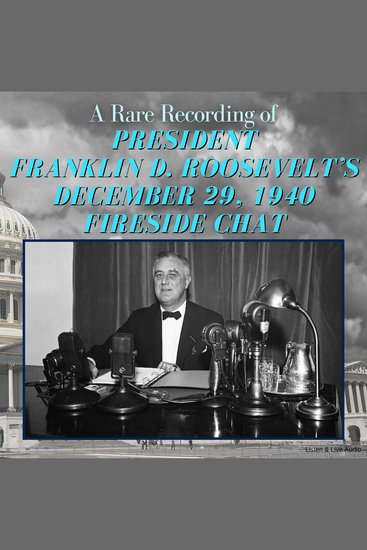
  • A Rare Recording of President Franklin D Roosevelt’s December 29 1940 Fireside Chat - cover

    A Rare Recording of President...

    President Franklin D. Roosevelt

    • 0
    • 0
    • 0
    Franklin Delano Roosevelt (January 30, 1882 to April 12, 1945), also known as FDR, was the 32nd president of the United States, serving from 1933 until his death in 1945. The longest-serving U.S. president, he is the only president to have served more than two terms. His initial two terms were centered on combating the Great Depression, while his third and fourth saw him shift his focus to America's involvement in World War II. The following recording is of a December 29, 1940 fireside chat FDR gave discussing national security.
    Mostra libro
  • Who Will Defend Europe? - An Awakened Russia and a Sleeping Continent - cover

    Who Will Defend Europe? - An...

    Keir Giles

    • 0
    • 0
    • 0
    Who will defend Europe? The answer should be obvious: Europe should be able to defend itself. Yet, for decades, most of the continent enjoyed a defense holiday, outsourcing protection to the United States while banking an increasingly illusory 'peace dividend'. Now, after three decades of reducing armed forces and drawing down defense industries, Europe finds itself close to unprotected—while Russia is intent on continuing its war of expansion, and the United States is distracted and divided. 


    In this urgent, vital book, Keir Giles lays out the stark choices facing leaders and societies as they confront the return of war in Europe. He explains how the West's unwillingness to confront Russia has nurtured the threat, and that Putin's ambition puts the whole continent at risk. He assesses the role and deficiencies of NATO as a guarantor of hard security, and whether the European Union or coalitions of the willing can fill the gap. Above all, Giles emphasizes the need for new leadership in defense of the free world after the United States has stepped aside—and warns that the United Kingdom's brief moment of setting the pace for Europe has already been squandered.
    Mostra libro
  • Faithful Antiracism - Moving Past Talk to Systemic Change - cover

    Faithful Antiracism - Moving...

    Chad Brennan, Christina Edmondson

    • 0
    • 0
    • 0
    It's time to move past talk. 


    It's no longer news to most of us that our society has a deep-seated racism problem. Christians of all ethnic and economic backgrounds are tired of seeing the ugly legacy of racism play out before their eyes and feeling ill-equipped to respond. They watch as friends and family members leave the visible church over this issue, or fall prey to a gospel of White nationalism that is an affront to the cross of Christ. Racism presents itself as an undefeatable foe—a sustained scourge on the reputation of the church. 


    In Faithful Antiracism, Christina Barland Edmondson and Chad Brennan take confidence from the truth that Christ has overcome the world, including racism, and offer clear analysis and interventions to challenge and resist its pernicious power. Drawing on brand-new research from the landmark Race, Religion, and Justice Project led by Michael Emerson and others, this book represents the most comprehensive study on Christians and race since Emerson's own book Divided by Faith (2001). It invites listeners to put this data to immediate practical use, applying it to their own specific context. Compelled by our grievous social moment and by the timeless truth of Scripture, Faithful Antiracism will equip listeners to move past talk and enter the fight against racism in both practical and hopeful ways.
    Mostra libro
  • Brain Healing and Trauma - cover

    Brain Healing and Trauma

    Brittany Forrester

    • 0
    • 0
    • 0
    Approximately 50 percent of the population will experience a traumatic event at some point. While reactions to trauma can vary widely, and not everyone will develop Post-Traumatic Stress Disorder(PTSD), trauma can change the brain in some predictable ways. With increased awareness, you can seek treatment to address your symptoms and learn skills that could rewire your brain for recovery. Knowing what’s going on can be immensely helpful because it may help you realize that you’re not crazy, irreversibly damaged, or the wrong person. Instead, you can think of a traumatized brain as one that functions differently due to traumatic events. And just as your brain changes in response to your past experiences with the world, it can also change in response to your future experiences. In other words, the brain is “plastic,” and you can change it.Depth or imaginal psychotherapy is highly effective in treating and assessing adult survivors of childhood abuse. Specifically, interventions that use dreams, symbols, metaphor, and expressive art techniques are deemed especially valuable as they address dissociatively based changes (affect regulation, sense of self, and diminished imagination).Specifically, this book proposes that prominent symptoms of Posttraumatic Stress Disorder (which will be further referred to as PTSD), such as changes in affect regulation, sense of self, and use of imagination, are better neurologically matched to therapeutic interventions that foster right-brain processes. By assessing specific depth psychological aspects of the individual’s shattered sense of self, a more focused and efficient treatment plan can be created sooner in the course of therapy.
    Mostra libro
  • Mao Zedong and Chiang Kai-Shek - The History of the Rivals Who Fought the Chinese Civil War - cover

    Mao Zedong and Chiang Kai-Shek -...

    Charles River Editors

    • 0
    • 0
    • 0
    In 1937, the fledgling Empire of Japan once more went to war with China, which by then had become a nation broken into petty warlord fiefdoms and wracked by civil war. The Japanese enacted a brutal campaign over the fragmented realms that made up China, committing atrocities just as horrendous as their Axis allies in Europe. Despite this, the sheer size of China, coupled with Japan’s overextension, allowed the larger, less developed nation to endure throughout World War II. 
    At the same time, China was experiencing an equally brutal civil war between Nationalist and Communist forces, which became inextricably intertwined with the fighting raging across the globe. In fact, the sheer scale of the horrors of the civil war remain hard to believe today, even as action in that theater is often overlooked because of events in Europe. What most people remember about the civil war is that it was ultimately won by Mao Zedong and the Communists, ushering in a new era of Communism in China and exiling the Republic of China’s government to Taiwan. Political tensions between Taiwan and China remain precarious to this day. 
    The Republic of China’s most famous leader and general was Chiang Kai-Shek, who rose from humble origins as the son of a local trader to become, as he liked to remind visitors, the ruler over more people than any other world leader. He certainly became one of the most influential leaders of the 20th century, yet today, he is considerably less well-known than many other figures from that period, which was so rife of chaos and tumultuous change. Chiang had come to power at a time when China was rebuilding itself after a period of internal conflict and turmoil, attempting to unify the nation in the face of the Japanese and the man who would become his arch-rival: Mao Zedong, leader of the Chinese Communists.
    Mostra libro
  • Hope Circuits - Rewiring Universities and Other Organizations for Human Flourishing - cover

    Hope Circuits - Rewiring...

    Jessica Riddell

    • 0
    • 0
    • 0
    How do we model abundance and generosity — in teaching, in learning, in leading organizations, particularly non-profits — when dealing with fiscal austerity and other forms of scarcity thinking? Hope Circuits explores this question, presenting sophisticated ideas that support democratizing higher education for everybody.
    		 
    Written in a conversational style that draws upon Jessica Riddell’s experience in governance, senior administration, and scholarship, the book is a how-to guide and thought leadership manifesto for developing the conceptual tools to seek solutions to higher education’s most pressing issues. Hope Circuits aims to rewire mindsets, perspectives, and behaviours to in turn rewire and renew the systems within which university stakeholders learn, live, and work. It tackles this challenging feat by suggesting ten tools to build hope circuits, a concept borrowed from neuroscience. 
    		 
    Riddell acknowledges that changing systems and deep cultures is not for the faint of heart; indeed, the more than 250 interviews conducted with thought partners for Hope Circuits expose how individuals who navigate complex systems regularly experience discomfort and even despair. In response, she shows us how to anchor a practice of hope in higher education with focus and intention, inviting others to adopt and adapt her approach.
    Mostra libro