Unisciti a noi in un viaggio nel mondo dei libri!
Aggiungi questo libro allo scaffale
Grey
Scrivi un nuovo commento Default profile 50px
Grey
Iscriviti per leggere l'intero libro o leggi le prime pagine gratuitamente!
All characters reduced
Siena - cover

Siena

Algernon Charles Swinburne

Casa editrice: Edizioni Aurora Boreale

  • 0
  • 0
  • 0

Sinossi

Algernon Charles Swinburne (1837-1909) was a British poet, writer and playwright of the Victorian era. Active in the aesthetic circle, romantic and then decadent, he met Oscar Wilde and other famous intellectuals and artists of the same environment, attending the Pre-Raphaelite Brotherhood and becoming a friend of the poet, artist and initiate Dante Gabriel Rossetti. Eccentric personality, with a strong taste for artistic provocation, inspired by writers such as the Marquis de Sade, Percy Bysshe Shelley and Charles Baudelaire, his poetry was very controversial, due to its themes (sadomasochism, suicide, lesbianism, irreligiosity); his lyrics are also characterized by original versification solutions, by the cult of paganism and the idealized Middle Ages, and of absolute freedom. From 1903 to 1909 he was nominated for the Nobel Prize for Literature. With Alfred Edward Housman, Robert Browning, Alfred Tennyson, Ernest Dowson and William Butler Yeats, he is considered one of the most representative lyric poets of Victorian literature. He died in Putney (London) on April 10, 1909.Swinburne’s literary output is vast and includes poems, plays, songs, novels, short stories and numerous essays on literary criticism. The poem Siena, dedicated to the splendid and historic Tuscan city, was first published in Lippincott’s Magazine in June 1868 and then included by Swinburne in 1871 in his book Songs before Sunrise, dedicated to the Italian revolutionary and Freemason Giuseppe Mazzini.
Disponibile da: 13/05/2023.

Altri libri che potrebbero interessarti

  • The Best of Robert Service - cover

    The Best of Robert Service

    Robert Service, Harriett Shlossberg

    • 0
    • 0
    • 0
    This new and revised edition of poems about the men and women of the North features the most loved ballads by Robert Service, and is narrated by Michael Puttonen. While living in Whitehorse, Robert Service wrote The Cremation of Sam McGee, and other well-known poems. He wrote and published into his mid-eighties. He was quoted as saying, I just go for a walk and come back with a poem in my pocket.Gaiety, humor, nostalgia, and pathos fill every page, along with the genuine Service ring of virility which has made his verse loved throughout the English reading world.
    Mostra libro
  • This Was Meant to Find You - When You Needed It Most - cover

    This Was Meant to Find You -...

    Charlotte Freeman

    • 0
    • 0
    • 0
    If you are hurting, healing, feeling, letting someone go, or starting a new chapter and learning to open your heart back up again, this book was meant to find you when you needed it most. "This Was Meant To Find You (When You Needed It Most)" is Charlotte Freeman’s second book and was written to resonate deeply with the ones who seek comfort in reading the right words at the right time. It’s for the ones who are learning what it means to choose yourself a little more each day and be gentle with yourself through all phases of your journey.
    Mostra libro
  • O Solitude! if I must with thee dwell - cover

    O Solitude! if I must with thee...

    John Keats

    • 0
    • 0
    • 0
    LibriVox volunteers bring you 16 different recordings of O Solitude! if I must with thee dwell by John Keats. This was the weekly poetry project for the week of May 11th, 2008.
    Mostra libro
  • All’s Well That Ends Well - cover

    All’s Well That Ends Well

    Tom Wheelwright, William...

    • 0
    • 0
    • 0
    The young and virtuous physician’s daughter Helena desperately loves Count Bertram, but he regards her as beneath his notice. 
    When Helena cures the king of France of a mortal illness, he rewards her with Bertram’s hand, but before their marriage can be consummated, the count flees. To win her husband back again, Helena forms a daring and resourceful plan. 
    A plot to unmask the strutting soldier Parolles makes up another strand in this sometimes disturbing comedy of deception and disguise. 
    ACT IScene 1. Bertram, the young Count of Rossillion, is leaving home to take his place at the court of the King of France, who is gravely ill. Bertram bids farewell to his mother the widowed Countess, her friend the old lord Lafew and the young and virtuous Helena, daugther of a famous doctor now deceased, who lives as a dependent in the old Countess’ household. Helena is passionately in love with Bertram, though without hope because he is so far above her in birth. Parolles, a blustering soldier who has attached himself to Bertram, is also going to the French court and Helena determines to follow. She has learned the mysteries of medicine from her father; if she can cure the King, she may win Bertram’s heart.Scene 2. The ailing King tells of war between the Florentines and Sienese; he will give permission to any young gentleman of France who wishes to go to Italy in search of glory. Bertram arrives and the King greets him warmly. Scene 3. The Countess gently forces Helena to admit her love for Bertram and reveal her plan to attempt the King’s cure. The old lady kindly offers her support. 
    ACT IIScene 1. Lafew announces the arrival at court of a young woman who claims to be able to heal the King. The King is deeply skeptical, but Helena persuades him to allow her to make the attempt. Should she succeed, the King is to grant her the husband of her choice.Scene 2. The Countess’ fool Lavatch is to be sent to the court. He claims that he has a response that will serve him in all social situations, but the Countess exposes his folly.Scene 3. Helena has restored the King to joyful health. He offers her the hand in marriage of any of the young lords at court, but when she chooses Bertram he recoils in horror. Angrily, the King commands Bertram to wed Helena instantly. The marriage takes place, but Bertram vows that he will never sleep with his bride and determines to steal away to the Italian wars at once.Scene 4. Helena receives a letter from Bertram telling her that he has been called away and ordering her to take leave of the King.Scene 5. Lafew warns Bertram that Parolles is a hollow sham. Helena enters and Bertram dismisses her curtly, instructing her to return to the Countess. 
    ACT IIIScene 1. The Duke of Florence prepares to welcome the young Frenchmen who come to fight on his behalf.Scene 2. Helena has received a letter from Bertram: until she can get the ring from his finger, which he has vowed never to remove, and produce a child that she has conceived by him, she will never be able to call him husband.Scene 3. The Duke of Florence, impressed by Bertram’s military promise, has given him an important command. Scene 4. The Countess has received a letter from Helena telling her that she has gone on a pilgrimage to atone for her sin in aspiring to Bertram’s love and freeing him from his responsibility for her. The Countess bitterly deplores her son’s arrogance and blindness.Scene 5. Helena has come to Florence where she meets a kindly widow and her beautiful daughter, Diana. The widow tells her that Bertram has fought heroically in the war but also that he has been attempting to seduce Diana. Scene 6. The French soldiers hatch a plot to convince Bertram of Parolles’ cowardliness; pretending to be enemy soldiers, they will capture him, then see if he is prepared to betray his friends.Scene 7. Helena, too, is setting a plot. Diana is to pretend to yield to Bertram’s suit on condition that he give her his ring. She
    Mostra libro
  • Rupert Brooke: The Selected Poetry - cover

    Rupert Brooke: The Selected Poetry

    Rupert Brooke

    • 0
    • 0
    • 0
    'And think, this heart, all evil shed away,
    
    A pulse in the eternal mind, no less
    
    Gives somewhere back the thoughts by England given;
    
    Her sights and sounds; dreams happy as her day…'
    
    A captivating collection of early twentieth-century poetry from renowned war poet Rupert Brooke.
    
    Witty, charismatic and popular in society, Rupert Brooke made fast friends with the Bloomsbury group of writers in his youth, having tried his hand at poetry from an early age. But it was the First World War, where Brooke was commissioned into the Royal Navy, that inspired his most enduring works. In this beautifully crafted collection, we are offered Brooke's most notable and cherished poems. From the patriotic fervour in 'The Soldier', to tender meditations on mortality in 'The Dead', Brooke's poetry never fails to charm its readers with its evocative language, vivid imagery and lyrical grace. A timeless lesson in romanticism, Rupert Brooke: The Selected Poetry is a remarkable tribute to one of England's most memorable war poets.
    Rupert Brooke (1887 – 1915) was an English poet, renowned for his patriotic and lyrical sonnets written during the First World War. He died at the young age of twenty-seven from blood poisoning, but his work continued to be revered by figures such as Virginia Woolf, Henry James and Winston Churchill.
    Mostra libro
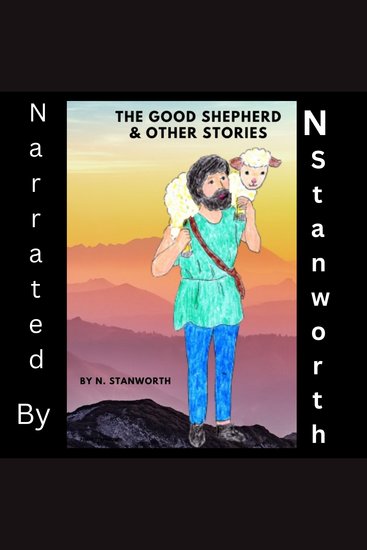
  • The Good Shepherd & Other Stories - cover

    The Good Shepherd & Other Stories

    Philip Stanworth, N Stanworth

    • 0
    • 0
    • 0
    N Stanworth has done 2 Books  
    Three small stories for 3 to 4 year-olds and this book is  
    There are 3 stories based on the New Testament St Luke & St John  
     This is N Stanworth's second book 
     
    Mostra libro