Unisciti a noi in un viaggio nel mondo dei libri!
Aggiungi questo libro allo scaffale
Grey
Scrivi un nuovo commento Default profile 50px
Grey
Iscriviti per leggere l'intero libro o leggi le prime pagine gratuitamente!
All characters reduced
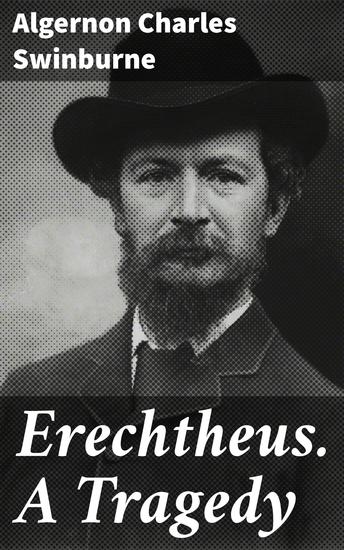
Erechtheus A Tragedy - A Poetic Exploration of Power and Fate in Greek Tragedy - cover

Erechtheus A Tragedy - A Poetic Exploration of Power and Fate in Greek Tragedy

Algernon Charles Swinburne

Casa editrice: Good Press

  • 0
  • 0
  • 0

Sinossi

Erechtheus. A Tragedy is a compelling exploration of ancient themes, weaving the myth of Erechtheus, the Athenian king, into a rich tapestry of poetic diction and dramatic structure. Swinburne's characteristic use of lyrical intensity and rhythmic innovation shines through, as he delves into profound questions of duty, sacrifice, and the intersection of personal desire with the demands of fate. The work stands as a homage to classical tragedy, drawing inspiration from Greek drama while simultaneously infusing it with Victorian sensibilities, reflecting Swinburne's fascination with the interplay of love, death, and divine retribution. Algernon Charles Swinburne, a prominent figure in the 19th-century literary scene, was known for his radical views on aesthetics and morality, and his fascination with themes of freedom and constraint. Influenced by the classical canon, as well as by his own experiences with political upheaval, Swinburne often grappled with the tensions between individual will and societal expectations. His intimate knowledge of Greek mythology and tragedy culminated in this bold work, which resonates with the emotional weight and ethical dilemmas of his time. Erechtheus is a must-read for enthusiasts of both classical literature and Victorian poetry. Swinburne's masterful command of language combined with the timeless themes of love, loss, and the relentless march of destiny invite readers into a world that transcends its historical context. This tragedy serves not merely as a retelling of an ancient tale but as a profound reflection on the human condition, making it an essential addition to the canon of literary classics.
Disponibile da: 22/08/2023.
Lunghezza di stampa: 42 pagine.

Altri libri che potrebbero interessarti

  • The Mysterious Affair at Styles - cover

    The Mysterious Affair at Styles

    Agatha Christie

    • 0
    • 0
    • 0
    Step into the grand yet treacherous halls of Styles Court, where secrets lurk behind every locked door. In The Mysterious Affair at Styles—Agatha Christie's dazzling debut novel—the sudden death of wealthy matriarch Mrs. Inglethorp sends shockwaves through a household simmering with tension. Captain Arthur Hastings, home from the front lines of World War I, is drawn into the mystery, quickly realizing that everyone at Styles has something to hide. Enter Hercule Poirot, the brilliant Belgian detective, whose keen observations and masterful deductions will untangle a web of jealousy, greed, and betrayal. Narrated by Mike Polischuk, this timeless whodunit introduces listeners to Poirot’s signature flair and sets the standard for classic detective fiction.
    Mostra libro
  • Better Dead - From their pens to your ears genius in every story - cover

    Better Dead - From their pens to...

    J M Barrie

    • 0
    • 0
    • 0
    Sir James Matthew Barrie, 1st Baronet, OM, was born in Kirriemuir, Angus on 9th May, 1860.  
    Barrie knew from an early age that he wished to be an author. His family wished otherwise. The compromise was that he would attend university to study literature at the University of Edinburgh. He graduated with an M.A. in April, 1882. 
    His first job was as a staff journalist for the Nottingham Journal. The London editor of the St. James's Gazette "liked that Scotch thing" in Barrie’s work and he wrote several stories for them and later several novels based on his mother’s early life.  
    Barrie though was increasingly drawn to working in the theatre.  His first plays achieved little attention but in 1901 and 1902, Barrie had back-to-back theatre successes with Quality Street and The Admirable Crichton. 
    The character of ‘Peter Pan’ first appeared in The Little White Bird in 1902. This most famous and enduring of his works; Peter Pan, or The Boy Who Wouldn't Grow Up had its first stage performance on December 27th, 1904.  
    Peter Pan would overshadow all his other works.  But his short stories cannot be overlooked.  Indeed, from today’s vantage point they are excellent gems of social manners, of class and the way characters, sometimes in the most mundane of circumstances, react in the most surprising of ways.
    Mostra libro
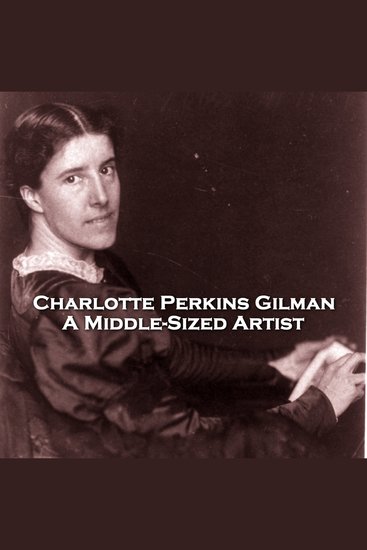
  • A Middle-Sized Artist - From their pens to your ears genius in every story - cover

    A Middle-Sized Artist - From...

    Charlotte Perkins Gilman

    • 0
    • 0
    • 0
    Charlotte Perkins Gilman was born on 3rd July 1860 in Hartford, Connecticut, to an unaffectionate mother and a father who abandoned her and her older brother to a life of poverty. 
    Inevitably her schooling was limited and by 15 she had attended seven different schools but received only four years education.  However Charlotte was resourceful and did spend time with her father’s aunts – the suffragist Isabella Beecher Hooker and the ‘Uncle Tom Cabin’s’ author, Harriet Beecher Stowe as well as many hours at the public library studying ancient civilisations. 
    In 1878, she enrolled in classes at the Rhode Island School of Design where she met Martha Luther and they developed a close relationship until Luther married in 1881. Charlotte was devastated and detested romance and love until she met and married the artist Charles Walter Stetson.  
    Their only child, Katharine Beecher Stetson, was born in 1885 but left Charlotte with post-natal depression, then often dismissed as a case of hysteria or nerves.  Unsuited to domestic life she ruptured her life and moved to California with Katherine.  She divorced in 1894 and then sent Katharine east to live with her father and his second wife confirming that his paternal rights be acknowledged and that Katherine establish a relationship with her father. 
    After her mother died in 1893, Charlotte moved back east and became involved with her first cousin, Wall Street attorney, Houghton Gilman who she married in 1900. After his death she moved back to California, where Katherine now lived.   
    Her most popular story is ‘The Yellow Wallpaper’ which touched on her own post-partum depression and underlined the need for women to be responsible for their mental and physical well-being, as the narrator is ordered by her husband/doctor to take compete rest in her room where she is isolated and becomes obsessed with the revolting yellow wallpaper.   
    She wrote other notable short stories the best of which we also include.   
    Charlotte lectured widely for social reform, wrote important non-fiction works that questioned our patriarchal system and left a legacy as a leading and positive spokesperson for feminism.  
    She was diagnosed with incurable breast cancer in 1932 and, as she wrote in her suicide note and autobiography, she ‘chose chloroform over cancer’    
    Charlotte Perkins Gilman took her own life on 17th August 1935, aged 75, in Pasadena, California.
    Mostra libro
  • A Model Crime - From their pens to your ears genius in every story - cover

    A Model Crime - From their pens...

    William Pett Ridge

    • 0
    • 0
    • 0
    William Pett Ridge was born at Chartham, near Canterbury, Kent, on 22nd April 1859.  
    His family’s resources were certainly limited. His father was a railway porter, and the young Pett Ridge, after schooling in Marden, Kent became a clerk in a railway clearing-house. The hours were long and arduous, but self-improvement was Pett Ridge’s goal.  After working from nine until seven o’clock he would attend evening classes at Birkbeck Literary and Scientific Institute and then to follow his passion; the ambition to write.  He was heavily influenced by Dickens and several critics thought he had the capability to be his successor.  
    From 1891 many of his humourous sketches were published in the St James's Gazette, the Idler, Windsor Magazine and other literary periodicals of the day. 
    Pett Ridge published his first novel in 1895, A Clever Wife. By the advent of his fifth novel, Mord Em'ly, a mere three years later in 1898, his success was obvious.  His writing was written from the perspective of those born with no privilege and relied on his great talent to find humour and sympathy in his portrayal of working class life. 
    Today Pett Ridge and other East End novelists including Arthur Nevinson, Arthur Morrison and Edwin Pugh are being grouped together as the Cockney Novelists.   
    In 1924, Pugh set out his recollections of Pett Ridge from the 1890s: “I see him most clearly, as he was in those days, through a blue haze of tobacco smoke. We used sometimes to travel together from Waterloo to Worcester Park on our way to spend a Saturday afternoon and evening with H. G. Wells. Pett Ridge does not know it, but it was through watching him fill his pipe, as he sat opposite me in a stuffy little railway compartment, that I completed my own education as a smoker... Pett Ridge had a small, dark, rather spiky moustache in those days, and thick, dark, sleek hair which is perhaps not quite so thick or dark, though hardly less sleek nowadays than it was then”. 
    With his success, on the back of his prolific output and commercial success, Pett Ridge gave generously of both time and money to charity. In 1907 he founded the Babies Home at Hoxton.  This was one of several organisations that he supported that had the welfare of children as their mission.  
    His circle considered Pett Ridge to be one of life's natural bachelors. In 1909 they were rather surprised therefore when he married Olga Hentschel.  
    As the 1920’s arrived Pett Ridge added to his popularity with the movies. Four of his books were adapted into films.  
    Pett Ridge now found the peak of his fame had passed. Although he still managed to produce a book a year he was falling out of fashion and favour with the reading public and his popularity declined rapidly.  His canon runs to over sixty novels and short-story collections as well as many pieces for magazines and periodicals. 
    William Pett Ridge died, on 29th September 1930, at his home, Ampthill, Willow Grove, Chislehurst, at the age of 71. 
    He was cremated at West Norwood on 2nd October 1930.
    Mostra libro
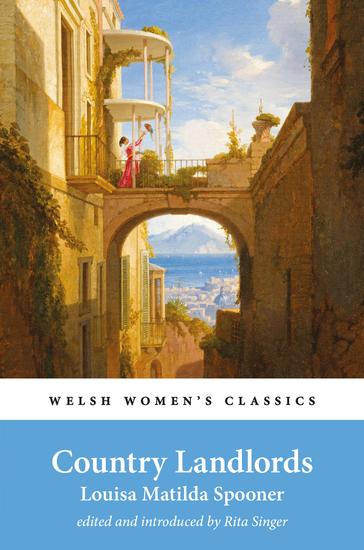
  • Country Landlords - cover

    Country Landlords

    L.M. Spooner

    • 0
    • 0
    • 0
    The young lovers Gertrude Fitzhammons and Anarawd Gwynne are caught between their fathers' mutual antagonism. Eventually, Gertrudes' adoptive father, the retired sea captain Ricardo Lewis, is forced to flee Britain due to the machinations of old squire Gwynne and Lewis's mortal enemy, Lord Morlif. At the same time, Anarawd is sent abroad in the hope that he forgets his sweetheart.
    
    
    After several years apart, their separate fates lead them to meet again in Naples during the spring revolutions of 1848. After Lewis's betrayal to his death on the republican barricades, a broken-hearted Gertrude returns to her Welsh home. Will Anarawd follow her or seek his fortune abroad in the British Army?
    
    
    Loosely inspired by social and agricultural advancements in the district around the author's home in Porthmadog, Country Landlords (1860) looks at the relationship between the landed gentry and ordinary country population in the early nineteenth-century.
    
    
    The first republication of this novel since 1860, following on from the successful Honno republication of Spooner's first novel, Gladys of Harlech in 2017.
    
    
    • An informative introduction contextualizes Louisa Matilda Spooner's life and writings.
    
    
    • An example of mid-century novels by female authors from Wales dealing with contemporary issues, such as land improvement, nationalism, and empire.
    
    
    • A social novel in the style of a romance inspired by the villages and landed estates of rural west Wales and their links with the wider world.
    Mostra libro
  • Sun - cover

    Sun

    D H Lawrence

    • 0
    • 0
    • 0
    'Sun' is a sensual story of a woman rediscovering her sexuality through the power of the sun. But for the unexpected arrival of her businessman husband she was ready to give herself to a local peasant but is finally pulled back to respectability by her husband. But she is free to remain apart from him in the sun.
    Mostra libro