Join us on a literary world trip!
Add this book to bookshelf
Grey
Write a new comment Default profile 50px
Grey
Subscribe to read the full book or read the first pages for free!
All characters reduced
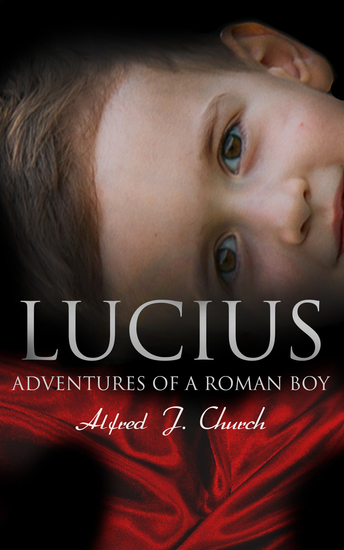
Lucius - Adventures of a Roman Boy - Historical Novel - cover

Lucius - Adventures of a Roman Boy - Historical Novel

Alfred J. Church

Publisher: e-artnow

  • 0
  • 0
  • 0

Summary

Set during the last years of the Roman Republic in the first century B. C. the story follows the adventures of Lucius Marius, young Roman lad who gets sent to Capua at first, and then to take up an official position in Sicily. On his great journey Lucius meets several important historical figures such as Spartacus and Mithridates, and enjoys many adventures among soldiers, sailors, pirates and kings.
Available since: 02/18/2022.
Print length: 246 pages.

Other books that might interest you

  • Germany and the World Wars: The History and Legacy of the Germans’ Participation in History’s Biggest Conflicts - cover

    Germany and the World Wars: The...

    Charles River Editors

    • 0
    • 0
    • 0
    Not surprisingly, German unity in 1871 caused geopolitical ripples that reverberated for decades. Other larger European powers, such as Britain, France, and Russia, came to feel threatened by the rise of Germany. These tensions were still prevalent at the outbreak of World War I in 1914, and it became even more important in World War II. In part this was because Germany also became an economic powerhouse, fundamentally altering the global economy. Alongside the rapid expansion of the United States, trade went through a transformation that still has ramifications today. 
    Germany's defeat in World War I brought about the Weimar Republic, but Weimar has since become a byword for a failed, tragic, political experiment. The official period of its existence, 1919-1933, marked the interwar years in Germany and their related uncertainty, chaos, and the state’s ultimate collapse. Historians have found the roots of Nazism embedded in the Weimar years and that in the final analysis, Weimar politicians voluntarily handed over power to the man who wrought destruction on an epic scale, Adolf Hitler. This set the German nation irrevocably on the path towards World War II. That war would plunge much of the planet into an existential battle that ultimately cost an estimated 60 million lives.
    Show book
  • How To Raise A Citizen (And Why It's Up to You to Do It) - cover

    How To Raise A Citizen (And Why...

    Lindsey Cormack

    • 0
    • 0
    • 0
    An essential guide to nurturing the next generation of responsible, informed citizens 


    Lindsey Cormack's book, How to Raise a Citizen (And Why It's Up to You to Do It), speaks directly to an America in which civic knowledge is alarmingly sparse and many people dread politics. It's a tool for parents, educators, and anyone eager to fill this gap. In the book, Cormack offers an engaging and practical approach to discussing political issues and the inner workings of the US government with children. She explains why our schools can no longer be the sites of civic education that they used to be and provides parents with strategies and necessary know-how to be able to impart these lessons to their children. From the intricacies of the voting process to the foundational principles of democracy and the significance of key government documents like the Constitution, the author demystifies complex topics with clarity and insight. 


    How to Raise a Citizen is a roadmap to a future where political dialogue and civic engagement are not just encouraged but celebrated in our homes. With actionable advice and easy-to-understand explanations, it empowers listeners to instill a sense of civic responsibility and curiosity in the young minds they influence.
    Show book
  • Joyful Living - Embracing Positivity in a Chaotic World - cover

    Joyful Living - Embracing...

    Fiona Zenith

    • 0
    • 0
    • 0
    In a world filled with stress and uncertainty, Joyful Living offers a transformative roadmap to reclaim your sense of joy and well-being. This insightful guide delves into the art of cultivating a positive mindset amidst life's challenges, equipping you with practical strategies to enhance your mental health and foster resilience. Fiona Zenith shares her personal journey from despair to empowerment, illustrating how simple shifts in perspective can lead to profound changes. Each chapter provides actionable techniques—from identifying negative thoughts and practicing gratitude to integrating mindfulness into daily routines. Discover how to build emotional resilience, create joyful habits, and embrace an optimistic outlook that will illuminate your path through adversity. With relatable stories, reflective exercises, and a wealth of practical advice, Joyful Living invites you to embark on a journey of self-discovery and growth. Whether you seek to enhance your personal happiness or support others in their quest for positivity, this book serves as your companion in navigating the complexities of life with grace and confidence. Transform your life today—embrace the power of positivity and unlock the joy within.
    Show book
  • The Art of Subtext - Beyond Plot - cover

    The Art of Subtext - Beyond Plot

    Charles Baxter

    • 0
    • 0
    • 0
    The Art Of series, edited by Charles Baxter, is a new series of brief books by contemporary writers on an important craft issue. Each book investigates an aspect of the craft of fiction, creative nonfiction, or poetry by discussing works by authors past and present. The books in The Art Of series are not strictly manuals, but serve readers and writers by illuminating aspects of the craft of writing that people think they already know but don't really know.The first book in The Art Of series of books on the craft of writing, fiction writer and essayist Charles Baxter's The Art of Subtext discusses and illustrates the hidden subtextual overtones and undertones in fictional works haunted by the unspoken, the suppressed, and the secreted. As Baxter notes in one essay, "A novel is not a summary of its plot but a collection of instances, of luminous specific details that take us in the direction of the unsaid and unseen."Using an array of examples from Melville and Dostoyevsky to contemporary writers Paula Fox, Edward P. Jones, and Lorrie Moore, Baxter explains how fiction writers create those visible and invisible details, how what is displayed evokes what is not displayed.
    Show book
  • How to Think More and Better - Being Reasonable in Unreasonable Times - cover

    How to Think More and Better -...

    William B. Irvine

    • 0
    • 0
    • 0
    William B. Irvine, author of the popular book "A Guide to the Good Life," offers much needed philosophical advice on how to become a more rational and critical thinker in today's emotionally-driven and complex world. 
      
    Even the most reasonable of us can be selective about when we think reasonably. We may realize that the best thing to do is to take the advice of our doctor when facing a medical issue. When shopping for a new car or appliance we might carefully assess online reviews and weigh our options calmly before making an informed decision. But when it comes to things that feel more fraught—voting, navigating a challenge in our family, figuring out what to do in a difficult professional situation—we might throw this approach out the window, dismissing facts and patterns that form a body of evidence, and trust our gut. (Of course, there is a time and place for this, but not every big decision is purely a matter of the heart.) Likewise, when we think about big ideas, about right and wrong, or about concepts so complex they make anyone's head spin, we can freeze, jumping to conclusions rather than wading into the details, or considering the existing arguments that others offer as a trail through challenging terrain. How can we do better? How can we train our minds to be more consistent? How can we practice using the best of our rational abilities when it matters most? 
      
    How to Think More and Better offers a philosopher's advice on becoming a more rational and critical thinker, rather than relying on emotions or hearsay to reach important decisions. It trains the reader in open-minded critical thinking. This thinking is crucial in a time of political polarization, social media, politicized news media, and echo chambers, to help us pursue truth and understanding in a world of rabbit holes, echo chambers, and disinformation. Irvine explains the prevalence of emotion-driven thinking is often at the expense of engagement with evidence, and then lays out strategies readers can use to train themselves to think more critically, drawn from what worked for him in the classroom. He also covers important areas to aid intellectual self-transformation, such as Mindcare and Mindcleaning.  
      
    With practice, most people can become evidence-based thinkers. Seemingly intractable contemporary problems might be solved if we all start engaging more in this kind of slow and careful thinking, considering arguments and evidence even from those on opposite sides of key debates. 
      
    "William B. Irvine is the voice of reason—and reasoned thinking—in a world that feasts on attention and spectacle and drama. How to Think More and Better is a guide to recovering our senses not only as citizens, but as judicious and thoughtful human beings."—Tom Nichols, author of The Death of Expertise
    Show book
  • How History Keeps Repeating Itself - cover

    How History Keeps Repeating Itself

    Owen Blackwood

    • 0
    • 0
    • 0
    This audiobook is narrated by an AI Voice.   
    Unravel the mysterious patterns governing human civilization across millennia. This mind-expanding journey explores how historical events repeat in predictable cycles that seem impossible to break. From information revolutions to civilizational collapse, discover why humanity seems trapped in eternal loops of rise and fall. Learn from ancient philosophers who understood eternal return, modern historians who identified patterns in twenty-one civilizations, and consciousness researchers exploring how awareness itself might be cyclical. Discover the Library of Alexandria burning then and burning now through digital fragmentation. Understand Arnold Toynbee's creative minorities, Nietzsche's eternal return, and Pierre Teilhard de Chardin's noosphere. This exploration suggests we're not doomed to repetition but invited to consciously participate in evolution's next phase through awareness of the patterns themselves.
    Show book