Unisciti a noi in un viaggio nel mondo dei libri!
Aggiungi questo libro allo scaffale
Grey
Scrivi un nuovo commento Default profile 50px
Grey
Iscriviti per leggere l'intero libro o leggi le prime pagine gratuitamente!
All characters reduced
Philosophy and literature - exploring ontology aesthetics and hermeneutics - cover

Philosophy and literature - exploring ontology aesthetics and hermeneutics

Alexis karpouzos

Casa editrice: ALEXIS KARPOUZOS

  • 0
  • 0
  • 0

Sinossi

In Philosophy and Literature, Alexis Karpouzos embarks on a sweeping intellectual and poetic journey that bridges the timeless questions of philosophy with the evocative power of literature. This work is a profound meditation on being, beauty, interpretation, and ethics—an invitation to explore the depths of human consciousness through the twin lenses of reason and imagination.
 
Drawing inspiration from the great minds of the 19th and 20th centuries, Karpouzos engages in a vibrant dialogue with thinkers and writers who shaped modern thought. From the existential inquiries of Søren Kierkegaard and Friedrich Nietzsche to the ontological investigations of Martin Heidegger, and the hermeneutic insights of Hans-Georg Gadamer and Paul Ricoeur, the book traces the philosophical lineage that interrogates the nature of truth, morality, and meaning. But this is not philosophy in isolation. Karpouzos brings literature into the conversation with equal reverence. He reflects on the poetic mysticism of William Blake, the moral complexity of Fyodor Dostoevsky, the symbolic depth of James Joyce, and the existential lyricism of Rainer Maria Rilke. The book also resonates with the modernist fragmentation of Virginia Woolf, the mythic consciousness of Carl Jung, and the metaphysical yearning of T.S. Eliot. These literary voices are not merely referenced—they are woven into the philosophical fabric of the text, creating a multidimensional dialogue that transcends disciplinary boundaries.
 
Alexis Karpouzos does not offer definitive answers. Instead, he invites readers into a contemplative space where questions are cherished more than conclusions. His prose is poetic, his reasoning intuitive, and his vision deeply humanistic. This is a book for seekers—those who find solace in ambiguity, who believe that truth is not a fixed point but a horizon we move toward through dialogue, reflection, and imagination.
 
Whether you're a philosopher, a literary scholar, or simply a curious soul drawn to the mysteries of existence, Philosophy and Literature offers a luminous guide through the labyrinth of thought and feeling. It is a celebration of the human spirit’s capacity to wonder, to create, and to connect.
Disponibile da: 15/08/2025.
Lunghezza di stampa: 124 pagine.

Altri libri che potrebbero interessarti

  • Conquering Your State of Anxiety - How to Battle OCD and Reclaim Your Life - cover

    Conquering Your State of Anxiety...

    Kirsten Pagacz

    • 0
    • 0
    • 0
    Conquer Your State of Anxiety with Inspirational insight“Her description of her escalating illness is irreverent, brutally honest, and compelling, her successes are inspiring.”  —BooklistReceive practical and insightful anxiety relief and comfort from someone with first hand experience struggling with a specific type of OCD.Discover what anxiety looks like. Kirstin Pagacz tells the riveting story of how she discovered her disorder. By high school, she was anorexic and a substance abuser —common "shadow syndromes" of OCD. By adulthood she was holding onto jobs and friends through sheer grit. Help came in the form of a miraculously well-timed public service announcement on NPR about OCD —at last, her illness had an identity.Learn what anxiety feels like. "It's like the meanest, wildest monkey running around my head, constantly looking for ways to bite me." That was how Kirsten Pagacz described her OCD to her therapist. After learning how to conquer her specific type of OCD, Pagacz wants to share her insight with you in hopes that you banish those intrusive thoughts, conquer your anxiety, and live a better life.Inside you'll gain insight into:The benefits of meditation and yoga  Cognitive behavioral therapyMedication and exposure therapyIf you learned from guides like Anxious for Nothing, The Dialectical Behavior Therapy Skills Workbook, or The Anxiety and Worry Workbook, then you’ll want to read Conquering Your State of Anxiety.
    Mostra libro
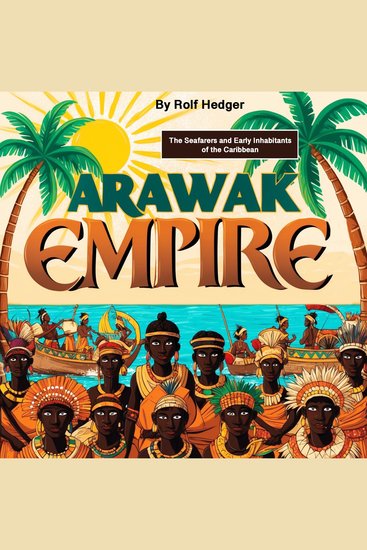
  • Arawak Empire - The Seafarers and Early Inhabitants of the Caribbean - cover

    Arawak Empire - The Seafarers...

    Rolf Hedger

    • 0
    • 0
    • 0
    The Arawak people trace their origins to the vast and resource-rich region of the Orinoco River basin in present-day Venezuela. As part of the larger Arawakan language family, they were one of the many groups that gradually expanded across South America and into the Caribbean. Their migration was driven by a combination of environmental factors, population growth, and the search for fertile land and abundant resources. Over generations, they navigated rivers, coastlines, and open waters, eventually settling in the islands of the Greater and Lesser Antilles, where they established thriving communities. 
    Archaeological evidence suggests that the Arawak migration into the Caribbean began around 2000 BCE, with the earliest settlements appearing in the Guianas and Trinidad before spreading to islands such as Hispaniola, Cuba, and Puerto Rico. The seafaring skills of the Arawak were instrumental in their expansion, allowing them to cross large distances using well-crafted dugout canoes. These vessels, some of which could carry dozens of people, enabled them to transport goods, establish trade networks, and maintain cultural connections between islands. 
    The Arawak developed a rich cultural identity deeply connected to their environment. They were skilled agriculturalists, cultivating staple crops such as cassava, maize, sweet potatoes, and fruits like guava and pineapple. Their farming methods, including slash-and-burn techniques and mound cultivation, allowed them to sustain large populations and support the growth of permanent villages. In addition to agriculture, they engaged in fishing and hunting, making use of the diverse ecosystems found throughout the Caribbean.
    Mostra libro
  • The Pacific Theater - Island Hopping and the Fight Against Japan - cover

    The Pacific Theater - Island...

    Sage Winters

    • 0
    • 0
    • 0
    The Pacific Theater of World War II was the culmination of decades of tension, territorial disputes, and ideological differences between Japan and the Allied Powers, particularly the United States. The roots of the conflict can be traced back to Japan’s rise as an imperial power in the late 19th and early 20th centuries. Seeking to expand its influence across East Asia and the Pacific, Japan embarked on a campaign of military conquest and economic domination, often at the expense of its neighbors.  
      
    By the 1930s, Japan’s aggressive expansionist policies became more pronounced, beginning with the invasion of Manchuria in 1931 and escalating with the full-scale war against China in 1937. These actions alarmed Western powers, who viewed Japan’s ambitions as a direct challenge to their interests in the region. The United States, in particular, responded by imposing economic sanctions and cutting off vital supplies, including oil, to curtail Japan’s militarism. However, these measures only further inflamed tensions, as Japan viewed them as an existential threat to its survival and growth as a global power.  
      
    The turning point came on December 7, 1941, with Japan’s surprise attack on Pearl Harbor. This audacious assault on the U.S. Pacific Fleet in Hawaii aimed to neutralize American naval power and secure Japan’s dominance in the Pacific. Although the attack achieved significant tactical success, crippling much of the U.S. fleet, it also galvanized American public opinion and led to the United States’ entry into World War II. The attack on Pearl Harbor marked the beginning of a brutal and protracted conflict that would span nearly four years and claim millions of lives. 
    Mostra libro
  • The Frogs - cover

    The Frogs

    Aristophanes

    • 0
    • 0
    • 0
    In The Frogs, the ancient Greek playwright Aristophanes crafts a comedic and satirical journey to the underworld, where the god Dionysus seeks to bring back a great tragic playwright to save Athens. Disguised as Heracles, Dionysus embarks on a series of farcical adventures, culminating in a contest between the spirits of Aeschylus and Euripides to determine who is the superior dramatist. Blending sharp wit, literary critique, and political commentary, the play mocks contemporary Athenian culture while celebrating the power of art to shape society. With its lively dialogue, clever wordplay, and fantastical premise—including a chorus of frogs whose croaking becomes a memorable refrain—The Frogs remains a brilliant example of classical comedy that explores the role of tragedy, leadership, and the moral health of the state. Entertaining and thought-provoking, it offers enduring insights into literature, democracy, and human folly.
    Mostra libro
  • History of Australia: A Captivating Guide to Australian History Starting from the Aborigines Through the Dutch East India Company James Cook and World War II to the Present - cover

    History of Australia: A...

    Captivating History

    • 0
    • 0
    • 0
    Did you know that Australia was once thought of as an undesirable place to live? 
    Long before Australia started to be considered one of the best places in the world to live, it was thought to be completely unlivable. In the 15th century, the European race to claim land began. Despite the fact that Australia was a large landmass, no nation believed it was worth colonizing. The land was claimed by the Netherlands. However, little exploration happened there. 
    Many countries actually believed it to be uninhabitable. However, the Aboriginal populations had already been thriving on the land for millennia. This allowed the Australian Aborigines the opportunity to truly develop their unique and complex cultures and systems. Nearly one hundred years after the Dutch-named the landmass New Holland, James Cook, a British captain, charted the eastern coast. He suggested it should be revisited. 
    In this book, you will learn about:Where Australia’s first people came fromThe diet, lifestyles, and beliefs of Australia’s AboriginesHow the first European contact with the Aboriginals actually wentThe exciting discoveries of the British voyages to AustraliaHow well did the Aborigines and the European settlers get along?All the political, social, and judiciary developments in the settlementsThe Australian gold rushes and how they impacted the region and beyondAustralia’s development into a unique nation, one separate from EnglandHow big of a role did Australia play during World War I and World War II?What is Australia up to today? 
    Scroll up and click the “add to cart” button to learn more about this interesting and diverse continent!
    Mostra libro
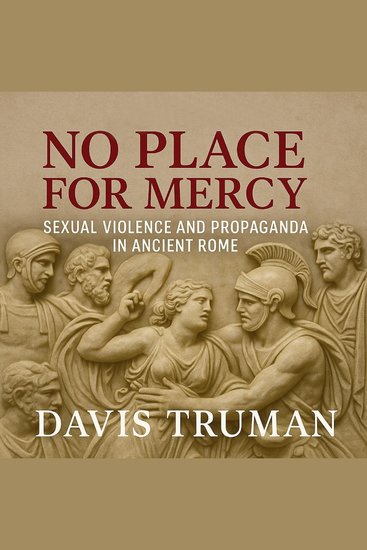
  • No Place for Mercy - Sexual Violence and Propaganda in Ancient Rome - cover

    No Place for Mercy - Sexual...

    Davis Truman

    • 0
    • 0
    • 0
    This audiobook is narrated by an AI Voice.   
    Where empire rose, mercy fell. 
    In No Place for Mercy, ancient Rome is unmasked—not as the marble-clad cradle of civilization, but as a brutal stage where sex, violence, and power played their most calculated roles. With a piercing lens, this provocative and deeply researched work reveals how sexual violence was not only a consequence of conquest but a deliberate tool of political manipulation and imperial propaganda. 
    From the mythologized Rape of the Sabine Women to the whispered scandals of imperial courts, No Place for Mercy exposes how Rome’s leaders wielded control over bodies as a means to control the narrative, transforming victims into symbols and violence into a spectacle. 
    Drawing from primary sources, inscriptions, and visual art, this groundbreaking book explores how Roman elites exploited sexual violence to define citizenship, masculinity, and moral order. It challenges romanticized visions of antiquity and forces us to confront the uncomfortable truths beneath Rome’s glorious facade. 
    Bold, unflinching, and urgently relevant, this is history that speaks to today’s conversations about power, gender, and the weaponization of sexuality. For scholars, students, and anyone who dares to ask what lies beneath the empire’s polished stone, No Place for Mercy is an essential and unforgettable read.
    Mostra libro