Unisciti a noi in un viaggio nel mondo dei libri!
Aggiungi questo libro allo scaffale
Grey
Scrivi un nuovo commento Default profile 50px
Grey
Iscriviti per leggere l'intero libro o leggi le prime pagine gratuitamente!
All characters reduced
The Federalist Papers - Complete Founding Fathers' Writings - cover

The Federalist Papers - Complete Founding Fathers' Writings

Alexander Hamilton, James Madison, John Jay, Zenith Horizon Publishing

Casa editrice: Zenith Horizon Publishing

  • 0
  • 0
  • 0

Sinossi

The blueprint of American democracy—still relevant today.

The Federalist Papers is a cornerstone of U.S. political thought, penned by Alexander Hamilton, James Madison, and John Jay to defend and explain the newly proposed Constitution. These 85 essays offer profound insight into republicanism, checks and balances, federalism, and the foundations of liberty.

Whether you're a student of history, a legal scholar, or a curious reader, this edition of The Federalist Papers is essential reading for understanding the ideas that shaped the United States.

📘 This edition includes:

The complete and unabridged collection

Kindle-optimized layout for smooth navigation

A must-have for anyone studying American government, history, or law

📚 A vital resource for civic literacy and political thought.

Download now and engage with the enduring ideas of America's Founding Fathers.
Disponibile da: 17/06/2025.
Lunghezza di stampa: 592 pagine.
Altri libri che potrebbero interessarti

  • Modern Discovery of Australia and New Zealand The: The History of the Indigenous Natives and the Initial European Expeditions and Settlements - cover

    Modern Discovery of Australia...

    Editors Charles River

    • 0
    • 0
    • 0
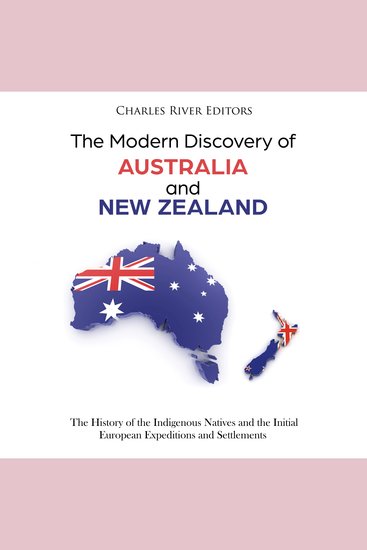
    A land of almost 3 million square miles has lain since time immemorial on the southern flank of the planet, so isolated that it remained entirely outside of European knowledge until 1770. However, the first human footprints on this vast territory were felt 70,000 years earlier, as people began to cross the periodic land bridges and the short sea crossings from Southeast Asia. 
    By the mid-17th century, the existence of a land in the south referred to as Terra Australis was generally known and understood by the Europeans, and incrementally, its shores were observed and mapped. Van Diemen’s Land, an island off the south coast of Australia now called Tasmania, was identified in 1642 by Dutch mariner Abel Tasman, and a few months later, the intrepid Dutchman would add New Zealand to the map of the known world. 
    At the time, the English were the greatest naval power in Europe, but they arrived on the scene rather later. The first to appear was William Dampier, captain of the HMS Roebuck, in 1699, after he had been granted a Royal Commission by King William III to explore the east coast of New Holland. By then, the general global balance of power was shifting, and with the English gaining a solid foothold in India, their supremacy in the Indian Ocean trade zone began. The Dutch, once predominant in the region, began slowly to lose ground, slipping out of contention as a major global trading power. So too were the Portuguese, also once dominant in the region. It was now just the French and the English who were facing one another down in a quest to dominate the world, but their imperial interests were focused mainly in India and the East Indies, as well as the Caribbean and the Americas. As a result, the potential of a vast, practically uninhabited great southern continent did not yet hold much interest. By then the world was largely mapped, with just regions such as the Arctic Archipelago and the two poles remaining terra incognita.
    Mostra libro
  • The Unbiased Self - The Psychology of Overcoming Cognitive Bias - cover

    The Unbiased Self - The...

    Erin Devers

    • 0
    • 0
    • 0
    A Christian Perspective on Overcoming Cognitive Bias
    So much human behavior can be explained by two motives: we want to be right, and we want to feel good about ourselves. But the tension between these two motives makes us especially vulnerable to bias—and bias distorts our view of the world and of ourselves and can keep us from doing even what we know is right.
    In The Unbiased Self, social psychologist Erin Devers lays out what psychology has discovered about bias and selfishness. To truly overcome cognitive bias, we need a vision of what an unbiased self could look like, stemming from a solid sense of identity—an identity available in Christian faith. Devers explains how a Christian concept of the self can provide the combination of humility with self-confidence that enables unbiased thinking. Using current research and illuminating stories, this book
    
    - describes how "fast" and "slow" thinking work together in everyday life;
    - diagnoses when we're most vulnerable to distorted thinking;
    - considers how regarding every person as a child of God counteracts implicit bias;
    - reveals psychological insights into spiritual formation; and
    - recommends practices for slowing our thinking to seek God's wisdom about our ourselves and others.
    The social sciences offer rich resources for understanding how to reduce stereotyping and prejudice. By thoughtfully integrating them with biblical perspectives on human worth and sin, we gain hopeful, practical guidance on how to perceive the world more accurately and love others more generously.
    Mostra libro
  • Living with Jane Austen - cover

    Living with Jane Austen

    Janet Todd

    • 0
    • 0
    • 0
    Fanny Price, in Mansfield Park, tells her persistent suitor that 'we have all a better guide in ourselves...than any other person can be'. Sometimes, however, we crave external guidance: and when this happens we could do worse than seek it in Jane Austen's own subtle novels. Written to coincide with Austen's 250th birthday, this approachable and intimate work shows why and how - for over half a century - Austen has inspired and challenged its author through different phases of her life. Part personal memoir, part expert interaction with all the letters, manuscripts and published novels, Janet Todd's book reveals what living with Jane Austen has meant to her and what it might also mean to others. Todd celebrates the undimmable power of Austen's work to help us understand our own bodies and our environment, and teach us about patience, humour, beauty and the meaning of home.
    Mostra libro
  • The History of France - The 1700s and the Napoleon Era - cover

    The History of France - The...

    Will Forrest

    • 0
    • 0
    • 0
    If you're one of those folks who's had enough of the same old boring history books, you're in for a treat. 
    You see, "The History of France: The 1700s and the Napoleon Era" isn't like those other dusty books that put you to sleep before you can finish the first chapter. This book's got something special – something that makes you want to keep turning the pages and find out what happens next. 
    Picture this: France in the 1700s, with all its kings and queens, and the Age of Enlightenment brewing like a fresh pot of coffee. 
    It was a time of big ideas and even bigger hair, when people like Voltaire and Rousseau were changing the way folks thought about, well, everything. And then there's the French Revolution, that wild and crazy period when people decided they'd had enough of the aristocracy and started chopping heads left and right. 
    But that's not all. This book will also take you on a whirlwind tour of the Napoleon Era, where you'll get up close and personal with the little general who almost conquered the world – if only the Russians hadn't been so darn cold. You'll learn about his rise and fall, his brilliant strategies, and his complicated love life, all told in a way that'll make you feel like you're right there in the thick of things. 
    This is the kind of book that sneaks up on you, like that kid in class who never says much but always has the best stories to tell. 
    It's a book that'll make you forget about all those other history books that never quite lived up to their promises. 
    So why not give it a try? You might just find yourself getting lost in the pages, eager to uncover the secrets and stories of a time and place that'll never be quite the same again.
    Mostra libro
  • Family Abolition - Capitalism and the Communizing of Care - cover

    Family Abolition - Capitalism...

    M.E. O’Brien

    • 0
    • 0
    • 0
    For some of us, the family is a source of love and support. But for many others, the family is a place of private horror, coercion, and personal domination. In a capitalist society, the private family carries the impossible demands of interpersonal care and social reproductive labor. Can we imagine a different future? 


    In Family Abolition, author M. E. O'Brien uncovers the history of struggles to create radical alternatives to the private family. O'Brien traces the changing family politics of racial capitalism in the industrial cities of Europe and the slave plantations and settler frontier of North America, explaining the rise and fall of the housewife-based family form. From early Marxists to Black and queer insurrectionists to today's mass protest movements, O'Brien finds revolutionaries seeking better ways of loving, caring, and living. Family Abolition takes us through the past and present of family politics into a speculative future of the commune, imagining how care could be organized in a free society.
    Mostra libro
  • Helmut Schmidt: A short biography - 5 Minutes: Short on time - long on info! - cover

    Helmut Schmidt: A short...

    5 Minutes, 5 Minute Biographies,...

    • 0
    • 0
    • 0
    Helmut Schmidt, legendary German chancellor: Life and works in a short biography! Everything you need to know, brief and concise. Infotainment, education and entertainment at its best!
    Mostra libro