Unisciti a noi in un viaggio nel mondo dei libri!
Aggiungi questo libro allo scaffale
Grey
Scrivi un nuovo commento Default profile 50px
Grey
Iscriviti per leggere l'intero libro o leggi le prime pagine gratuitamente!
All characters reduced
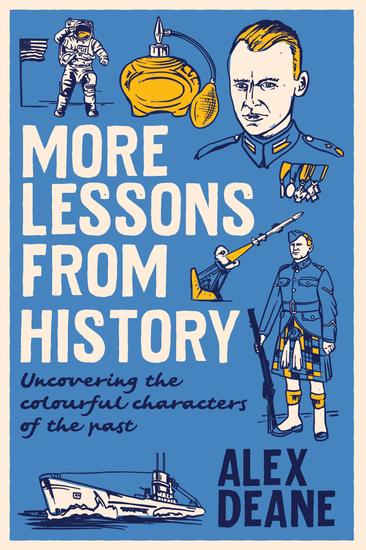
More Lessons from History - Uncovering the colourful characters of the past - cover

More Lessons from History - Uncovering the colourful characters of the past

Alex Deane

Casa editrice: Biteback Publishing

  • 0
  • 0
  • 0

Sinossi

"Fabulously entertaining, Alex Deane's wry, witty stories take hidden gems from our shared history and polish them until they shine. A must-read." – Iain Dale
"Ribald, riotous and sometimes surreal, Alex Deane's dispatches from the forgotten corners of history bring heroes and villains roaring vividly and often poignantly back to life." – Gavin Esler
"Alex Deane's tongue-in-cheek tales of eccentricity and endeavour not only shed light on the obscurest parts of history; they teach us things we never knew about the present." – Suella Braverman, Home Secretary
"More rollicking tales of fascinating figures who should not be lost to history – told with Alex Deane's warm empathy, shrewd insight and glistening wit." – Lord Parkinson, former special adviser to Prime Minister Theresa May
***
 
Welcome to another round of history's most absurd stories and the timeless lessons that come with them. In More Lessons from History, Alex Deane has unearthed yet more bizarre tales that you certainly haven't heard before. If you're wondering how large, flightless birds might organise themselves against a military regiment, how you should respond to the glare of an international rugby player whose glass eye you just knocked out, exactly why carrots are orange, or whether the world's worst-run battleship ever ceased firing upon her comrades-in-arms, then look no further.
 
In this second volume of his acclaimed series, Alex Deane reminds us that, throughout history, human nature has remained exactly the same, and the way that people responded to the most amusing, horrifying and convoluted of circumstances in the past can teach us everything we need to know about who we are today.
For even more lessons from history, check out Alex Deane's Hidden History Happy Hour podcast on Spotify, Google and Apple.
Disponibile da: 15/11/2022.
Lunghezza di stampa: 304 pagine.


Altri libri che potrebbero interessarti

  • From Prosperity to Peril - The Economic History of Argentina - cover

    From Prosperity to Peril - The...

    Anya Solace

    • 0
    • 0
    • 0
    The economic history of Argentina is deeply rooted in its colonial past, which shaped much of the country’s early economic structures and patterns. Argentina, as part of the Spanish Empire, was initially regarded as a peripheral region, with its economic activities largely shaped by the colonial powers’ interests. The Spanish imposed a rigid economic system in which the colony’s natural resources were exploited to benefit Spain, primarily through the export of silver, agricultural products, and other raw materials. This colonial legacy set the stage for Argentina’s agricultural-based economy and influenced the development of land ownership patterns and labor systems that would persist well into the 19th century. 
    During the colonial period, the region that would become Argentina was an important supplier of agricultural products, such as cattle and grains, to the Spanish Empire. Large estates, known as estancias, were established, and much of the labor force was provided by indigenous peoples and African slaves. The development of these estates led to the establishment of an agrarian economy that would remain a cornerstone of Argentina’s economic identity. The concentration of land and wealth in the hands of a few, however, created significant economic inequalities that would become a recurring theme in Argentina’s history. 
    Following Argentina’s independence from Spain in 1816, the young nation faced significant challenges in establishing its economic identity. The economic institutions that had been put in place by the colonial powers were largely centered around the needs of the empire, and there was little infrastructure to support an autonomous economy. The new republic was faced with the task of building a functional economy that could support its growing population while integrating itself into the global economy.
    Mostra libro
  • 100 Amazing Facts about Antarctica - The Hidden World of Glaciers - cover

    100 Amazing Facts about...

    Marc Dresgui

    • 0
    • 0
    • 0
    Dive into the mysteries of a fascinating and untamed continent, where each fact reveals the incredible magic of Antarctica! 🇦🇶 
    Have you ever wondered:Which incredible animals survive Antarctica’s harsh winters?What hidden treasures lie beneath miles of ice?Why is Antarctic ice so pure and transparent?What geological wonders are buried under the ancient ice?Why is Antarctica protected by an international treaty? 
    Here’s why 100 Amazing Facts About Antarctica is the perfect gift for young explorers:Captivating and accessible content: Tailored for readers aged 10 and up, the book features clear, precise, and fascinating facts, offering a comprehensive glimpse into Antarctica. Each fact is written in an engaging and straightforward style, making reading enjoyable and easy to follow.A fascinating exploration of the South Pole: From rare wildlife to extreme weather phenomena, this book covers many lesser-known aspects of Antarctica. Young readers will discover surprising anecdotes that bring them closer to this mysterious continent.An educational journey around the world: By learning about Antarctica, children also gain insight into the importance of ecosystems and biodiversity in preserving our planet. A valuable introduction to tomorrow’s environmental challenges.Accessible scientific knowledge: The book delves into diverse scientific topics – geology, biology, climatology – in a clear and educational manner. Perfect for sparking young readers’ interest in natural sciences. 
    Whether as a gift, a school resource, or a way to nurture young minds, 100 Amazing Facts About Antarctica is more than a book—it’s an invitation to explore, learn, and dream big.
    Mostra libro
  • Do Your Own Thing - cover

    Do Your Own Thing

    Richard Phoenix

    • 0
    • 0
    • 0
    Do Your Own Thing is a full-length work of non-fiction from artist and musician Richard Phoenix detailing his experiences of the best underground arts scene you've never heard of——Do Your Own Thing, a project run by learning disability arts organisation Heart n Soul.Looking at the transformative potential of working to support creative young people make the music and art they want to, this book contributes essential new voices, reflections and considerations to the established ideas of 'Do It Yourself' culture. Phoenix's book, written with a disarming and idiosyncratic voice, asks what our often reductive understanding of DIY aesthetics might mean in light of questions about access, support and who gives permission to whom to make art, guiding us through the kind of project only spoken about in funding reports and transforming it into a polyphonic, collaborative and joyful work of art.
    Mostra libro
  • Tantra - Life-Enhancing Rituals of Power - cover

    Tantra - Life-Enhancing Rituals...

    Hamraz Ahsan

    • 0
    • 0
    • 0
    Tantric rituals are used to connect with divine energies and expand our consciousness. Its practices originate from Indian medieval scriptures and informs strands in Hindu, Jain and Buddhist thought. Yoga, meditation and art all formed a part of its rich, historic lineage. 
     
    In this book we uncover and explain the ideas contained within this complex system of thought and introduce simple exercises to put these ideas into practice. Understanding how to weave together the energies within us leads to a completion of the self that feeds ever-greater health and happiness. 
     
    Sections include:Scripture and experienceBeginning with the breathNyasa and the art of touchDaily modern rituals
    Mostra libro
  • Poetry Unbound - 50 Poems to Open Your World - cover

    Poetry Unbound - 50 Poems to...

    Pádraig Ó Tuama

    • 0
    • 0
    • 0
    In the tumult of our contemporary moment, poetry has emerged as an inviting, consoling outlet with a unique power to move and connect us, to inspire fury, tears, joy, laughter, and surprise. This generous anthology pairs fifty illuminating poems with poet and podcast host Pádraig Ó Tuama's appealing, unhurried reflections. With keen insight and warm personal anecdotes, Ó Tuama considers each poem's artistry and explores how its meaning can reach into our own lives. 


    Focusing mainly on poets writing today, Ó Tuama engages with a diverse array of voices that includes Ada Limón, Ilya Kaminsky, Margaret Atwood, Ocean Vuong, Layli Long Soldier, and Reginald Dwayne Betts. Natasha Trethewey meditates on miscegenation and Mississippi; Raymond Antrobus makes poetry out of the questions shot at him by an immigration officer; Martín Espada mourns his father; Marie Howe remembers and blesses her mother's body; Aimee Nezhukumatathil offers comfort to her child-self. Through these wide-ranging poems, Ó Tuama guides us on an inspiring journey to reckon with self-acceptance, history, independence, parenthood, identity, joy, and resilience. 


    For anyone who has wanted to try their hand at a conversation with poetry but doesn't know where to start, Poetry Unbound presents a window through which to celebrate the art of being alive.
    Mostra libro
  • Oliver Cromwell - The English Military Political Leader - cover

    Oliver Cromwell - The English...

    Kelly Mass

    • 0
    • 0
    • 0
    Oliver Cromwell was an English army and statesman who led Parliamentary armies against King Charles I throughout the English Civil War. From 1653 till his death in the year 1658, he lead the British army in the British Islands area. 
    Why was he so hated by so many? And is this image of him historically correct? 
    Even though we cannot go back in time 450 years ago, we can certainly try to find the answers in the sources we have. 
    The reason why people thought he was so evil, is because of his brutality against the Irish at that time. Several Irish and English scholars agree that Cromwell was too cruel in Ireland. Other academics blame him of 'ethnic cleansing,' or the systematic expulsion of a certain ethnic population from a territory. It typically entails the execution and deportation of Catholics, and that he is despised by Irish Catholics. 
    Is this true? And why did he do this? 
    Find out more about his time, his life, his circumstances and his legacy.
    Mostra libro