Join us on a literary world trip!
Add this book to bookshelf
Grey
Write a new comment Default profile 50px
Grey
Subscribe to read the full book or read the first pages for free!
All characters reduced
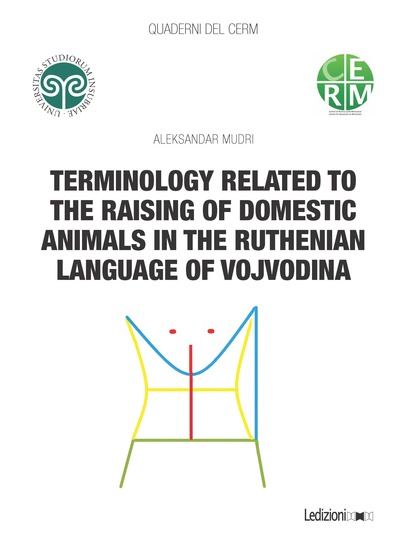
Terminology related to the raising of domestic animals in the ruthenian language of Vojvodina - cover

Terminology related to the raising of domestic animals in the ruthenian language of Vojvodina

Aleksandar Mudri

Publisher: Ledizioni

  • 0
  • 0
  • 0

Summary

The aim of this book is to research the Ruthenian language fragments related to the conceptualisation and categorisation of domestic animals. An interdisciplinary framework of Cognitive Linguistic theories and methodologies were employed, including conceptual metaphor analysis, categorization, and association experiments.
This publication reveals prototypical members of domestic animal categories in the contemporary world image in the Ruthenian language of Vojvodina which is reconstructed through the results of association experiments. Considering the levels of research that show a petrified image of the world, manifested at the level of nominations and phraseologisms, the shift of certain members of these categories was followed. In that sense, a horse, a cow and a dog changed their places in categories, which also shows a change in human needs from domestic animals from labor-related assistance and providers of food to people's best and most loyal friends.
Available since: 01/28/2025.
Print length: 364 pages.

Other books that might interest you

  • German Short Stories - Dirk the Flying Dutchman (B1-B2) - cover

    German Short Stories - Dirk the...

    Anja Winta

    • 0
    • 0
    • 0
    What you will get with German Short Stories:Get better at your German pronunciation: Follow the narrator's speech and dialogues and mimic the correct pronunciation.Classical Storytelling & Realistic dialogues: Follow a fun and creative story with new words that are outside of your usual German textbook AND learn new Slang words with the dialogues that are very natural and authentic, just the way native speakers would talkYou can use the separate textbook to read along with the audiobook. There you will find a vocabulary list for each chapter to practise new words and a translation underneath each paragraph.
    Show book
  • How to English: Idioms - A Practical Guide to Common Idiomatic Phrases - cover

    How to English: Idioms - A...

    David Tobin

    • 0
    • 0
    • 0
    Make your English more natural, colorful, and expressive. 
    Unlock the power of English idioms with this engaging and practical guide. How to English: Idioms offers clear explanations, real-life examples, and a wide variety of expressions to help you sound more fluent and confident. 
    Perfect for intermediate to advanced learners, educators, or anyone who wants to add personality and depth to their English, this audiobook makes idioms easy to understand—and even easier to use. 
    Whether you're learning for fun, study, or everyday conversation, this guide brings English to life, one idiom at a time.
    Show book
  • 1000 Common Nouns - Learn Portuguese Through Simple Sentences - cover

    1000 Common Nouns - Learn...

    Science-Based Language Learning Lab

    • 0
    • 0
    • 0
    Unlock Portuguese fluency with 1000 Common Nouns: Learn Portuguese Through Simple Sentences. Perfect for beginners and intermediate learners, this guide introduces the 1000 most common Portuguese nouns through clear, easy sentences. Each sentence is translated into English, making it ideal for self-study or classroom use. 
     
    By mastering these nouns and their context, you will significantly improve your comprehension and communication skills in Portuguese. Whether you're preparing for travel, boosting your career, or passionate about learning, this book lays a strong foundation for your Portuguese journey. You'll expand your vocabulary and learn to use these words naturally in conversation, helping you speak confidently and understand native speakers with ease. 
     
    Features: 
     
    - 1000 common Portuguese nouns in practical sentences 
     
    - Clear English translations 
     
    - Suitable for beginners and intermediate learners 
     
    - Enhances vocabulary, comprehension, and conversational skills 
     
    - Ideal for self-study, travel, or classroom resource 
     
    Start your Portuguese learning journey today and discover how mastering 1000 common nouns can transform your communication skills. 1000 Common Nouns: Learn Portuguese Through Simple Sentences is your essential guide to proficiency in one of the world's most widely spoken languages.
    Show book
  • The Self-Serving Bias - How We Attribute Success to Ourselves and Failures to External Factors - cover

    The Self-Serving Bias - How We...

    William Rands

    • 0
    • 0
    • 0
    The self-serving bias is a common psychological phenomenon in which individuals attribute their successes to internal factors, such as their abilities or efforts, while blaming external factors for their failures. This tendency to favor oneself when interpreting outcomes is a deeply ingrained aspect of human behavior, and it plays a significant role in shaping our self-perceptions, interactions with others, and even our decision-making processes. 
    At its core, the self-serving bias serves to protect and enhance self-esteem. By crediting successes to internal factors, individuals reinforce their belief in their own competence and abilities. This, in turn, boosts confidence and motivates continued effort. On the flip side, by attributing failures to external, uncontrollable factors such as bad luck, difficult circumstances, or the actions of others, individuals avoid the negative emotional consequences of failure. This creates a shield that protects one’s self-image, allowing a person to maintain a positive outlook even when things go wrong. 
    One of the primary reasons for the self-serving bias is the desire to preserve self-esteem. Humans have an inherent need to view themselves in a positive light, and the self-serving bias is one of the mechanisms that help achieve this goal. It provides a way to maintain a sense of control over outcomes, particularly in challenging or uncertain situations. In this way, the bias helps individuals navigate the complexities of life without becoming overwhelmed by feelings of helplessness or inadequacy.
    Show book
  • Spanish Unleashed: Your 3-in-1 Beginner's Guide - Grammar Short Stories and Dynamic Phrases – Break Language Barriers Anytime Anywhere! - cover

    Spanish Unleashed: Your 3-in-1...

    Polyglot Mastery Institute

    • 0
    • 0
    • 0
    Ready to embark on an exciting journey into the vibrant world of Spanish? 
    Look no further! This comprehensive audiobook is your ultimate companion, packed with everything you need to kickstart your language learning adventure. 
    Grammar Made Easy: Say goodbye to confusing conjugations and perplexing grammar rules! With our clear and concise explanations, mastering Spanish grammar has never been more effortless. From verb tenses to sentence structure, unlock the secrets of the Spanish language with confidence. 
    Captivating Short Stories: Immerse yourself in the rich tapestry of Spanish culture through our captivating short stories. Each narrative is carefully crafted to engage and entertain, while simultaneously reinforcing key language concepts. Experience the thrill of learning Spanish as you journey through tales of adventure, romance, and mystery. 
    Dynamic Phrases for Real-Life Conversations: Tired of sounding like a tourist? Take your Spanish skills to the next level with our collection of dynamic phrases for real-life conversations. Whether you're ordering tapas in Barcelona or making new friends in Mexico City, you'll be equipped with the language tools you need to break down barriers and connect with native speakers effortlessly. 
    Break Language Barriers Anytime, Anywhere: With "Spanish Unleashed," language learning knows no bounds. Whether you're commuting to work, hitting the gym, or relaxing at home, our audiobook format allows you to learn on the go. Simply plug in your headphones and transform any moment into an opportunity for language mastery. 
    Unlock the door to a world of possibilities with "Spanish Unleashed: Your 3-in-1 Beginner's Guide."Start your journey today and unleash the power of Spanish wherever life takes you!
    Show book
  • Dutch Made Easy - Beginner - Volume 2 of 3 - cover

    Dutch Made Easy - Beginner -...

    Lingo Wave

    • 0
    • 0
    • 0
    We broke our new series on learning Dutch down into different learning stages. Start with the "Lower Beginner" books followed by the "Beginner" and "Upper Beginner" books. Next, progress to the "Intermediate" series, then test and reinforce your knowledge with the "Conversations" series. 
    This audiobook is divided into units.While it provides different learning patterns and accommodates various needs, this audiobook focuses on helping you improve your ability to understand, speak, and memorise Dutch.  
    In Unit 1 you will hear Dutch decoded with each syllable spoken very slowly and clearly with repetition. Immediately before each sentence is spoken, you will hear the translation, so you will always understand what is being said. 
    Unit 2 focuses solely on increasing your listening ability, which will improve your abilities to engage in dialogue with a native Dutch speaker. This chapter requires you to listen very carefully to nuances in the language. 
    By Unit 3 you will already notice progress in your abilities to speak and understand Dutch. The spoken translation is followed by two repetitions in Dutch at a completely natural speed. While you are learning to process naturally spoken Dutch, Units 3 and 4 will help you memorise new vocabulary and full sentences. 
    In Unit 5 you can test yourself on how much you have learned. If you are having difficulties, we suggest you revisit the listening, speaking, or memorisation section of Units 1, 2 3 or 4, according to what you need more help with. 
    Topics covered in this book: 
    1. Asking about family 
    2. Asking about relationship status 
    3. Expressing frequency 
    4. Talking about spare time activities and hobbies 
    5. Using quantifiers/determiners 
    6. Talking about preference 
    7. Talking about abilities 
    8. Talking about location of places 
    9. Describing appearance 
    10. Talking about personality 
    11. Talking about the weather 
    ...
    Show book