Snow-blind
Albert M. Treynor
Casa editrice: Good Press
Sinossi
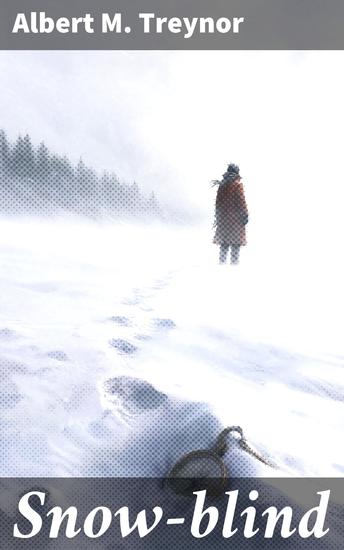
In Snow-blind, Albert M. Treynor crafts a taut, atmospherically charged narrative in which winter landscape becomes both setting and psychological condition. The title suggests disorientation, obscured vision, and the perilous limits of perception, and the book develops these motifs through spare, disciplined prose and a close attention to environment. Treynor's style belongs to a tradition of serious modern fiction that uses external hardship—snow, isolation, exposure—as a means of probing inward states of fear, endurance, and moral uncertainty. The result is a work whose physical starkness carries strong symbolic force. Though less widely discussed than some of his contemporaries, Treynor writes with the assurance of an author deeply attentive to human behavior under pressure. His interest in elemental conditions and psychological extremity appears to shape the novel's central concerns, suggesting a writer drawn to moments when ordinary certainties collapse. That sensibility gives Snow-blind its intellectual coherence: it is not merely a story of survival or crisis, but an inquiry into how perception itself can fail. This is a book especially worth recommending to readers who value literary fiction of atmosphere, compression, and philosophical undertone. Snow-blind rewards careful reading, offering both narrative tension and interpretive depth in a compact, memorable form.
Disponibile da: 29/06/2026.
Lunghezza di stampa: 198 pagine.