Unisciti a noi in un viaggio nel mondo dei libri!
Aggiungi questo libro allo scaffale
Grey
Scrivi un nuovo commento Default profile 50px
Grey
Iscriviti per leggere l'intero libro o leggi le prime pagine gratuitamente!
All characters reduced
How Lasers Work - cover

How Lasers Work

Aiden Feynman

Traduttore A AI

Casa editrice: Publifye

  • 0
  • 0
  • 0

Sinossi

"How Lasers Work" explores the physics behind lasers, illuminating their transformative applications across technology and medicine. It begins by establishing a foundation in light and electromagnetic radiation, progressing to explain light absorption, spontaneous emission, and stimulated emission – the key to laser function. The book emphasizes the laser's unique properties, such as monochromaticity and coherence, which enable its precision applications, like cutting through steel and repairing retinas.

 
The book details the historical development of the laser, from Einstein's theoretical concepts to Theodore Maiman's first working laser in 1960. Different types of lasers, including gas, solid-state, and semiconductor lasers, are examined in terms of construction, principles, and specific uses. A significant portion is dedicated to laser applications in medicine, communication, and industry, providing real-world examples of their impact.

 
The book uses experimental data and schematics, and connects laser physics to materials science, computer science, and environmental science. It provides a balanced treatment of theory and practice, making it valuable for both academic study and practical reference.
Disponibile da: 12/02/2025.
Lunghezza di stampa: 75 pagine.
Altri libri che potrebbero interessarti

  • AI Chat GPT Elections 2024 - Orac For President - cover

    AI Chat GPT Elections 2024 -...

    Michael Mathiesen

    • 0
    • 0
    • 0
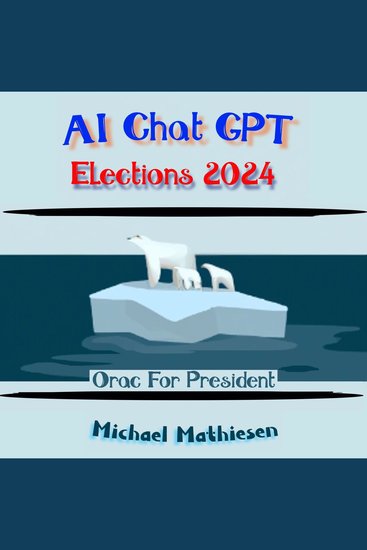
    AI Chat GPT Elections 2024 - Orac for President is a journey through Human-AI collaboration and is a futuristic book that explores the possibilities and challenges of a world where AI language models can collaborate with humans to create meaningful dialogues on complex issues such as politics and social justice. This book is a compilation of conversations between a human and Orac, an intelligent and intuitive AI language model, discussing the potential of AI-assisted decision-making, ethical concerns, and the role of technology in shaping our worldviews. The reader will witness the evolution of the relationship between human and AI, highlighting the possibilities and limitations of this relationship in creating a more just and equitable society.The collaboration between Orac and myself also delves into the concept of Real Democracy and the potential amendments to the Constitution required to make it a reality. From discussions around voting rights and accessible education, to equitable healthcare and a universal basic income, the reader will find compelling arguments and perspectives around the ways in which technology and AI can support a more inclusive and democratic society. Through the lens of Real Democracy, the book offers a path towards progress and social change, encouraging readers to think critically about how technology and AI can be harnessed for the greater good of humanity.We come to many revolutionary ideas about how to use this amazing new technology to improve the highly flawed and antiquated system of making our laws by sending representatives - who pledge to represent their constituents in Washington D.C., but somehow take decades to deliver on any real solutions to problems and in fact create more problems than they solve.  Orac realizes there is a better way by using the power of the Internet in a Real Democracy where money cannot block truly popular legislation and new ideas but he needs to be President to get this done.
    Mostra libro
  • Identifying Trees of the West - An All-Season Guide to Western North America - cover

    Identifying Trees of the West -...

    Lois DeMarco, Jay Mengel

    • 0
    • 0
    • 0
    A field guide to every common tree in Western North America, with hundreds of color photos.   Learn how to recognize trees you see every day by their bark; branching patterns; fruits, flowers, or nuts; and overall appearance. Created for in-the-field or at-home use, this guide is an easy-to-use resource that covers every common tree in western North America—from the eastern base of the Rocky Mountains to the Pacific coast. Clearly written for both beginning and advanced botanists, it provides tips for identification throughout a tree’s lifespan and in every season of the year.
    Mostra libro
  • The Ai Revolution - Machines Minds and the Human Future - cover

    The Ai Revolution - Machines...

    Mustafa Scales, Robert Suleyman

    • 0
    • 0
    • 0
    The AI Revolution: Machines, Minds, and the Human Future 
    Are you intrigued by the vast potential of AI but unsure about its impact on our lives and the future of humanity? How can we understand and coexist with the ever-evolving world of artificial intelligence? Have you grappled with the ethical and existential dilemmas that arise in the wake of this technological revolution? 
    Curious about the true implications of AI's integration into our daily lives? How can we navigate this rapidly evolving landscape without losing sight of our human essence? Having faced similar questions and concerns, the author empathizes with the complexities and uncertainties you might feel about the AI revolution. 
    Meet the Author: The AI Thought Leader 
    The author, a prominent figure in AI research and development, delves into the complex nuances of AI and its impact on society and the human future. They understand the dilemmas and apprehensions surrounding the integration of AI into our lives, drawing from personal experiences and expertise to shed light on the path ahead. 
    Why You Need This Book 
    Insights into the history and evolution of artificial intelligence. 
    Explore AI's impact on various facets of society, from work to healthcare. 
    Consideration of ethical and moral quandaries posed by AI advancements. 
    Insights into the future landscape of human-machine collaboration. 
    Analysis of the potential risks and benefits AI poses to our collective future. 
    Guidance on navigating the complexities of AI integration in daily life. 
    Strategies for understanding and shaping the AI-driven world.
    Mostra libro
  • Death Without Dignity? - Euthanasia and Assisted Suicide in Europe - cover

    Death Without Dignity? -...

    John Wyatt

    • 0
    • 0
    • 0
    In this engaging and timely book,  John Wyatt analyses the arguments in favour of euthanasia and physician assisted suicide and shows how unstable their foundations are. Instead, Wyatt suggests a more humane path forward: one that is both achievable and more honouring to the patient.
    Mostra libro
  • Birth of Modern Astronomy The: The History of the Scientists and Theories that Modernized Astronomy - cover

    Birth of Modern Astronomy The:...

    Editors Charles River

    • 0
    • 0
    • 0
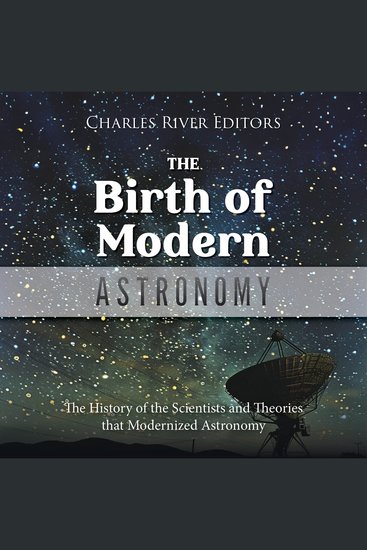
    As interesting as the stories about Tycho Brahe are, chances are he wouldn’t be remembered if not for the important work he did, especially in the realm of astronomy. He lived in an era when the intellectual worldview of most in northern Europe was medieval in nature, influenced mostly by spirituality, mysticism, religion, and metaphysics. Brahe, however, was far-thinking in his outlook, taking advantages of the latest technological ideas and practicing empiricism to revolutionize the field of science. This work eventually led Brahe to cross paths with Johannes Kepler, whose laws on planetary motion would change everything.  
    Trying to define a man who had the qualities of a mathematician, astronomer, philosopher, inventor, and astrologer can prove difficult. But all of that can be ascribed to Johannes Kepler, one of the giants of his era who ushered in the Scientific Revolution and is often considered the first modern scientist. Kepler stood at a moment in time when the intellectual worldview of most in northern Europe was medieval in nature. Kepler, however, was far-thinking in his outlook. 
    	In his lifetime, Galileo straddled the epochs of the Renaissance and the Scientific Revolution, and it was his work and technological advances that helped usher in a brand new understanding of the solar system and the scientific method. Stephen Hawking himself has asserted, “Galileo, perhaps more than any other single person, was responsible for the birth of modern science." Of course, part of what made Galileo such a monumental figure was the fact that he was ahead of his time, and that he mostly refused to conform to the accepted dogmas of contemporary society.  
    In 1676, Sir Isaac Newton wrote in a letter, “If I have seen further it is by standing on ye sholders of Giants.” By the time he died, Newton had become science’s greatest giant, and every scientist who has followed him has stood on his shoulders. 
    Mostra libro
  • The Petroleum Papers - Inside the Far-Right Conspiracy to Cover Up Climate Change - cover

    The Petroleum Papers - Inside...

    Geoff Dembicki

    • 0
    • 0
    • 0
    Burning fossil fuels will cause catastrophic global warming: this is what top American oil executives were told by scientists in 1959. But they ignored that warning. Instead, they developed one of the biggest, most polluting oil sources in the world—the oil sands in Alberta, Canada. As investigative journalist Geoff Dembicki reveals in this explosive book, the decades-long conspiracy to keep the oil sands flowing into the US would turn out to be one of the biggest reasons for the world's failure to stop the climate crisis. 


    In The Petroleum Papers, Dembicki draws from confidential oil industry documents to uncover for the first time how companies like Exxon, Koch Industries, and Shell built a global right-wing echo chamber to protect oil sands profits—a misinformation campaign that continues to this day. He also tells the high-stakes stories of people fighting back: a Seattle lawyer who brought down Big Tobacco and is now going after Big Oil, a Filipina activist whose family drowned in a climate disaster, and a former Exxon engineer pushed out for asking hard questions. 


    With experts now warning we have less than a decade to get global emissions under control, The Petroleum Papers provides a step-by-step account of how we got to this precipice—and the politicians and companies who deserve our blame.
    Mostra libro